

Motmot

Upland Goose vs Ruddy-headed Goose

Chloephaga picta versus Chloephaga rubidiceps

Play a quiz with Upland Goose and Ruddy-headed Goose
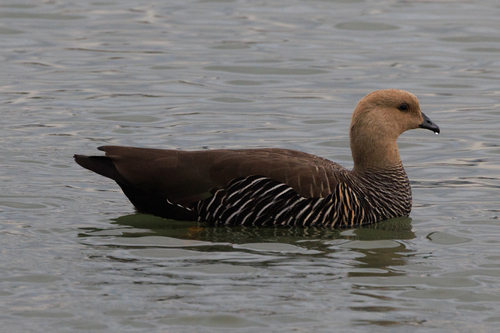
Upland Goose (Chloephaga picta) Upland Goose
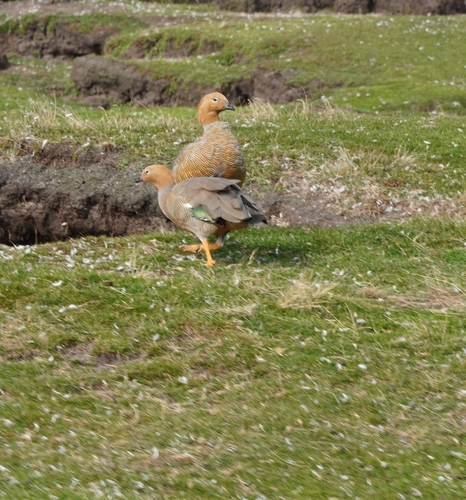
Ruddy-headed Goose (Chloephaga rubidiceps) Ruddy-headed Goose

Media

Loading…

In short

The most reliable field mark to separate Upland Goose from Ruddy-headed Goose is the strong sexual dimorphism in Upland Goose: adult males are mostly white with black legs, while females are barred and reddish-brown with yellow-orange legs. In contrast, Ruddy-headed Goose shows no sexual dimorphism—both sexes have a reddish-brown head, gray and buff barred body, and orange legs with black blotches. Juvenile and female Upland Geese can be confused with Ruddy-headed Goose due to similar barred underparts, but Upland is much larger and bulkier. In flight or at rest, note the Upland Goose’s size and the male’s white plumage, versus the smaller, more uniformly patterned Ruddy-headed Goose. Leg color and head pattern are key when plumage overlaps.

Identification tips

  1. Sexual dimorphism in Upland Goose: Only Upland Goose shows strong sex differences—males are mostly white, females barred and reddish-brown. Ruddy-headed Goose shows no sex difference; both sexes have reddish-brown heads and barred bodies.
  2. Head color and pattern: Ruddy-headed Goose always has a rich reddish-brown head and neck with a white eyering, regardless of sex or age. Upland Goose males have white heads; females have a reddish-brown head but lack the clear white eyering.
  3. Leg color: Upland Goose males have black legs, females yellow-orange. Ruddy-headed Goose has orange legs with black blotches and an orange carpal knob—check this in good light.
  4. Body size and bulk: Upland Goose is much larger and heavier—look for a bulkier, longer-necked bird, especially when mixed flocks are present.
  5. Plumage barring: Both Upland Goose females and Ruddy-headed Goose have barred underparts, but Upland Goose females tend to be more reddish overall, while Ruddy-headed Goose is grayer with a cinnamon belly.
  6. Male Upland Goose: If you see a mostly white goose with black legs, it is an Upland Goose male—no Ruddy-headed Goose is ever white.
  7. Speculum color: Both species show a green speculum in adults, but in Ruddy-headed Goose juveniles it is blackish or gray. This is subtle and best seen in flight or close views.
  8. Wing coverts and secondaries: Ruddy-headed Goose has bright white lesser wing-coverts and secondaries contrasting with gray wings; Upland Goose males are mostly white above, so this contrast is less obvious.
  9. Bill color and shape: Ruddy-headed Goose has a short, thin black bill; Upland Goose bill is similar but may appear slightly stouter due to the bird’s larger size.
  10. Vocalizations: Listen for the Upland Goose female's low rattling 'a-rrr' versus the Ruddy-headed Goose female's short, rasping quack. Male calls are both high-pitched but differ subtly.
  11. Juvenile confusion: Juvenile Upland Goose females can be nearly indistinguishable from Ruddy-headed Goose at a distance—use size, leg color, and head pattern if possible.
  12. Habitat overlap: Both species use similar open habitats; do not rely on location or habitat alone for identification.
  13. Mixed flocks: If you see both species together, the size and plumage differences are much easier to judge—look for the larger, white male Upland Goose and compare leg and head color for females and immatures.
  14. Flight views: In flight, Upland Goose males are white above, while Ruddy-headed Goose is gray with white wing panels; both show a green speculum but overall color and size are more reliable.
  15. Season and molt: No strong seasonal plumage differences are noted, but juveniles of both species are duller; always check multiple features if plumage is worn or birds are distant.

Size

Upland Goose is substantially larger and heavier (body mass ~2930 g) than Ruddy-headed Goose (~1592.5 g). Upland Goose measures 60–72.5 cm in length, while Ruddy-headed Goose is only 45–52.5 cm. This size gap is obvious in direct comparison, with Upland Goose appearing bulkier and longer-necked both on the ground and in flight. If you see a pair, the size difference is especially apparent.

Plumage

Juvenile and female Upland Geese can closely resemble Ruddy-headed Goose due to their barred breast and flanks, but only Upland Goose males are mostly white with black legs. Ruddy-headed Goose adults (both sexes) have a rich reddish-brown head and neck, a white eyering, and a cinnamon belly, with gray and buff barring on the back, breast, and flanks. Their wings are gray with an iridescent green speculum, black primaries, and bright white lesser coverts and secondaries. Juvenile Ruddy-headed Geese are duller, with a blackish or gray speculum, but still show the reddish head and barred body. Upland Goose females share the barred underparts but have a more reddish-brown head and yellow-orange legs, while males are unmistakable if seen well. In flight, both species show a green speculum, but the Upland Goose male’s white upperparts and the larger size are distinctive. Leg color is a useful check: Upland Goose males have black legs, females yellow-orange; Ruddy-headed Goose has orange legs with black blotches.

Behaviour

Both species are terrestrial grazers, often seen feeding in open grasslands or near water. Upland Goose may appear more robust and dominant in mixed flocks due to its larger size. Both nest on the ground, usually in grass or among boulders. There are no strong behavioral differences in feeding or movement noted in the sources.

Habitat

Both species inhabit open grasslands, meadows, and coastal wetlands in southern South America and the Falkland Islands. They often overlap in range and habitat, so context alone is not diagnostic. Both nest near water and feed mostly on land. Ruddy-headed Goose is more restricted in numbers on the mainland and may be less common overall, but local abundance varies.

Voice

Upland Goose males give a whistling 'wheep', while females make a low, rattling 'a-rrr' sound. Ruddy-headed Goose males have a short, whistled 'seep', and females give a short, rasping quack. Both species’ male calls are high-pitched and short, but the Upland Goose’s female call is lower and more rattling compared to the Ruddy-headed’s quack. Voice may help if birds are calling, but is not always diagnostic at distance.

Submit a better description

Use the same sections as the comparison. Your text is published immediately.

The most reliable field mark to separate Upland Goose from Ruddy-headed Goose is the strong sexual dimorphism in Upland Goose: adult males are mostly white with black legs, while females are barred and reddish-brown with yellow-orange legs. In contrast, Ruddy-headed Goose shows no sexual dimorphism—both sexes have a reddish-brown head, gray and buff barred body, and orange legs with black blotches. Juvenile and female Upland Geese can be confused with Ruddy-headed Goose due to similar barred underparts, but Upland is much larger and bulkier. In flight or at rest, note the Upland Goose’s size and the male’s white plumage, versus the smaller, more uniformly patterned Ruddy-headed Goose. Leg color and head pattern are key when plumage overlaps.

  1. Sexual dimorphism in Upland Goose: Only Upland Goose shows strong sex differences—males are mostly white, females barred and reddish-brown. Ruddy-headed Goose shows no sex difference; both sexes have reddish-brown heads and barred bodies.
  2. Head color and pattern: Ruddy-headed Goose always has a rich reddish-brown head and neck with a white eyering, regardless of sex or age. Upland Goose males have white heads; females have a reddish-brown head but lack the clear white eyering.
  3. Leg color: Upland Goose males have black legs, females yellow-orange. Ruddy-headed Goose has orange legs with black blotches and an orange carpal knob—check this in good light.
  4. Body size and bulk: Upland Goose is much larger and heavier—look for a bulkier, longer-necked bird, especially when mixed flocks are present.
  5. Plumage barring: Both Upland Goose females and Ruddy-headed Goose have barred underparts, but Upland Goose females tend to be more reddish overall, while Ruddy-headed Goose is grayer with a cinnamon belly.
  6. Male Upland Goose: If you see a mostly white goose with black legs, it is an Upland Goose male—no Ruddy-headed Goose is ever white.
  7. Speculum color: Both species show a green speculum in adults, but in Ruddy-headed Goose juveniles it is blackish or gray. This is subtle and best seen in flight or close views.
  8. Wing coverts and secondaries: Ruddy-headed Goose has bright white lesser wing-coverts and secondaries contrasting with gray wings; Upland Goose males are mostly white above, so this contrast is less obvious.
  9. Bill color and shape: Ruddy-headed Goose has a short, thin black bill; Upland Goose bill is similar but may appear slightly stouter due to the bird’s larger size.
  10. Vocalizations: Listen for the Upland Goose female's low rattling 'a-rrr' versus the Ruddy-headed Goose female's short, rasping quack. Male calls are both high-pitched but differ subtly.
  11. Juvenile confusion: Juvenile Upland Goose females can be nearly indistinguishable from Ruddy-headed Goose at a distance—use size, leg color, and head pattern if possible.
  12. Habitat overlap: Both species use similar open habitats; do not rely on location or habitat alone for identification.
  13. Mixed flocks: If you see both species together, the size and plumage differences are much easier to judge—look for the larger, white male Upland Goose and compare leg and head color for females and immatures.
  14. Flight views: In flight, Upland Goose males are white above, while Ruddy-headed Goose is gray with white wing panels; both show a green speculum but overall color and size are more reliable.
  15. Season and molt: No strong seasonal plumage differences are noted, but juveniles of both species are duller; always check multiple features if plumage is worn or birds are distant.

Upland Goose is substantially larger and heavier (body mass ~2930 g) than Ruddy-headed Goose (~1592.5 g). Upland Goose measures 60–72.5 cm in length, while Ruddy-headed Goose is only 45–52.5 cm. This size gap is obvious in direct comparison, with Upland Goose appearing bulkier and longer-necked both on the ground and in flight. If you see a pair, the size difference is especially apparent.

Juvenile and female Upland Geese can closely resemble Ruddy-headed Goose due to their barred breast and flanks, but only Upland Goose males are mostly white with black legs. Ruddy-headed Goose adults (both sexes) have a rich reddish-brown head and neck, a white eyering, and a cinnamon belly, with gray and buff barring on the back, breast, and flanks. Their wings are gray with an iridescent green speculum, black primaries, and bright white lesser coverts and secondaries. Juvenile Ruddy-headed Geese are duller, with a blackish or gray speculum, but still show the reddish head and barred body. Upland Goose females share the barred underparts but have a more reddish-brown head and yellow-orange legs, while males are unmistakable if seen well. In flight, both species show a green speculum, but the Upland Goose male’s white upperparts and the larger size are distinctive. Leg color is a useful check: Upland Goose males have black legs, females yellow-orange; Ruddy-headed Goose has orange legs with black blotches.

Both species are terrestrial grazers, often seen feeding in open grasslands or near water. Upland Goose may appear more robust and dominant in mixed flocks due to its larger size. Both nest on the ground, usually in grass or among boulders. There are no strong behavioral differences in feeding or movement noted in the sources.

Both species inhabit open grasslands, meadows, and coastal wetlands in southern South America and the Falkland Islands. They often overlap in range and habitat, so context alone is not diagnostic. Both nest near water and feed mostly on land. Ruddy-headed Goose is more restricted in numbers on the mainland and may be less common overall, but local abundance varies.

Upland Goose males give a whistling 'wheep', while females make a low, rattling 'a-rrr' sound. Ruddy-headed Goose males have a short, whistled 'seep', and females give a short, rasping quack. Both species’ male calls are high-pitched and short, but the Upland Goose’s female call is lower and more rattling compared to the Ruddy-headed’s quack. Voice may help if birds are calling, but is not always diagnostic at distance.

Discard your changes?

You have unsaved edits. If you leave now, those changes will be lost.

Upland Goose · Ruddy-headed Goose · My Tricky Birds