

Motmot

マゼランガン 対 チャガシラコバシガン

Chloephaga picta 対 Chloephaga rubidiceps

マゼランガンとチャガシラコバシガンのクイズ
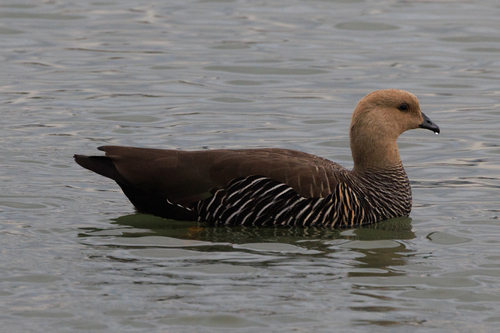
マゼランガン (Chloephaga picta) マゼランガン
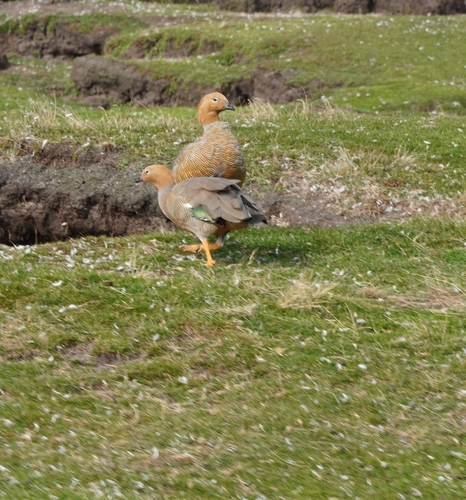
チャガシラコバシガン (Chloephaga rubidiceps) チャガシラコバシガン

メディア

読み込み中…

要点

ウプランドガンとチャガシラコバシガンを区別する最も信頼できるフィールドマークは、ウプランドガンにおける強い性差です:成鳥のオスは主に白く、黒い脚を持ち、メスは縞模様で赤褐色、黄色オレンジの脚を持っています。それに対して、チャガシラコバシガンは性差を示さず、両性ともに赤褐色の頭、灰色とバフの縞模様の体、黒い斑点のあるオレンジ色の脚を持っています。ウプランドガンの幼鳥とメスは、似たような縞模様の腹部のためにチャガシラコバシガンと混同されることがありますが、ウプランドガンははるかに大きく、がっしりとしています。飛行中または静止中に、ウプランドガンのサイズとオスの白い羽毛に注意し、より小さく、より均一な模様のチャガシラコバシガンと比較してください。羽毛が重なっているときは、脚の色と頭の模様が重要です。

識別のコツ

  1. ウプランドガンの性差: ウプランドガンだけが強い性差を示します—オスは主に白く、メスは縞模様で赤褐色です。チャガシラコバシガンは性差を示さず、両性ともに赤褐色の頭と縞模様の体を持っています。
  2. 頭の色と模様: チャガシラコバシガンは常に豊かな赤褐色の頭と首を持ち、白いアイリングがあります。ウプランドガンのオスは白い頭を持ち、メスは赤褐色の頭を持っていますが、明確な白いアイリングはありません。
  3. 脚の色: ウプランドガンのオスは黒い脚を持ち、メスは黄色オレンジの脚を持っています。チャガシラコバシガンは黒い斑点のあるオレンジ色の脚とオレンジ色の手首の突起を持っています—良い光の下で確認してください。
  4. 体のサイズと体格: ウプランドガンははるかに大きく、重いです—特に混合群があるときには、がっしりとした長い首の鳥を探してください。
  5. 羽毛の縞模様: ウプランドガンのメスとチャガシラコバシガンは縞模様の腹部を持っていますが、ウプランドガンのメスは全体的により赤褐色である傾向があり、チャガシラコバシガンはシナモン色の腹を持つより灰色です。
  6. オスのウプランドガン: 主に白い脚の黒いガンを見たら、それはウプランドガンのオスです—チャガシラコバシガンは決して白くありません。
  7. スペキュラムの色: 両種ともに成鳥では緑色のスペキュラムを示しますが、チャガシラコバシガンの幼鳥では黒っぽいまたは灰色です。これは微妙で、飛行中または近くで見るのが最適です。
  8. 翼の覆羽と二次羽: チャガシラコバシガンは灰色の翼と対照的な明るい白い小翼覆羽と二次羽を持っています;ウプランドガンのオスは主に上面が白いため、この対比はあまり明白ではありません。
  9. くちばしの色と形: チャガシラコバシガンは短くて細い黒いくちばしを持っています;ウプランドガンのくちばしは似ていますが、鳥の大きさのためにやや太く見えることがあります。
  10. 鳴き声: ウプランドガンのメスの低い rattling 'a-rrr' と、チャガシラコバシガンのメスの短い、ざらざらしたクワックに耳を傾けてください。オスの鳴き声はどちらも高音ですが、微妙に異なります。
  11. 幼鳥の混同: 幼鳥のウプランドガンのメスは、遠くから見るとチャガシラコバシガンとほとんど区別がつかないことがあります—可能であれば、サイズ、脚の色、頭の模様を使用してください。
  12. 生息地の重複: 両種は似たような開けた生息地を使用します;識別のために位置や生息地だけに頼らないでください。
  13. 混合群: 両種が一緒にいるのを見ると、サイズと羽毛の違いを判断するのがはるかに簡単です—大きくて白いオスのウプランドガンを探し、メスと幼鳥の脚と頭の色を比較してください。
  14. 飛行中の視点: 飛行中、ウプランドガンのオスは上面が白く、チャガシラコバシガンは白い翼のパネルを持つ灰色です;両者ともに緑色のスペキュラムを示しますが、全体の色とサイズがより信頼できます。
  15. 季節と換羽: 強い季節的な羽毛の違いは見られませんが、両種の幼鳥は鈍いです;羽毛が擦り切れているか、鳥が遠い場合は常に複数の特徴を確認してください。

大きさ

ウプランドガンはチャガシラコバシガンよりもかなり大きく、重いです(体重約2930 g)対してチャガシラコバシガンは約1592.5 gです。ウプランドガンは長さ60〜72.5 cmで、チャガシラコバシガンはわずか45〜52.5 cmです。このサイズの差は直接比較すると明らかで、ウプランドガンは地上でも飛行中でもがっしりとして長い首に見えます。ペアを見た場合、サイズの違いは特に明らかです。

羽色

幼鳥とメスのウプランドガンは、縞模様の胸部と側面のためにチャガシラコバシガンに非常に似ていることがありますが、ウプランドガンのオスだけが主に白く、黒い脚を持っています。チャガシラコバシガンの成鳥(両性)は、豊かな赤褐色の頭と首、白いアイリング、シナモン色の腹を持ち、灰色とバフの縞模様があります。彼らの翼は灰色で、虹色の緑色のスペキュラム、黒い初列風切、明るい白い小覆羽と二次羽を持っています。幼鳥のチャガシラコバシガンは鈍く、黒っぽいまたは灰色のスペキュラムを持っていますが、依然として赤褐色の頭と縞模様の体を示しています。ウプランドガンのメスは縞模様の腹部を共有していますが、より赤褐色の頭と黄色オレンジの脚を持ち、オスはよく見れば間違いなく識別できます。飛行中、両種は緑色のスペキュラムを示しますが、ウプランドガンのオスの白い上面と大きなサイズが特徴的です。脚の色は有用なチェックです:ウプランドガンのオスは黒い脚を持ち、メスは黄色オレンジの脚を持っています;チャガシラコバシガンは黒い斑点のあるオレンジ色の脚を持っています。

行動

両種は地上で草を食べる草食性の鳥で、開けた草原や水の近くでよく見られます。ウプランドガンはその大きなサイズのため、混合群の中でより頑丈で優位に見えることがあります。両者は地面に巣を作り、通常は草の中や岩の間にあります。食事や移動における強い行動の違いは、情報源には見られません。

生息環境

両種は南アメリカ南部とフォークランド諸島の開けた草原、牧草地、沿岸湿地に生息しています。彼らはしばしば範囲と生息地が重なり合うため、文脈だけでは診断できません。両者は水の近くに巣を作り、主に陸上で餌を食べます。チャガシラコバシガンは本土での数が制限されており、全体的にあまり一般的ではないかもしれませんが、地域によって豊富さは異なります。

声

ウプランドガンのオスは笛のような 'wheep' を出し、メスは低い rattling 'a-rrr' 音を出します。チャガシラコバシガンのオスは短い笛のような 'seep' を持ち、メスは短いざらざらしたクワックを出します。両種のオスの鳴き声は高音で短いですが、ウプランドガンのメスの鳴き声は低く、チャガシラコバシガンのクワックと比較してより rattling です。鳥が鳴いている場合、声が役立つことがありますが、遠くでは常に診断的ではありません。

より良い説明を送る

比較と同じ項目を使ってください。文章はすぐに公開されます。

The most reliable field mark to separate Upland Goose from Ruddy-headed Goose is the strong sexual dimorphism in Upland Goose: adult males are mostly white with black legs, while females are barred and reddish-brown with yellow-orange legs. In contrast, Ruddy-headed Goose shows no sexual dimorphism—both sexes have a reddish-brown head, gray and buff barred body, and orange legs with black blotches. Juvenile and female Upland Geese can be confused with Ruddy-headed Goose due to similar barred underparts, but Upland is much larger and bulkier. In flight or at rest, note the Upland Goose’s size and the male’s white plumage, versus the smaller, more uniformly patterned Ruddy-headed Goose. Leg color and head pattern are key when plumage overlaps.

  1. Sexual dimorphism in Upland Goose: Only Upland Goose shows strong sex differences—males are mostly white, females barred and reddish-brown. Ruddy-headed Goose shows no sex difference; both sexes have reddish-brown heads and barred bodies.
  2. Head color and pattern: Ruddy-headed Goose always has a rich reddish-brown head and neck with a white eyering, regardless of sex or age. Upland Goose males have white heads; females have a reddish-brown head but lack the clear white eyering.
  3. Leg color: Upland Goose males have black legs, females yellow-orange. Ruddy-headed Goose has orange legs with black blotches and an orange carpal knob—check this in good light.
  4. Body size and bulk: Upland Goose is much larger and heavier—look for a bulkier, longer-necked bird, especially when mixed flocks are present.
  5. Plumage barring: Both Upland Goose females and Ruddy-headed Goose have barred underparts, but Upland Goose females tend to be more reddish overall, while Ruddy-headed Goose is grayer with a cinnamon belly.
  6. Male Upland Goose: If you see a mostly white goose with black legs, it is an Upland Goose male—no Ruddy-headed Goose is ever white.
  7. Speculum color: Both species show a green speculum in adults, but in Ruddy-headed Goose juveniles it is blackish or gray. This is subtle and best seen in flight or close views.
  8. Wing coverts and secondaries: Ruddy-headed Goose has bright white lesser wing-coverts and secondaries contrasting with gray wings; Upland Goose males are mostly white above, so this contrast is less obvious.
  9. Bill color and shape: Ruddy-headed Goose has a short, thin black bill; Upland Goose bill is similar but may appear slightly stouter due to the bird’s larger size.
  10. Vocalizations: Listen for the Upland Goose female's low rattling 'a-rrr' versus the Ruddy-headed Goose female's short, rasping quack. Male calls are both high-pitched but differ subtly.
  11. Juvenile confusion: Juvenile Upland Goose females can be nearly indistinguishable from Ruddy-headed Goose at a distance—use size, leg color, and head pattern if possible.
  12. Habitat overlap: Both species use similar open habitats; do not rely on location or habitat alone for identification.
  13. Mixed flocks: If you see both species together, the size and plumage differences are much easier to judge—look for the larger, white male Upland Goose and compare leg and head color for females and immatures.
  14. Flight views: In flight, Upland Goose males are white above, while Ruddy-headed Goose is gray with white wing panels; both show a green speculum but overall color and size are more reliable.
  15. Season and molt: No strong seasonal plumage differences are noted, but juveniles of both species are duller; always check multiple features if plumage is worn or birds are distant.

Upland Goose is substantially larger and heavier (body mass ~2930 g) than Ruddy-headed Goose (~1592.5 g). Upland Goose measures 60–72.5 cm in length, while Ruddy-headed Goose is only 45–52.5 cm. This size gap is obvious in direct comparison, with Upland Goose appearing bulkier and longer-necked both on the ground and in flight. If you see a pair, the size difference is especially apparent.

Juvenile and female Upland Geese can closely resemble Ruddy-headed Goose due to their barred breast and flanks, but only Upland Goose males are mostly white with black legs. Ruddy-headed Goose adults (both sexes) have a rich reddish-brown head and neck, a white eyering, and a cinnamon belly, with gray and buff barring on the back, breast, and flanks. Their wings are gray with an iridescent green speculum, black primaries, and bright white lesser coverts and secondaries. Juvenile Ruddy-headed Geese are duller, with a blackish or gray speculum, but still show the reddish head and barred body. Upland Goose females share the barred underparts but have a more reddish-brown head and yellow-orange legs, while males are unmistakable if seen well. In flight, both species show a green speculum, but the Upland Goose male’s white upperparts and the larger size are distinctive. Leg color is a useful check: Upland Goose males have black legs, females yellow-orange; Ruddy-headed Goose has orange legs with black blotches.

Both species are terrestrial grazers, often seen feeding in open grasslands or near water. Upland Goose may appear more robust and dominant in mixed flocks due to its larger size. Both nest on the ground, usually in grass or among boulders. There are no strong behavioral differences in feeding or movement noted in the sources.

Both species inhabit open grasslands, meadows, and coastal wetlands in southern South America and the Falkland Islands. They often overlap in range and habitat, so context alone is not diagnostic. Both nest near water and feed mostly on land. Ruddy-headed Goose is more restricted in numbers on the mainland and may be less common overall, but local abundance varies.

Upland Goose males give a whistling 'wheep', while females make a low, rattling 'a-rrr' sound. Ruddy-headed Goose males have a short, whistled 'seep', and females give a short, rasping quack. Both species’ male calls are high-pitched and short, but the Upland Goose’s female call is lower and more rattling compared to the Ruddy-headed’s quack. Voice may help if birds are calling, but is not always diagnostic at distance.

変更を破棄しますか?

保存していない編集があります。今離れると失われます。

マゼランガン · チャガシラコバシガン · 苦手な鳥