

Upland Goose vs Kelp Goose
Chloephaga picta versus Chloephaga hybrida
Play a quiz with Upland Goose and Kelp Goose
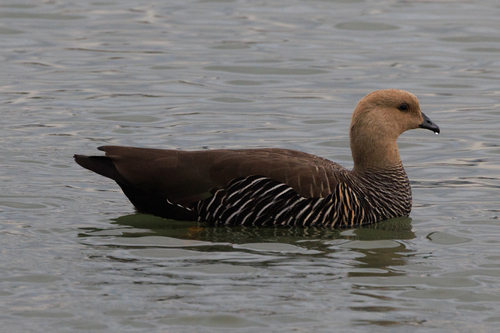 Upland Goose
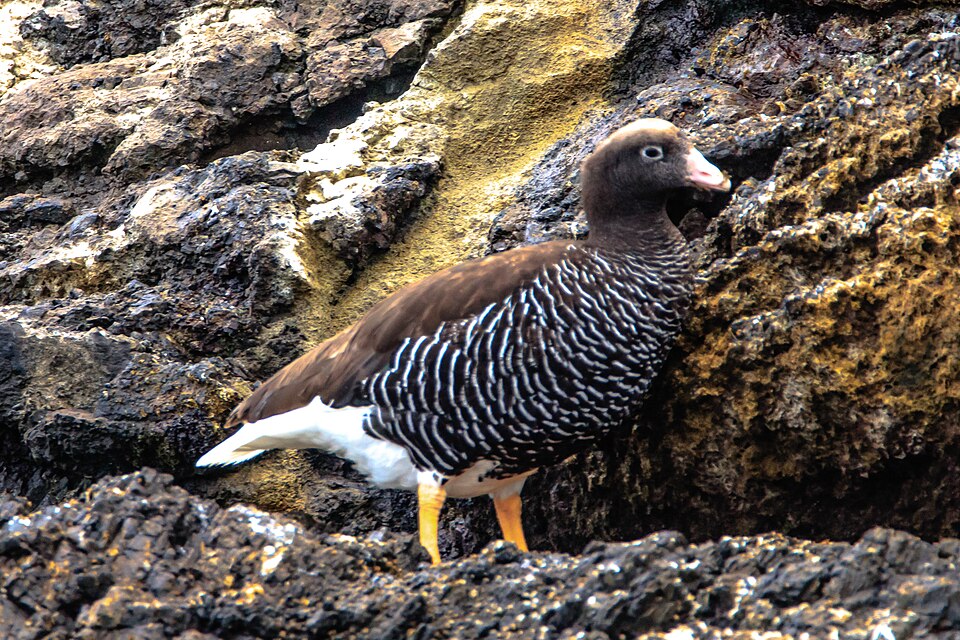 Kelp Goose
In short
Adult males of both Upland Goose and Kelp Goose can appear strikingly similar at a distance due to their mostly white plumage, but careful attention to leg color, bill pattern, and subtle plumage differences is key. Females are more easily separated: Upland Goose females have reddish-brown heads and orange legs, while Kelp Goose females show chocolate brown heads with yellow legs and a pink bill. Juveniles of both species resemble adult females, so leg and bill color remain important. Size differences are minor in the field, but Upland Goose is generally heavier and slightly longer. Habitat overlap is extensive, so field marks are more reliable than context.
Identification tips
- Leg color is a key field mark: Upland Goose males have black legs, females have yellow-orange legs; Kelp Goose males and females both have yellow legs, but males' are brighter.
- Bill color and pattern: Upland Goose has a dark bill in both sexes; Kelp Goose males have a black bill with a pink spot on the maxilla, females have a pink bill.
- Adult male plumage: Both are mostly white, but Upland Goose males may show a greenish-bronze speculum on the inner secondaries (in good light or flight), absent in Kelp Goose.
- Adult female head color: Upland Goose females have a reddish-brown head, Kelp Goose females have a chocolate brown head and pale brown crown.
- Breast and flank barring in females: Both species' females are barred, but Upland Goose females are more rufous overall, while Kelp Goose females have a whiter back and tail.
- Juvenile confusion: Juveniles of both species resemble adult females; use leg and bill color for separation (see above).
- Size: Upland Goose is heavier and slightly longer, but this is subtle unless birds are side by side.
- Habitat: Upland Goose is more likely inland or in grassy meadows, Kelp Goose more coastal, but overlap is significant.
- Voice: If you hear a whistling 'wheep' or rattling 'a-rrr', it's Upland Goose; otherwise, don't rely on voice.
- Male morphs in Upland Goose: Some Upland Goose males have black-barred breasts, others are pure white; both morphs have black legs.
- Kelp Goose juvenile males: Look for brown 'shoulders' and greenish-yellow legs.
- Kelp Goose juvenile females: Note the dark crown and dark uppertail coverts.
- Feet color in the field: In bright light, Kelp Goose feet are more vivid yellow, while Upland Goose female feet are more orange.
- Speculum color: Only Upland Goose males show a greenish-bronze speculum; Kelp Goose lacks this feature.
- Context: If you see a white goose with black legs and a dark bill, it's Upland Goose; yellow legs and a pink bill or spot point to Kelp Goose.
Size
Upland Goose is the larger of the two, with an average mass of about 2930 g compared to Kelp Goose's 2327 g [wikidata]. Upland Goose also tends to be longer (60–72.5 cm) than Kelp Goose (55–65 cm) [wikipedia]. However, these differences are subtle and not always apparent in the field, especially when birds are not side by side. Both species are robust, goose-shaped waterfowl.
Plumage
Juvenile and immature birds of both species resemble adult females, making separation challenging. For all ages, leg and bill color are among the most reliable field marks: Upland Goose females and juveniles have yellow-orange to orange legs and a dark bill, while Kelp Goose females and juveniles have yellow legs and a pink bill (males have a black bill with a pink spot). Adult males of both species are predominantly white, but Upland Goose males have black legs and a greenish-bronze speculum on the inner secondaries (visible in good light or flight), while Kelp Goose males have yellow legs and a black bill with a pink spot. Female Upland Geese have reddish-brown heads and barred breasts, while female Kelp Geese have chocolate brown heads and more extensive white on the back and tail. Juvenile Kelp Goose males have brown 'shoulders' and greenish-yellow legs, while juvenile females have a dark crown and dark uppertail coverts.
Behaviour
Both species are typically seen in pairs or small groups and are often found grazing near water. Their behavior is similar, with both feeding on grasses and coastal vegetation. No major behavioral differences are noted in the sources that would help with field separation.
Habitat
Both species occur in southern South America and the Falkland Islands, often in overlapping habitats near water, including grasslands, meadows, and coastal areas. Upland Goose is more associated with inland grasslands and meadows, while Kelp Goose is more coastal, often near kelp beds and rocky shores, but this is not a reliable separation in areas where both occur.
Voice
Upland Goose males give a whistling 'wheep' and females a low, rattling 'a-rrr'. No vocalization details are provided for Kelp Goose in the sources, so voice is not a reliable separator unless the Upland Goose's distinctive calls are heard.