

Motmot

Upcher's Warbler vs Icterine Warbler

Hippolais languida versus Hippolais icterina

Play a quiz with Upcher's Warbler and Icterine Warbler
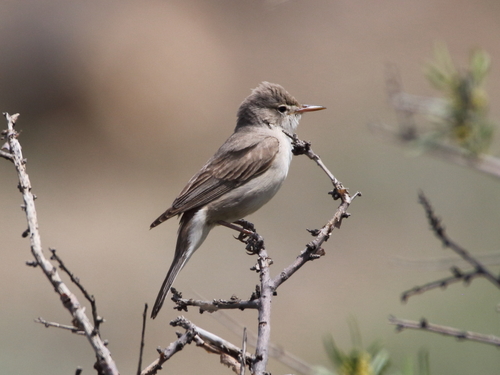
Upcher's Warbler (Hippolais languida) Upcher's Warbler
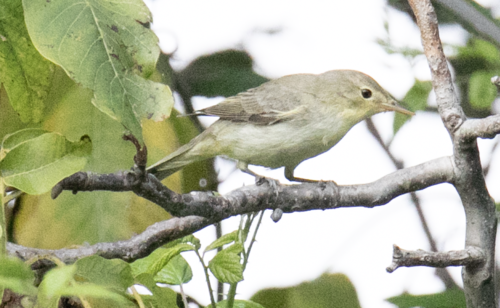
Icterine Warbler (Hippolais icterina) Icterine Warbler

Media

Loading…

In short

The most reliable way to separate Upcher's Warbler from Icterine Warbler is by watching for Upcher's distinctive, frequent tail movements—Upcher's constantly flicks and fans its long tail, unlike the more sedate Icterine. Structurally, Upcher's has a longer tail and bill, but shorter wings, giving it a more elongated look, while Icterine is more compact with a squarer tail and longer wings. Plumage is subtle: Upcher's is generally greyer, while Icterine shows greenish upperparts and yellowish underparts, with a pale wing panel. In the field, focus on tail action and overall shape before relying on color. Both species are similar in size, but their jizz and behavior are the best clues.

Identification tips

  1. Tail movement is key: Upcher's Warbler almost never stops flicking and fanning its long tail, often in a chat-like manner. If you see a Hippolais warbler with persistent tail action, it's almost certainly Upcher's. Icterine Warbler rarely shows this behavior.
  2. Tail shape and length: Upcher's has a noticeably longer and more graduated tail than Icterine, which has a shorter, square-ended tail. This is visible both perched and in flight.
  3. Bill structure: Upcher's bill is slightly longer and finer than Icterine's, which is broad-based and more robust. This is subtle but can help at close range.
  4. Wing length and projection: Icterine Warbler has longer wings relative to its body, giving it a more compact, big-headed look. Upcher's has shorter wings, making it look more elongated.
  5. Wing panel: Icterine Warbler (all ages) shows a pale panel on the folded wing, formed by pale-edged secondaries and tertials. Upcher's lacks this feature and appears more uniformly grey.
  6. Plumage tone: Upcher's is overall greyish, with little contrast between upperparts and underparts. Icterine is brighter, with greenish-grey upperparts and distinctly yellow underparts.
  7. Supercilium and lores: Icterine has a faint yellowish supercilium and pale lores, giving the face a slightly brighter look. Upcher's lacks a strong supercilium and looks plainer-faced.
  8. Eye ring: Both species have pale eye rings, but Icterine's is more obvious and can be a supporting mark.
  9. Leg color: Icterine's legs are grey, sometimes bluish, but this is subtle and not always visible in the field.
  10. Behavior in foraging: Icterine is clumsier and more deliberate in foliage, sometimes flycatching. Upcher's is more active and restless, especially with its tail.
  11. Habitat and range: If you are in mainland Europe in leafy woodland, Icterine is far more likely. In arid, bushy habitats from Turkey to Pakistan, Upcher's is the default.
  12. Song: If you know the songs, they are distinctive and not likely to be confused, but this is not helpful unless you are already familiar with both.
  13. Season and context: Both species are migratory, but their breeding and wintering ranges do not overlap. Always consider location and habitat before relying on subtle plumage marks.
  14. Juvenile confusion: The pale wing panel of Icterine is present in juveniles as well as adults, so this is a reliable mark across ages. Upcher's juveniles remain plain and grey.
  15. When in doubt, watch the tail: If all else fails, persistent tail flicking and fanning is diagnostic for Upcher's and rules out Icterine.

Size

Both species are medium-sized Hippolais warblers and are very close in overall size. Upcher's Warbler is similar in length to Icterine Warbler, but appears more elongated due to its proportionally longer tail and slightly longer bill. Icterine Warbler has a large head, broad-based bill, and longer wings, giving it a somewhat chunkier, more compact look with a shorter, squarer tail. In hand or at close range, these differences are subtle, but in the field, Upcher's often looks more slender and attenuated, while Icterine is stockier.

Plumage

Juvenile and adult Icterine Warblers show a distinctive pale panel on the folded wing, created by pale edges to the secondaries and tertials—this is often visible when perched and can be a useful field mark. Upcher's Warbler lacks this pale wing panel and instead appears rather plain and greyish overall, with little contrast between upperparts and underparts. Icterine Warbler's upperparts are greyish-green, and its underparts are a uniform light yellow, with a faint yellowish supercilium and pale lores. Upcher's is more uniformly grey, lacking strong yellow tones, and has no obvious supercilium. Both species have pale eye rings, but Icterine's is more noticeable. In flight, neither species shows strong contrasting wing or tail patterns, so focus on perched views for plumage clues.

Behaviour

Behavior is a strong separator: Upcher's Warbler is constantly flicking, fanning, and moving its long tail, often in a manner reminiscent of Sylvia warblers or chats. This tail action is very distinctive and is rarely matched by Icterine Warbler, which is more sedate and less animated in its movements. Icterine forages clumsily in foliage, sometimes flycatching, but does not show the same persistent tail activity. Both species are insectivorous, but Icterine may also take fruit in late summer.

Habitat

Upcher's Warbler breeds from Turkey east to Pakistan, favoring dry, bushy habitats in its range. Icterine Warbler is a bird of mainland Europe, breeding in a wide band from northern France and Norway eastwards, and is absent from the range of Upcher's. In the field, range and habitat are often enough to separate them: Upcher's is found in arid, shrubby areas, while Icterine prefers leafy trees and bushes in temperate Europe. Overlap is extremely rare, so context is a strong clue.

Voice

Upcher's Warbler's song is distinctive among Hippolais warblers and is entirely different from Icterine Warbler's song, though both are described as unique within the genus. However, the specifics of their vocalizations are not detailed in the provided notes, so this is not a practical field mark unless you are already familiar with both songs.

Submit a better description

Use the same sections as the comparison. Your text is published immediately.

The most reliable way to separate Upcher's Warbler from Icterine Warbler is by watching for Upcher's distinctive, frequent tail movements—Upcher's constantly flicks and fans its long tail, unlike the more sedate Icterine. Structurally, Upcher's has a longer tail and bill, but shorter wings, giving it a more elongated look, while Icterine is more compact with a squarer tail and longer wings. Plumage is subtle: Upcher's is generally greyer, while Icterine shows greenish upperparts and yellowish underparts, with a pale wing panel. In the field, focus on tail action and overall shape before relying on color. Both species are similar in size, but their jizz and behavior are the best clues.

  1. Tail movement is key: Upcher's Warbler almost never stops flicking and fanning its long tail, often in a chat-like manner. If you see a Hippolais warbler with persistent tail action, it's almost certainly Upcher's. Icterine Warbler rarely shows this behavior.
  2. Tail shape and length: Upcher's has a noticeably longer and more graduated tail than Icterine, which has a shorter, square-ended tail. This is visible both perched and in flight.
  3. Bill structure: Upcher's bill is slightly longer and finer than Icterine's, which is broad-based and more robust. This is subtle but can help at close range.
  4. Wing length and projection: Icterine Warbler has longer wings relative to its body, giving it a more compact, big-headed look. Upcher's has shorter wings, making it look more elongated.
  5. Wing panel: Icterine Warbler (all ages) shows a pale panel on the folded wing, formed by pale-edged secondaries and tertials. Upcher's lacks this feature and appears more uniformly grey.
  6. Plumage tone: Upcher's is overall greyish, with little contrast between upperparts and underparts. Icterine is brighter, with greenish-grey upperparts and distinctly yellow underparts.
  7. Supercilium and lores: Icterine has a faint yellowish supercilium and pale lores, giving the face a slightly brighter look. Upcher's lacks a strong supercilium and looks plainer-faced.
  8. Eye ring: Both species have pale eye rings, but Icterine's is more obvious and can be a supporting mark.
  9. Leg color: Icterine's legs are grey, sometimes bluish, but this is subtle and not always visible in the field.
  10. Behavior in foraging: Icterine is clumsier and more deliberate in foliage, sometimes flycatching. Upcher's is more active and restless, especially with its tail.
  11. Habitat and range: If you are in mainland Europe in leafy woodland, Icterine is far more likely. In arid, bushy habitats from Turkey to Pakistan, Upcher's is the default.
  12. Song: If you know the songs, they are distinctive and not likely to be confused, but this is not helpful unless you are already familiar with both.
  13. Season and context: Both species are migratory, but their breeding and wintering ranges do not overlap. Always consider location and habitat before relying on subtle plumage marks.
  14. Juvenile confusion: The pale wing panel of Icterine is present in juveniles as well as adults, so this is a reliable mark across ages. Upcher's juveniles remain plain and grey.
  15. When in doubt, watch the tail: If all else fails, persistent tail flicking and fanning is diagnostic for Upcher's and rules out Icterine.

Both species are medium-sized Hippolais warblers and are very close in overall size. Upcher's Warbler is similar in length to Icterine Warbler, but appears more elongated due to its proportionally longer tail and slightly longer bill. Icterine Warbler has a large head, broad-based bill, and longer wings, giving it a somewhat chunkier, more compact look with a shorter, squarer tail. In hand or at close range, these differences are subtle, but in the field, Upcher's often looks more slender and attenuated, while Icterine is stockier.

Juvenile and adult Icterine Warblers show a distinctive pale panel on the folded wing, created by pale edges to the secondaries and tertials—this is often visible when perched and can be a useful field mark. Upcher's Warbler lacks this pale wing panel and instead appears rather plain and greyish overall, with little contrast between upperparts and underparts. Icterine Warbler's upperparts are greyish-green, and its underparts are a uniform light yellow, with a faint yellowish supercilium and pale lores. Upcher's is more uniformly grey, lacking strong yellow tones, and has no obvious supercilium. Both species have pale eye rings, but Icterine's is more noticeable. In flight, neither species shows strong contrasting wing or tail patterns, so focus on perched views for plumage clues.

Behavior is a strong separator: Upcher's Warbler is constantly flicking, fanning, and moving its long tail, often in a manner reminiscent of Sylvia warblers or chats. This tail action is very distinctive and is rarely matched by Icterine Warbler, which is more sedate and less animated in its movements. Icterine forages clumsily in foliage, sometimes flycatching, but does not show the same persistent tail activity. Both species are insectivorous, but Icterine may also take fruit in late summer.

Upcher's Warbler breeds from Turkey east to Pakistan, favoring dry, bushy habitats in its range. Icterine Warbler is a bird of mainland Europe, breeding in a wide band from northern France and Norway eastwards, and is absent from the range of Upcher's. In the field, range and habitat are often enough to separate them: Upcher's is found in arid, shrubby areas, while Icterine prefers leafy trees and bushes in temperate Europe. Overlap is extremely rare, so context is a strong clue.

Upcher's Warbler's song is distinctive among Hippolais warblers and is entirely different from Icterine Warbler's song, though both are described as unique within the genus. However, the specifics of their vocalizations are not detailed in the provided notes, so this is not a practical field mark unless you are already familiar with both songs.

Discard your changes?

You have unsaved edits. If you leave now, those changes will be lost.

Upcher's Warbler · Icterine Warbler · My Tricky Birds