

Motmot

Uniform Antshrike vs Black-throated Antbird

Thamnophilus unicolor versus Myrmophylax atrothorax

Play a quiz with Uniform Antshrike and Black-throated Antbird
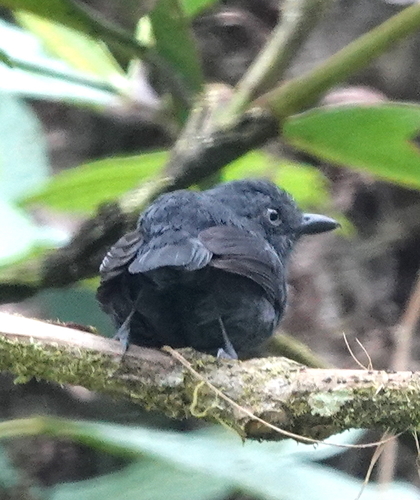
Uniform Antshrike (Thamnophilus unicolor) Uniform Antshrike
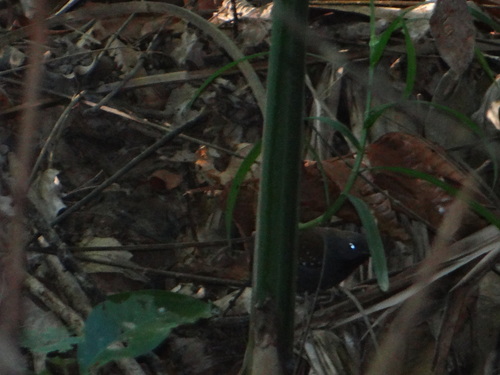
Black-throated Antbird (Myrmophylax atrothorax) Black-throated Antbird

Media

Loading…

In short

The most reliable field mark to separate Uniform Antshrike from Black-throated Antbird is the overall uniformity and lack of strong pattern in the antshrike, versus the bold black throat and white shoulder patch (in males) and contrasting wing covert tips of the antbird. Immature and female Uniform Antshrikes are mostly rufous-brown above and pale below, while Black-throated Antbird females show cinnamon underparts and buff-tipped wing coverts. In the field, Uniform Antshrike is larger and bulkier, with a stouter, hooked bill and a more uniform appearance, while Black-throated Antbird is smaller, slimmer, and shows more contrast in plumage, especially in the wings and face. Both species are typically found low in dense vegetation, but the antbird is more likely near water or in swampy areas.

Identification tips

  1. Uniformity vs. Contrast: Uniform Antshrike is overall plain and unmarked (especially males), while Black-throated Antbird shows strong contrast—black throat and breast, white shoulder patch (males), and pale or buff-tipped wing coverts.
  2. Wing Covert Tips: Black-throated Antbird males have black and white tips on the wing coverts; females have buff tips. Uniform Antshrike's wings are plain, lacking these contrasting tips. This is visible in perched birds and sometimes in flight.
  3. Throat and Breast: Male Black-throated Antbird has a solid black throat and breast, sharply set off from gray face and belly. Uniform Antshrike males are uniform gray to blackish gray with no black throat patch.
  4. Shoulder Patch: Male Black-throated Antbird shows a white patch between the shoulders, absent in Uniform Antshrike.
  5. Female Plumage: Female Uniform Antshrike has a rufous crown, gray face, rufous brown upperparts, and pale rufous underparts—overall more uniform and paler below. Female Black-throated Antbird has a dull reddish yellow-brown crown, dark brown wings with buff tips, white chin/throat, and cinnamon-rufous underparts with dark olive-brown flanks and crissum—more contrast and darker flanks.
  6. Immature Birds: Immature Uniform Antshrikes resemble adult females (rufous brown above, pale below). Immature Black-throated Antbirds are not described but likely resemble females, so look for wing covert tips and underpart color.
  7. Bill Structure: Uniform Antshrike has a noticeably stouter, hooked bill (shrike-like), while Black-throated Antbird's bill is slimmer and less hooked. This is best seen at close range.
  8. Size and Bulk: Uniform Antshrike is larger (14.5–17 cm, 24 g) and bulkier than Black-throated Antbird (13–14 cm, 14–18 g), which is smaller and more slender. Useful if you have a direct comparison or experience with both.
  9. Tail and Wing Shape: No distinctive differences are described, but Uniform Antshrike may appear more robust overall.
  10. Habitat: If the bird is in dense, undisturbed forest interior, Uniform Antshrike is more likely. If near water, in swampy edges, bamboo, or cane, or in regrowing clearings, suspect Black-throated Antbird.
  11. Behavior: Uniform Antshrike is usually solitary or in pairs, rarely in mixed flocks. Black-throated Antbird may be more active along edges and in wetter habitats.
  12. Voice: Uniform Antshrike's song is a short series of nasal notes or a slow, descending series. If you hear this, it's diagnostic. Black-throated Antbird's song is not described here.
  13. Iris and Legs: Uniform Antshrike has a gray-white to whitish gray iris and gray or blue-gray legs; Black-throated Antbird has gray legs (iris color not noted). Not usually diagnostic in the field.
  14. Sexual Dimorphism: Both species are sexually dimorphic, but the antshrike's dimorphism is mostly in overall color (gray male, rufous female), while the antbird's is in throat color and covert tips.
  15. Pitfalls: Female and immature Uniform Antshrikes can be confused with female Black-throated Antbirds, but the antshrike is paler below and lacks the antbird's buff-tipped wing coverts and white throat.

Size

Uniform Antshrike is noticeably larger and heavier (14.5–17 cm, 24 g) compared to Black-throated Antbird (13–14 cm, 14–18 g) [wikipedia][wikidata]. The antshrike also appears bulkier and has a stouter, more hooked bill, while the antbird is more slender overall. These differences are subtle in the field but can be apparent when both species are seen side by side or with experience.

Plumage

No distinctive age-specific upperwing or flight marks are described for either species, but wing covert pattern and overall coloration are key. Adult male Uniform Antshrike is deep gray to blackish gray, sometimes with small white tips on outer tail feathers, and shows little to no contrast in the wing or face. Adult male Black-throated Antbird has a black throat and breast, gray face, dark olive-brown upperparts with a white patch between the shoulders, and blackish gray tail; its wings have black and white tips on the coverts, adding contrast. Females of Uniform Antshrike are rufous-crowned with rufous-brown upperparts and pale rufous underparts, while female Black-throated Antbird has a dull reddish yellow-brown crown, dark brown wings with light buff tips on the coverts, white chin/throat, and cinnamon-rufous underparts with darker flanks. Immature Uniform Antshrikes resemble adult females, while immature antbirds are not described in detail but likely follow the female pattern. The antbird's wing covert tips (white in males, buff in females) are a key difference from the uniform wings of the antshrike.

Behaviour

Both species forage low in dense vegetation, but Uniform Antshrike is more often solitary or in pairs and rarely joins mixed-species flocks. It typically gleans prey from leaves and branches, sometimes probing dead leaf clusters. Black-throated Antbird also stays in the understorey and is associated with dense, wet habitats, often near water, and may be more active along edges and in regrowing clearings. Both species are secretive and can be difficult to see well.

Habitat

Uniform Antshrike is found in humid forests of Colombia, Ecuador, and Peru, usually in dense undergrowth. Black-throated Antbird has a broader range (Bolivia, Brazil, Colombia, Ecuador, French Guiana, Guyana, Peru, Suriname, Venezuela) and is closely associated with water: it favors swampy forest edges, riverine thickets, bamboo, and cane stands, and is often found in regrowing clearings. If the bird is in a wet, edge, or bamboo habitat, Black-throated Antbird is more likely; Uniform Antshrike prefers denser, less disturbed forest.

Voice

Uniform Antshrike gives a simple, short series of nasal notes ("anh, anh, anh"), sometimes with a rising inflection, or a slow series of high, descending notes. Calls include a rattled "kar'r'r'r", a descending whine, and a throaty, descending caw. Black-throated Antbird's vocalizations are not described in these notes, so voice is only useful if you know the antshrike's song; otherwise, rely on visual marks.

Submit a better description

Use the same sections as the comparison. Your text is published immediately.

The most reliable field mark to separate Uniform Antshrike from Black-throated Antbird is the overall uniformity and lack of strong pattern in the antshrike, versus the bold black throat and white shoulder patch (in males) and contrasting wing covert tips of the antbird. Immature and female Uniform Antshrikes are mostly rufous-brown above and pale below, while Black-throated Antbird females show cinnamon underparts and buff-tipped wing coverts. In the field, Uniform Antshrike is larger and bulkier, with a stouter, hooked bill and a more uniform appearance, while Black-throated Antbird is smaller, slimmer, and shows more contrast in plumage, especially in the wings and face. Both species are typically found low in dense vegetation, but the antbird is more likely near water or in swampy areas.

  1. Uniformity vs. Contrast: Uniform Antshrike is overall plain and unmarked (especially males), while Black-throated Antbird shows strong contrast—black throat and breast, white shoulder patch (males), and pale or buff-tipped wing coverts.
  2. Wing Covert Tips: Black-throated Antbird males have black and white tips on the wing coverts; females have buff tips. Uniform Antshrike's wings are plain, lacking these contrasting tips. This is visible in perched birds and sometimes in flight.
  3. Throat and Breast: Male Black-throated Antbird has a solid black throat and breast, sharply set off from gray face and belly. Uniform Antshrike males are uniform gray to blackish gray with no black throat patch.
  4. Shoulder Patch: Male Black-throated Antbird shows a white patch between the shoulders, absent in Uniform Antshrike.
  5. Female Plumage: Female Uniform Antshrike has a rufous crown, gray face, rufous brown upperparts, and pale rufous underparts—overall more uniform and paler below. Female Black-throated Antbird has a dull reddish yellow-brown crown, dark brown wings with buff tips, white chin/throat, and cinnamon-rufous underparts with dark olive-brown flanks and crissum—more contrast and darker flanks.
  6. Immature Birds: Immature Uniform Antshrikes resemble adult females (rufous brown above, pale below). Immature Black-throated Antbirds are not described but likely resemble females, so look for wing covert tips and underpart color.
  7. Bill Structure: Uniform Antshrike has a noticeably stouter, hooked bill (shrike-like), while Black-throated Antbird's bill is slimmer and less hooked. This is best seen at close range.
  8. Size and Bulk: Uniform Antshrike is larger (14.5–17 cm, 24 g) and bulkier than Black-throated Antbird (13–14 cm, 14–18 g), which is smaller and more slender. Useful if you have a direct comparison or experience with both.
  9. Tail and Wing Shape: No distinctive differences are described, but Uniform Antshrike may appear more robust overall.
  10. Habitat: If the bird is in dense, undisturbed forest interior, Uniform Antshrike is more likely. If near water, in swampy edges, bamboo, or cane, or in regrowing clearings, suspect Black-throated Antbird.
  11. Behavior: Uniform Antshrike is usually solitary or in pairs, rarely in mixed flocks. Black-throated Antbird may be more active along edges and in wetter habitats.
  12. Voice: Uniform Antshrike's song is a short series of nasal notes or a slow, descending series. If you hear this, it's diagnostic. Black-throated Antbird's song is not described here.
  13. Iris and Legs: Uniform Antshrike has a gray-white to whitish gray iris and gray or blue-gray legs; Black-throated Antbird has gray legs (iris color not noted). Not usually diagnostic in the field.
  14. Sexual Dimorphism: Both species are sexually dimorphic, but the antshrike's dimorphism is mostly in overall color (gray male, rufous female), while the antbird's is in throat color and covert tips.
  15. Pitfalls: Female and immature Uniform Antshrikes can be confused with female Black-throated Antbirds, but the antshrike is paler below and lacks the antbird's buff-tipped wing coverts and white throat.

Uniform Antshrike is noticeably larger and heavier (14.5–17 cm, 24 g) compared to Black-throated Antbird (13–14 cm, 14–18 g) [wikipedia][wikidata]. The antshrike also appears bulkier and has a stouter, more hooked bill, while the antbird is more slender overall. These differences are subtle in the field but can be apparent when both species are seen side by side or with experience.

No distinctive age-specific upperwing or flight marks are described for either species, but wing covert pattern and overall coloration are key. Adult male Uniform Antshrike is deep gray to blackish gray, sometimes with small white tips on outer tail feathers, and shows little to no contrast in the wing or face. Adult male Black-throated Antbird has a black throat and breast, gray face, dark olive-brown upperparts with a white patch between the shoulders, and blackish gray tail; its wings have black and white tips on the coverts, adding contrast. Females of Uniform Antshrike are rufous-crowned with rufous-brown upperparts and pale rufous underparts, while female Black-throated Antbird has a dull reddish yellow-brown crown, dark brown wings with light buff tips on the coverts, white chin/throat, and cinnamon-rufous underparts with darker flanks. Immature Uniform Antshrikes resemble adult females, while immature antbirds are not described in detail but likely follow the female pattern. The antbird's wing covert tips (white in males, buff in females) are a key difference from the uniform wings of the antshrike.

Both species forage low in dense vegetation, but Uniform Antshrike is more often solitary or in pairs and rarely joins mixed-species flocks. It typically gleans prey from leaves and branches, sometimes probing dead leaf clusters. Black-throated Antbird also stays in the understorey and is associated with dense, wet habitats, often near water, and may be more active along edges and in regrowing clearings. Both species are secretive and can be difficult to see well.

Uniform Antshrike is found in humid forests of Colombia, Ecuador, and Peru, usually in dense undergrowth. Black-throated Antbird has a broader range (Bolivia, Brazil, Colombia, Ecuador, French Guiana, Guyana, Peru, Suriname, Venezuela) and is closely associated with water: it favors swampy forest edges, riverine thickets, bamboo, and cane stands, and is often found in regrowing clearings. If the bird is in a wet, edge, or bamboo habitat, Black-throated Antbird is more likely; Uniform Antshrike prefers denser, less disturbed forest.

Uniform Antshrike gives a simple, short series of nasal notes ("anh, anh, anh"), sometimes with a rising inflection, or a slow series of high, descending notes. Calls include a rattled "kar'r'r'r", a descending whine, and a throaty, descending caw. Black-throated Antbird's vocalizations are not described in these notes, so voice is only useful if you know the antshrike's song; otherwise, rely on visual marks.

Discard your changes?

You have unsaved edits. If you leave now, those changes will be lost.

Uniform Antshrike · Black-throated Antbird · My Tricky Birds