

Motmot

Tundra Bean Goose vs Barnacle Goose

Anser serrirostris versus Branta leucopsis

Play a quiz with Tundra Bean Goose and Barnacle Goose
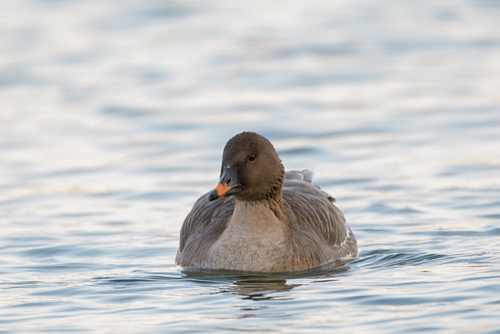
Tundra Bean Goose (Anser serrirostris) Tundra Bean Goose
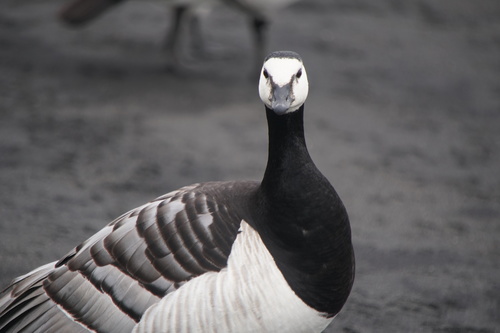
Barnacle Goose (Branta leucopsis) Barnacle Goose

Media

Loading…

In short

The most reliable way to separate Tundra Bean Goose from Barnacle Goose is by overall plumage: Tundra Bean Goose is a classic grey-brown Anser with orange legs and a bicolored bill, while Barnacle Goose is a striking black-and-white Branta with a white face and black neck. In flight or at rest, Barnacle Goose shows a sharp contrast between its black neck and white face, and a silvery-grey barred back, while Tundra Bean Goose is much plainer and browner. Bill and leg color are also key: Tundra Bean Goose has orange legs and a mostly black bill with an orange band, Barnacle Goose has black legs and a small black bill. Size can overlap but Tundra Bean Goose is generally larger and bulkier.

Identification tips

  1. Face and neck pattern: Barnacle Goose always shows a white face and black neck, unique among geese in the region; Tundra Bean Goose has a plain brownish-grey head and neck with no white.
  2. Bill color and shape: Tundra Bean Goose has a black bill with a distinct orange band (band width varies by subspecies), and the bill is longer and stouter; Barnacle Goose has a small, stubby all-black bill.
  3. Leg color: Tundra Bean Goose has bright orange legs and feet; Barnacle Goose has black legs and feet.
  4. Upperwing pattern in flight: Barnacle Goose shows silvery-grey underwing linings and a white rump patch; Tundra Bean Goose has dark brown upperwing-coverts with narrow white fringes and no white rump.
  5. Back and mantle: Barnacle Goose has a barred black-and-white (silvery-grey) back; Tundra Bean Goose is uniformly brownish-grey above with no barring.
  6. Body shape and size: Tundra Bean Goose is larger, longer-necked, and bulkier; Barnacle Goose is more compact and short-necked.
  7. Juvenile differences: Juvenile Barnacle Geese resemble adults in pattern but have rounded mantle and flank feather tips; Tundra Bean Goose juveniles are duller but otherwise similar to adults, never showing black-and-white face or barring.
  8. Flight silhouette: Barnacle Goose appears compact with a short neck and rapid wingbeats; Tundra Bean Goose looks heavier, longer-necked, and flies with steadier, slower wingbeats.
  9. Habitat context: Barnacle Goose is more coastal and estuarine, Tundra Bean Goose more often inland in open wetlands or fields.
  10. Association with other species: Barnacle Goose may be seen with other Branta geese (e.g., Brent Goose), while Tundra Bean Goose associates with other Anser geese (e.g., White-fronted Goose).
  11. Pitfall – size overlap: Some small Tundra Bean Geese (rossicus) can approach Barnacle Goose in size, but structure and plumage always differ.
  12. Pitfall – distant views: At great distance, Barnacle Goose's white face may appear as a pale spot; check for black neck and overall pattern.
  13. Pitfall – odd light: In poor light, Barnacle Goose's silvery back may look paler, but face and neck pattern remain diagnostic.
  14. No white on Tundra Bean Goose face: Any white on the face or neck rules out Tundra Bean Goose.
  15. No orange on Barnacle Goose: Any orange on bill or legs rules out Barnacle Goose.

Size

Tundra Bean Goose is the larger of the two, with a length of 68–90 cm and a wingspan of 140–174 cm, while Barnacle Goose is 55–70 cm long with a wingspan of 120–145 cm [wikipedia]. Tundra Bean Goose can weigh up to 4 kg, with males averaging 3.2 kg and females 2.84 kg, while Barnacle Goose averages around 1.7 kg (range 1.2–2.2 kg) [wikidata]. In the field, Tundra Bean Goose appears bulkier, longer-necked, and heavier-bodied compared to the more compact, short-necked Barnacle Goose.

Plumage

Juvenile and adult Barnacle Geese of all ages are instantly separated from Tundra Bean Goose by their bold black neck and white face, which are never shown by any Anser. In flight, Barnacle Goose shows a conspicuous white rump patch and silvery-grey underwing linings, plus a barred grey-and-black back. Tundra Bean Goose, regardless of age, is overall brownish-grey with dark brown upperwing-coverts narrowly fringed white, and lacks any white on the face, neck, or rump. Its bill is black with an orange band, and legs are orange. Barnacle Goose has black legs and a small black bill. Juvenile Barnacle Geese can be told by the rounded tips to mantle and flank feathers, but still show the same black-and-white pattern as adults. Tundra Bean Goose juveniles are similar to adults but may be slightly duller; their upperwing pattern is always dark brown with narrow white fringes, not barred or silvery.

Behaviour

Both species are gregarious and often seen in flocks, especially outside the breeding season. Tundra Bean Goose typically feeds in open fields or wetlands, walking with a steady, purposeful gait. Barnacle Goose is also social but often appears more upright and alert, and may be seen grazing on short grass or coastal turf. In flight, Barnacle Goose flocks are tight and direct, with rapid wingbeats, while Tundra Bean Goose flocks are looser and birds appear heavier and more labored in flight.

Habitat

Tundra Bean Goose breeds in northern Siberian tundra and winters further south in Asia, usually in open wetlands, lakes, and agricultural fields. Barnacle Goose breeds in Arctic islands and winters in temperate coastal areas, favoring grassy fields, estuaries, and saltmarshes. In mixed flocks, habitat may overlap, but Barnacle Goose is more likely in coastal or estuarine settings, while Tundra Bean Goose is more often inland.

Submit a better description

Use the same sections as the comparison. Your text is published immediately.

The most reliable way to separate Tundra Bean Goose from Barnacle Goose is by overall plumage: Tundra Bean Goose is a classic grey-brown Anser with orange legs and a bicolored bill, while Barnacle Goose is a striking black-and-white Branta with a white face and black neck. In flight or at rest, Barnacle Goose shows a sharp contrast between its black neck and white face, and a silvery-grey barred back, while Tundra Bean Goose is much plainer and browner. Bill and leg color are also key: Tundra Bean Goose has orange legs and a mostly black bill with an orange band, Barnacle Goose has black legs and a small black bill. Size can overlap but Tundra Bean Goose is generally larger and bulkier.

  1. Face and neck pattern: Barnacle Goose always shows a white face and black neck, unique among geese in the region; Tundra Bean Goose has a plain brownish-grey head and neck with no white.
  2. Bill color and shape: Tundra Bean Goose has a black bill with a distinct orange band (band width varies by subspecies), and the bill is longer and stouter; Barnacle Goose has a small, stubby all-black bill.
  3. Leg color: Tundra Bean Goose has bright orange legs and feet; Barnacle Goose has black legs and feet.
  4. Upperwing pattern in flight: Barnacle Goose shows silvery-grey underwing linings and a white rump patch; Tundra Bean Goose has dark brown upperwing-coverts with narrow white fringes and no white rump.
  5. Back and mantle: Barnacle Goose has a barred black-and-white (silvery-grey) back; Tundra Bean Goose is uniformly brownish-grey above with no barring.
  6. Body shape and size: Tundra Bean Goose is larger, longer-necked, and bulkier; Barnacle Goose is more compact and short-necked.
  7. Juvenile differences: Juvenile Barnacle Geese resemble adults in pattern but have rounded mantle and flank feather tips; Tundra Bean Goose juveniles are duller but otherwise similar to adults, never showing black-and-white face or barring.
  8. Flight silhouette: Barnacle Goose appears compact with a short neck and rapid wingbeats; Tundra Bean Goose looks heavier, longer-necked, and flies with steadier, slower wingbeats.
  9. Habitat context: Barnacle Goose is more coastal and estuarine, Tundra Bean Goose more often inland in open wetlands or fields.
  10. Association with other species: Barnacle Goose may be seen with other Branta geese (e.g., Brent Goose), while Tundra Bean Goose associates with other Anser geese (e.g., White-fronted Goose).
  11. Pitfall – size overlap: Some small Tundra Bean Geese (rossicus) can approach Barnacle Goose in size, but structure and plumage always differ.
  12. Pitfall – distant views: At great distance, Barnacle Goose's white face may appear as a pale spot; check for black neck and overall pattern.
  13. Pitfall – odd light: In poor light, Barnacle Goose's silvery back may look paler, but face and neck pattern remain diagnostic.
  14. No white on Tundra Bean Goose face: Any white on the face or neck rules out Tundra Bean Goose.
  15. No orange on Barnacle Goose: Any orange on bill or legs rules out Barnacle Goose.

Tundra Bean Goose is the larger of the two, with a length of 68–90 cm and a wingspan of 140–174 cm, while Barnacle Goose is 55–70 cm long with a wingspan of 120–145 cm [wikipedia]. Tundra Bean Goose can weigh up to 4 kg, with males averaging 3.2 kg and females 2.84 kg, while Barnacle Goose averages around 1.7 kg (range 1.2–2.2 kg) [wikidata]. In the field, Tundra Bean Goose appears bulkier, longer-necked, and heavier-bodied compared to the more compact, short-necked Barnacle Goose.

Juvenile and adult Barnacle Geese of all ages are instantly separated from Tundra Bean Goose by their bold black neck and white face, which are never shown by any Anser. In flight, Barnacle Goose shows a conspicuous white rump patch and silvery-grey underwing linings, plus a barred grey-and-black back. Tundra Bean Goose, regardless of age, is overall brownish-grey with dark brown upperwing-coverts narrowly fringed white, and lacks any white on the face, neck, or rump. Its bill is black with an orange band, and legs are orange. Barnacle Goose has black legs and a small black bill. Juvenile Barnacle Geese can be told by the rounded tips to mantle and flank feathers, but still show the same black-and-white pattern as adults. Tundra Bean Goose juveniles are similar to adults but may be slightly duller; their upperwing pattern is always dark brown with narrow white fringes, not barred or silvery.

Both species are gregarious and often seen in flocks, especially outside the breeding season. Tundra Bean Goose typically feeds in open fields or wetlands, walking with a steady, purposeful gait. Barnacle Goose is also social but often appears more upright and alert, and may be seen grazing on short grass or coastal turf. In flight, Barnacle Goose flocks are tight and direct, with rapid wingbeats, while Tundra Bean Goose flocks are looser and birds appear heavier and more labored in flight.

Tundra Bean Goose breeds in northern Siberian tundra and winters further south in Asia, usually in open wetlands, lakes, and agricultural fields. Barnacle Goose breeds in Arctic islands and winters in temperate coastal areas, favoring grassy fields, estuaries, and saltmarshes. In mixed flocks, habitat may overlap, but Barnacle Goose is more likely in coastal or estuarine settings, while Tundra Bean Goose is more often inland.

Discard your changes?

You have unsaved edits. If you leave now, those changes will be lost.

Tundra Bean Goose · Barnacle Goose · My Tricky Birds