
Motmot

Trumpeter Finch vs Mongolian Finch

Bucanetes githagineus versus Bucanetes mongolicus

Play a quiz with Trumpeter Finch and Mongolian Finch
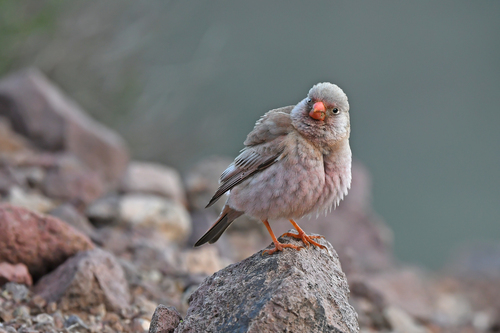
Trumpeter Finch (Bucanetes githagineus) Trumpeter Finch
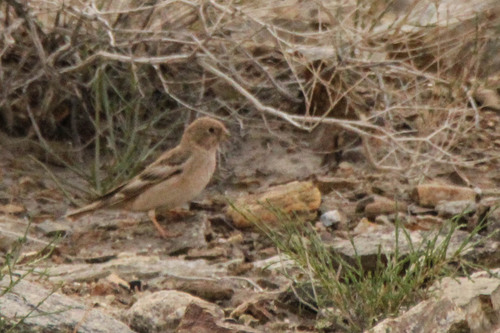
Mongolian Finch (Bucanetes mongolicus) Mongolian Finch

Media

Loading…

In short

The most reliable field mark between Trumpeter Finch and Mongolian Finch is the bill color: Trumpeter Finch males in breeding plumage have a distinctly red bill, while Mongolian Finch shows a greyish-yellow bill year-round. In flight or at rest, Mongolian Finch males also show more extensive white and pink in the wings, whereas Trumpeter Finch is plainer with less contrast. Females and non-breeding birds of both species can look washed out, but Mongolian Finch females lack the pink tones almost entirely. Structure is similar, but careful attention to bill color and wing pattern, especially in adult males, is key for separation.

Identification tips

  1. Bill color is critical: In adult males, Trumpeter Finch shows a bright red bill in breeding plumage, while Mongolian Finch always has a greyish-yellow bill. This is often visible even at a distance in good light.
  2. Wing pattern in males: Mongolian Finch males show extensive white and pink in the wings, visible both at rest and in flight. Trumpeter Finch lacks this contrast and appears more uniformly sandy or pale brown.
  3. Pink tones: Trumpeter Finch males have pink on the breast, rump, and tail, but Mongolian Finch males have a pink flush to the face and underparts, with the pink extending into the wings as well. Females of Mongolian Finch have almost no pink, while Trumpeter Finch females can show a faint pink wash.
  4. Non-breeding and female confusion: Outside the breeding season, both species become duller, but Mongolian Finch retains a greyish-yellow bill and the wing contrast, while Trumpeter Finch becomes more uniformly pale and washed out with a duller bill.
  5. Juvenile/immature birds: Detailed descriptions are lacking, but Mongolian Finch's wing pattern (white and pink) is present, though less marked, even in non-breeding or young birds. Trumpeter Finch juveniles are plainer and lack strong wing contrast.
  6. Tail pattern: Trumpeter Finch has a pink tail with dark terminal feathers; Mongolian Finch's tail pattern is not described as distinctive, so this may help if visible.
  7. Head and neck color: Trumpeter Finch males show a grey head and neck, while Mongolian Finch males do not have this feature as prominently.
  8. Habitat context: In North Africa and Spain, Trumpeter Finch is the expected species; in Central Asia or eastern Turkey, Mongolian Finch is more likely. Overlap is possible in some regions, so do not rely solely on location.
  9. Flock composition: Trumpeter Finch can form large flocks, sometimes with other finches; Mongolian Finch is less often reported in such mixed groups.
  10. Voice: If you hear a buzzing, nasal trill like a tin trumpet, it is Trumpeter Finch. Mongolian Finch's vocalizations are not described, so absence of this call is not diagnostic.
  11. Structure: Both species are similar in size and shape—small, long-winged, large-headed, with a short, thick bill. Structural differences are not reliable for separation.
  12. Pitfalls: Dull females and immatures of both species can be very similar. Focus on bill color and wing pattern, and avoid over-reliance on pink tones alone, especially in poor light or out of breeding season.
  13. Flight views: In flight, look for the Mongolian Finch's white and pink wing panels versus the more uniform wings of Trumpeter Finch.
  14. Perched views: Bill color and wing pattern are still the best clues when birds are perched, especially in males.
  15. Seasonal context: Breeding males are easiest to separate; non-breeding, female, and immature birds require more caution and reliance on subtle marks.

Size

Both species are small, long-winged finches with a large head and short, thick bill. There is no diagnostic size difference noted between Trumpeter Finch and Mongolian Finch in the available sources; both are similar in overall proportions and mass. Size alone is not a reliable field mark for separating these two species.

Plumage

For adult males in breeding plumage, Trumpeter Finch has a red bill, grey head and neck, pale brown upperparts, and pink on the breast, rump, and tail, with the tail tipped dark. Mongolian Finch males have a greyish-yellow bill and a pink flush to the face and underparts, but most notably, they show extensive white and pink in the wings—this is visible both at rest and in flight, and is the best plumage clue. Females and non-breeding birds of both species are duller: Trumpeter Finch becomes a washed-out version of the male, with less pink and a duller bill, while Mongolian Finch females have little to no pink and retain the greyish-yellow bill. Juvenile and immature plumages are not described in detail, but the wing pattern in Mongolian Finch (white and pink) is present, though less marked, even outside breeding plumage, while Trumpeter Finch remains plainer. In summary, Mongolian Finch is always more contrasting in the wing, and Trumpeter Finch is more uniform and sandy overall.

Behaviour

Both species are ground-dwelling finches that can be seen singly, in pairs, or in small flocks. Trumpeter Finch is noted for forming larger flocks outside the breeding season, sometimes with other finch species. Both species are likely to be seen flying to water in the late afternoon or evening. There is no strong behavioral difference in foraging or flight style noted in the sources that would reliably separate them in the field.

Habitat

Trumpeter Finch is primarily a desert species, found from North Africa and Spain through southern Asia, and is often associated with arid, open landscapes. Mongolian Finch occupies similar steppe and semi-desert habitats but is more eastern in distribution, with a core range in Central Asia and outlying populations in Turkey. Overlap is possible in some regions, but Mongolian Finch is less likely in western North Africa or Spain. Both species can occur as vagrants outside their core ranges, so habitat alone is not always diagnostic, but Trumpeter Finch is generally the default in the western Palearctic deserts.

Voice

Trumpeter Finch has a distinctive buzzing, nasal trill described as 'like a tin trumpet.' No specific vocalization details are provided for Mongolian Finch in the available notes, so voice is not a reliable separator unless Trumpeter Finch's unique call is heard.

Submit a better description

Use the same sections as the comparison. Your text is published immediately.

The most reliable field mark between Trumpeter Finch and Mongolian Finch is the bill color: Trumpeter Finch males in breeding plumage have a distinctly red bill, while Mongolian Finch shows a greyish-yellow bill year-round. In flight or at rest, Mongolian Finch males also show more extensive white and pink in the wings, whereas Trumpeter Finch is plainer with less contrast. Females and non-breeding birds of both species can look washed out, but Mongolian Finch females lack the pink tones almost entirely. Structure is similar, but careful attention to bill color and wing pattern, especially in adult males, is key for separation.

  1. Bill color is critical: In adult males, Trumpeter Finch shows a bright red bill in breeding plumage, while Mongolian Finch always has a greyish-yellow bill. This is often visible even at a distance in good light.
  2. Wing pattern in males: Mongolian Finch males show extensive white and pink in the wings, visible both at rest and in flight. Trumpeter Finch lacks this contrast and appears more uniformly sandy or pale brown.
  3. Pink tones: Trumpeter Finch males have pink on the breast, rump, and tail, but Mongolian Finch males have a pink flush to the face and underparts, with the pink extending into the wings as well. Females of Mongolian Finch have almost no pink, while Trumpeter Finch females can show a faint pink wash.
  4. Non-breeding and female confusion: Outside the breeding season, both species become duller, but Mongolian Finch retains a greyish-yellow bill and the wing contrast, while Trumpeter Finch becomes more uniformly pale and washed out with a duller bill.
  5. Juvenile/immature birds: Detailed descriptions are lacking, but Mongolian Finch's wing pattern (white and pink) is present, though less marked, even in non-breeding or young birds. Trumpeter Finch juveniles are plainer and lack strong wing contrast.
  6. Tail pattern: Trumpeter Finch has a pink tail with dark terminal feathers; Mongolian Finch's tail pattern is not described as distinctive, so this may help if visible.
  7. Head and neck color: Trumpeter Finch males show a grey head and neck, while Mongolian Finch males do not have this feature as prominently.
  8. Habitat context: In North Africa and Spain, Trumpeter Finch is the expected species; in Central Asia or eastern Turkey, Mongolian Finch is more likely. Overlap is possible in some regions, so do not rely solely on location.
  9. Flock composition: Trumpeter Finch can form large flocks, sometimes with other finches; Mongolian Finch is less often reported in such mixed groups.
  10. Voice: If you hear a buzzing, nasal trill like a tin trumpet, it is Trumpeter Finch. Mongolian Finch's vocalizations are not described, so absence of this call is not diagnostic.
  11. Structure: Both species are similar in size and shape—small, long-winged, large-headed, with a short, thick bill. Structural differences are not reliable for separation.
  12. Pitfalls: Dull females and immatures of both species can be very similar. Focus on bill color and wing pattern, and avoid over-reliance on pink tones alone, especially in poor light or out of breeding season.
  13. Flight views: In flight, look for the Mongolian Finch's white and pink wing panels versus the more uniform wings of Trumpeter Finch.
  14. Perched views: Bill color and wing pattern are still the best clues when birds are perched, especially in males.
  15. Seasonal context: Breeding males are easiest to separate; non-breeding, female, and immature birds require more caution and reliance on subtle marks.

Both species are small, long-winged finches with a large head and short, thick bill. There is no diagnostic size difference noted between Trumpeter Finch and Mongolian Finch in the available sources; both are similar in overall proportions and mass. Size alone is not a reliable field mark for separating these two species.

For adult males in breeding plumage, Trumpeter Finch has a red bill, grey head and neck, pale brown upperparts, and pink on the breast, rump, and tail, with the tail tipped dark. Mongolian Finch males have a greyish-yellow bill and a pink flush to the face and underparts, but most notably, they show extensive white and pink in the wings—this is visible both at rest and in flight, and is the best plumage clue. Females and non-breeding birds of both species are duller: Trumpeter Finch becomes a washed-out version of the male, with less pink and a duller bill, while Mongolian Finch females have little to no pink and retain the greyish-yellow bill. Juvenile and immature plumages are not described in detail, but the wing pattern in Mongolian Finch (white and pink) is present, though less marked, even outside breeding plumage, while Trumpeter Finch remains plainer. In summary, Mongolian Finch is always more contrasting in the wing, and Trumpeter Finch is more uniform and sandy overall.

Both species are ground-dwelling finches that can be seen singly, in pairs, or in small flocks. Trumpeter Finch is noted for forming larger flocks outside the breeding season, sometimes with other finch species. Both species are likely to be seen flying to water in the late afternoon or evening. There is no strong behavioral difference in foraging or flight style noted in the sources that would reliably separate them in the field.

Trumpeter Finch is primarily a desert species, found from North Africa and Spain through southern Asia, and is often associated with arid, open landscapes. Mongolian Finch occupies similar steppe and semi-desert habitats but is more eastern in distribution, with a core range in Central Asia and outlying populations in Turkey. Overlap is possible in some regions, but Mongolian Finch is less likely in western North Africa or Spain. Both species can occur as vagrants outside their core ranges, so habitat alone is not always diagnostic, but Trumpeter Finch is generally the default in the western Palearctic deserts.

Trumpeter Finch has a distinctive buzzing, nasal trill described as 'like a tin trumpet.' No specific vocalization details are provided for Mongolian Finch in the available notes, so voice is not a reliable separator unless Trumpeter Finch's unique call is heard.

Discard your changes?

You have unsaved edits. If you leave now, those changes will be lost.

Trumpeter Finch · Mongolian Finch · My Tricky Birds