

Motmot

Todd's Antwren vs Ancient Antwren

Herpsilochmus stictocephalus versus Herpsilochmus gentryi

Play a quiz with Todd's Antwren and Ancient Antwren
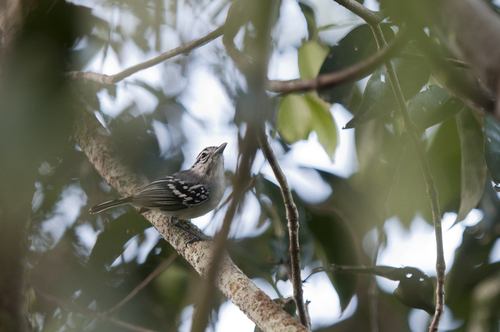
Todd's Antwren (Herpsilochmus stictocephalus) Todd's Antwren
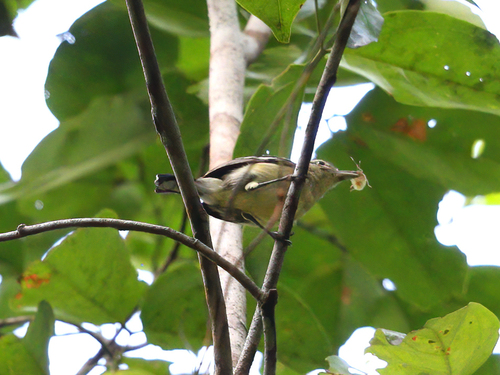
Ancient Antwren (Herpsilochmus gentryi) Ancient Antwren

Media

Loading…

In short

The most reliable field mark between Todd's Antwren and Ancient Antwren is the color of the underparts and supercilium: Ancient Antwren (especially males) shows distinctly yellowish underparts and a yellowish supercilium, while Todd's Antwren is pale gray below with a white supercilium. Adult males of both have black crowns, but Todd's has a white-streaked forehead and supercilium, while Ancient's is solid black above the eye. Female and immature plumages differ in crown spotting and underpart color, with Ancient Antwren females showing yellow or whitish crown spots and darker olive underparts, and Todd's females showing a buff tinge and paler, buffy underparts. Both species are canopy foragers, but their ranges do not overlap: Todd's is found in the Guianas and northeast Brazil, Ancient in northern Peru and southeast Ecuador. Voice is not well described for Ancient, but Todd's has a distinctive series of descending notes.

Identification tips

  1. Underpart color is key: Ancient Antwren (especially males) shows yellowish throat and underparts, while Todd's Antwren is pale gray or buff below (females) and white-throated. This is most reliable in good light.
  2. Supercilium color: Ancient Antwren has a yellowish supercilium; Todd's Antwren's is long and white. This is visible in both sexes and ages.
  3. Crown pattern in males: Todd's Antwren males have a black crown with short white streaks on the forehead; Ancient Antwren males have a solid black crown without streaks.
  4. Crown pattern in females/immatures: Ancient Antwren females and subadults show yellowish or whitish crown spots; Todd's Antwren females have a black crown with white spots and a buff tinge on the forehead.
  5. Upperparts and rump: Ancient Antwren is dark gray above, while Todd's Antwren is light gray with small black patches and a distinctive white patch between the scapulars (visible when perched or preening).
  6. Breast and side color in females: Ancient Antwren females have darker olive breasts and sides; Todd's Antwren females are lighter buff.
  7. Wing and tail pattern: Both have black wings with white-tipped coverts and white-edged flight feathers, but Ancient's wings and tail are shorter and more compact. Todd's Antwren has a more extensive white patch between the scapulars and more white on the central tail feathers.
  8. Tail shape: Ancient Antwren has a short, graduated tail; Todd's Antwren's tail is slightly longer but similarly patterned.
  9. Foraging behavior: Ancient Antwren often shows wing flutters and short hops; Todd's Antwren is more methodical and tends to forage at the ends of branches.
  10. Habitat and range: If you are in the Guianas or northeast Brazil, it is Todd's Antwren; if in northern Peru or southeast Ecuador, it is Ancient Antwren. They do not overlap.
  11. Vocalization: If you hear a rapid, descending series of notes as described for Todd's, Ancient can be ruled out. Ancient's voice is not documented in the available notes.
  12. Sexual dimorphism: Both species show some, but Ancient's is less pronounced; female Ancient Antwrens can look similar to males except for crown spotting and duller underparts.
  13. Size: Ancient Antwren is slightly heavier, but this is not a reliable field mark.
  14. Plumage pitfalls: Immature Ancient Antwrens can be confused with female Todd's due to crown spotting; use underpart and supercilium color to separate.
  15. Context: Both are canopy birds, often in mixed flocks; context alone is not diagnostic, but foraging style and range are helpful.

Size

Both species are similar in length (10–11 cm), but Ancient Antwren is slightly heavier (10.2–11 g) compared to Todd's Antwren (8–9.5 g). This difference is subtle and unlikely to be useful in the field unless birds are seen side-by-side. Both are small, active canopy antwrens.

Plumage

Juvenile and female plumages are the most likely to cause confusion. Ancient Antwren females and subadults show yellowish or whitish spots on the crown and have darker olive breasts and sides, with yellowish underparts. Todd's Antwren females have a buff tinge on the forehead, a black crown with white spots, and light buff breast and sides, but their underparts are generally paler than Ancient. In all plumages, Ancient Antwren has a yellowish supercilium and throat, while Todd's Antwren shows a long white supercilium and white throat. Males of both have black crowns, but Todd's is streaked or spotted white on the forehead, while Ancient's is solid black. Both have black wings with white-tipped coverts and white-edged flight feathers, but Ancient's wings and tail are shorter and more compact. Tail pattern is similar: both have black tails with white tips and edges, but Todd's shows a white patch between the scapulars and more extensive white on the central tail feathers.

Behaviour

Both species forage actively in the canopy or subcanopy, gleaning insects from leaves and branches, often in mixed-species flocks or small family groups. Ancient Antwren is noted for interspersed wing flutters and short hops during foraging, while Todd's Antwren forages methodically at the ends of branches and in vine tangles. Neither species is known to follow army ants.

Habitat

Todd's Antwren occurs in humid evergreen forests of the Guianas and northeast Brazil, favoring tall, rich-soil forests from sea level to 700 m, and is almost never found in forested savanna or seasonally flooded forest. Ancient Antwren is restricted to terra firme forests of northern Peru and southeastern Ecuador. Their ranges do not overlap, so geographic context is a strong clue. Both are canopy specialists.

Voice

Todd's Antwren gives a short, high, rapid series of about 12 notes that descend and slow at the end, plus abrupt 'tup' and 'chit' calls. Ancient Antwren's voice is not described in detail in the available notes, so vocal separation is only reliable for Todd's. If you hear the described Todd's song, Ancient can be ruled out.

Submit a better description

Use the same sections as the comparison. Your text is published immediately.

The most reliable field mark between Todd's Antwren and Ancient Antwren is the color of the underparts and supercilium: Ancient Antwren (especially males) shows distinctly yellowish underparts and a yellowish supercilium, while Todd's Antwren is pale gray below with a white supercilium. Adult males of both have black crowns, but Todd's has a white-streaked forehead and supercilium, while Ancient's is solid black above the eye. Female and immature plumages differ in crown spotting and underpart color, with Ancient Antwren females showing yellow or whitish crown spots and darker olive underparts, and Todd's females showing a buff tinge and paler, buffy underparts. Both species are canopy foragers, but their ranges do not overlap: Todd's is found in the Guianas and northeast Brazil, Ancient in northern Peru and southeast Ecuador. Voice is not well described for Ancient, but Todd's has a distinctive series of descending notes.

  1. Underpart color is key: Ancient Antwren (especially males) shows yellowish throat and underparts, while Todd's Antwren is pale gray or buff below (females) and white-throated. This is most reliable in good light.
  2. Supercilium color: Ancient Antwren has a yellowish supercilium; Todd's Antwren's is long and white. This is visible in both sexes and ages.
  3. Crown pattern in males: Todd's Antwren males have a black crown with short white streaks on the forehead; Ancient Antwren males have a solid black crown without streaks.
  4. Crown pattern in females/immatures: Ancient Antwren females and subadults show yellowish or whitish crown spots; Todd's Antwren females have a black crown with white spots and a buff tinge on the forehead.
  5. Upperparts and rump: Ancient Antwren is dark gray above, while Todd's Antwren is light gray with small black patches and a distinctive white patch between the scapulars (visible when perched or preening).
  6. Breast and side color in females: Ancient Antwren females have darker olive breasts and sides; Todd's Antwren females are lighter buff.
  7. Wing and tail pattern: Both have black wings with white-tipped coverts and white-edged flight feathers, but Ancient's wings and tail are shorter and more compact. Todd's Antwren has a more extensive white patch between the scapulars and more white on the central tail feathers.
  8. Tail shape: Ancient Antwren has a short, graduated tail; Todd's Antwren's tail is slightly longer but similarly patterned.
  9. Foraging behavior: Ancient Antwren often shows wing flutters and short hops; Todd's Antwren is more methodical and tends to forage at the ends of branches.
  10. Habitat and range: If you are in the Guianas or northeast Brazil, it is Todd's Antwren; if in northern Peru or southeast Ecuador, it is Ancient Antwren. They do not overlap.
  11. Vocalization: If you hear a rapid, descending series of notes as described for Todd's, Ancient can be ruled out. Ancient's voice is not documented in the available notes.
  12. Sexual dimorphism: Both species show some, but Ancient's is less pronounced; female Ancient Antwrens can look similar to males except for crown spotting and duller underparts.
  13. Size: Ancient Antwren is slightly heavier, but this is not a reliable field mark.
  14. Plumage pitfalls: Immature Ancient Antwrens can be confused with female Todd's due to crown spotting; use underpart and supercilium color to separate.
  15. Context: Both are canopy birds, often in mixed flocks; context alone is not diagnostic, but foraging style and range are helpful.

Both species are similar in length (10–11 cm), but Ancient Antwren is slightly heavier (10.2–11 g) compared to Todd's Antwren (8–9.5 g). This difference is subtle and unlikely to be useful in the field unless birds are seen side-by-side. Both are small, active canopy antwrens.

Juvenile and female plumages are the most likely to cause confusion. Ancient Antwren females and subadults show yellowish or whitish spots on the crown and have darker olive breasts and sides, with yellowish underparts. Todd's Antwren females have a buff tinge on the forehead, a black crown with white spots, and light buff breast and sides, but their underparts are generally paler than Ancient. In all plumages, Ancient Antwren has a yellowish supercilium and throat, while Todd's Antwren shows a long white supercilium and white throat. Males of both have black crowns, but Todd's is streaked or spotted white on the forehead, while Ancient's is solid black. Both have black wings with white-tipped coverts and white-edged flight feathers, but Ancient's wings and tail are shorter and more compact. Tail pattern is similar: both have black tails with white tips and edges, but Todd's shows a white patch between the scapulars and more extensive white on the central tail feathers.

Both species forage actively in the canopy or subcanopy, gleaning insects from leaves and branches, often in mixed-species flocks or small family groups. Ancient Antwren is noted for interspersed wing flutters and short hops during foraging, while Todd's Antwren forages methodically at the ends of branches and in vine tangles. Neither species is known to follow army ants.

Todd's Antwren occurs in humid evergreen forests of the Guianas and northeast Brazil, favoring tall, rich-soil forests from sea level to 700 m, and is almost never found in forested savanna or seasonally flooded forest. Ancient Antwren is restricted to terra firme forests of northern Peru and southeastern Ecuador. Their ranges do not overlap, so geographic context is a strong clue. Both are canopy specialists.

Todd's Antwren gives a short, high, rapid series of about 12 notes that descend and slow at the end, plus abrupt 'tup' and 'chit' calls. Ancient Antwren's voice is not described in detail in the available notes, so vocal separation is only reliable for Todd's. If you hear the described Todd's song, Ancient can be ruled out.

Discard your changes?

You have unsaved edits. If you leave now, those changes will be lost.

Todd's Antwren · Ancient Antwren · My Tricky Birds