

Motmot

Timor Imperial-Pigeon vs Pied Imperial-Pigeon

Ducula cineracea versus Ducula bicolor

Play a quiz with Timor Imperial-Pigeon and Pied Imperial-Pigeon

Timor Imperial-Pigeon (Ducula cineracea) Timor Imperial-Pigeon
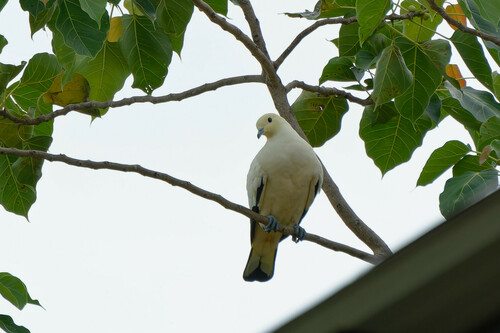
Pied Imperial-Pigeon (Ducula bicolor) Pied Imperial-Pigeon

Media

Loading…

In short

The most reliable way to separate Timor Imperial-Pigeon from Pied Imperial-Pigeon is by location and habitat: the Timor Imperial-Pigeon is restricted to the islands of Timor and Wetar, while the Pied Imperial-Pigeon is widespread across Southeast Asia, often in coastal and island habitats. In the field, plumage differences are subtle and not well-documented for the Timor species, but Pied Imperial-Pigeon adults are strikingly white with plain white thighs and undertail coverts, sometimes with a small dark spot at the undertail tip. Structural and size differences are not well established between these two, but Pied Imperial-Pigeon is a robust, large pigeon. If you see a large, mostly white imperial-pigeon outside Timor or Wetar, it is almost certainly Pied Imperial-Pigeon.

Identification tips

  1. Location is critical: If you are not on Timor or Wetar, you are almost certainly looking at a Pied Imperial-Pigeon. Timor Imperial-Pigeon is endemic to those two islands.
  2. Habitat context: Timor Imperial-Pigeon prefers dry or montane forests, while Pied Imperial-Pigeon is often seen in coastal, mangrove, or island habitats, sometimes in plantations or scrub.
  3. Adult plumage: Pied Imperial-Pigeon adults are pure white with plain white thighs and undertail coverts, sometimes with a small dark spot at the undertail tip. This is a strong mark for adults.
  4. Bill color: Pied Imperial-Pigeon has a narrowly dark-tipped bluish bill. There is no bill color information for Timor Imperial-Pigeon, so this mark is only useful for confirming Pied Imperial-Pigeon.
  5. Thigh and undertail coverts: If you see black spotting on the thighs or undertail coverts, this is not typical for Pied Imperial-Pigeon and may suggest another species (though not specifically Timor Imperial-Pigeon, as this is not described for it).
  6. Size and structure: Both are large, heavy-bodied pigeons; size is not a reliable separator.
  7. Immature/juvenile plumage: There are no documented age-specific wing or flight marks for either species, so do not rely on immature upperwing patterns for separation.
  8. Vocalizations: No distinguishing calls or songs are described in the available sources.
  9. Range overlap: There is no overlap; if you are within the range of Timor Imperial-Pigeon, check habitat and plumage carefully, but expect Pied Imperial-Pigeon elsewhere.
  10. Plumage pitfalls: Some Pied Imperial-Pigeons may appear slightly yellowish, but this is rare and not to the extent seen in other related species. Timor Imperial-Pigeon’s exact shade is not described, so do not use subtle color tints as a main mark.
  11. Subspecies confusion: Pied Imperial-Pigeon has complex subspecies taxonomy, but the nominate form is the one likely to be confused with Timor Imperial-Pigeon. Focus on the plain white thighs/undertail in adults for separation.
  12. Group context: Pied Imperial-Pigeon is often seen in flocks, especially in coastal areas. There is no information on Timor Imperial-Pigeon flocking behavior.
  13. Seasonality: No seasonal plumage differences are described for either species; both are likely resident where found.
  14. Sex differences: No sexual dimorphism is described for either species, so males and females look alike.
  15. Summary tip: In practice, use location and habitat first, then confirm with the clean white plumage and bill details of Pied Imperial-Pigeon if visible.

Size

Only Pied Imperial-Pigeon has a documented body mass (456g [wikidata]), confirming its status as a large pigeon. There is no published mass for Timor Imperial-Pigeon, but it is likely similar in size given its placement in the same genus. In the field, both will appear large and heavy-bodied, so size alone is not a reliable separator.

Plumage

Plumage differences are not fully detailed for Timor Imperial-Pigeon, but Pied Imperial-Pigeon adults are described as pure white with plain white thighs and undertail coverts, sometimes with a small dark spot at the undertail tip. The Pied Imperial-Pigeon has a narrowly dark-tipped bluish bill. There is no information on distinctive juvenile or immature wing patterns for either species, so age-specific flight marks are not available for separation. The Timor Imperial-Pigeon may lack the extremely clean white look of Pied Imperial-Pigeon, but this is not confirmed in the sources. If you see black-spotted thighs or undertail coverts, this would point away from Pied Imperial-Pigeon (but is not described for Timor Imperial-Pigeon).

Behaviour

No behavioral differences are documented between these two species. Both are likely to be seen in the canopy or flying between forest patches, as is typical for imperial pigeons.

Habitat

Habitat is a key separator: Timor Imperial-Pigeon is restricted to the islands of Timor and Wetar, inhabiting subtropical or tropical dry forests and moist montane forests [wikipedia]. Pied Imperial-Pigeon is much more widespread, found in forests, woodlands, mangroves, plantations, and scrub across Southeast Asia, especially on small islands and in coastal areas. If you are not on Timor or Wetar, you are almost certainly seeing Pied Imperial-Pigeon.

Submit a better description

Use the same sections as the comparison. Your text is published immediately.

The most reliable way to separate Timor Imperial-Pigeon from Pied Imperial-Pigeon is by location and habitat: the Timor Imperial-Pigeon is restricted to the islands of Timor and Wetar, while the Pied Imperial-Pigeon is widespread across Southeast Asia, often in coastal and island habitats. In the field, plumage differences are subtle and not well-documented for the Timor species, but Pied Imperial-Pigeon adults are strikingly white with plain white thighs and undertail coverts, sometimes with a small dark spot at the undertail tip. Structural and size differences are not well established between these two, but Pied Imperial-Pigeon is a robust, large pigeon. If you see a large, mostly white imperial-pigeon outside Timor or Wetar, it is almost certainly Pied Imperial-Pigeon.

  1. Location is critical: If you are not on Timor or Wetar, you are almost certainly looking at a Pied Imperial-Pigeon. Timor Imperial-Pigeon is endemic to those two islands.
  2. Habitat context: Timor Imperial-Pigeon prefers dry or montane forests, while Pied Imperial-Pigeon is often seen in coastal, mangrove, or island habitats, sometimes in plantations or scrub.
  3. Adult plumage: Pied Imperial-Pigeon adults are pure white with plain white thighs and undertail coverts, sometimes with a small dark spot at the undertail tip. This is a strong mark for adults.
  4. Bill color: Pied Imperial-Pigeon has a narrowly dark-tipped bluish bill. There is no bill color information for Timor Imperial-Pigeon, so this mark is only useful for confirming Pied Imperial-Pigeon.
  5. Thigh and undertail coverts: If you see black spotting on the thighs or undertail coverts, this is not typical for Pied Imperial-Pigeon and may suggest another species (though not specifically Timor Imperial-Pigeon, as this is not described for it).
  6. Size and structure: Both are large, heavy-bodied pigeons; size is not a reliable separator.
  7. Immature/juvenile plumage: There are no documented age-specific wing or flight marks for either species, so do not rely on immature upperwing patterns for separation.
  8. Vocalizations: No distinguishing calls or songs are described in the available sources.
  9. Range overlap: There is no overlap; if you are within the range of Timor Imperial-Pigeon, check habitat and plumage carefully, but expect Pied Imperial-Pigeon elsewhere.
  10. Plumage pitfalls: Some Pied Imperial-Pigeons may appear slightly yellowish, but this is rare and not to the extent seen in other related species. Timor Imperial-Pigeon’s exact shade is not described, so do not use subtle color tints as a main mark.
  11. Subspecies confusion: Pied Imperial-Pigeon has complex subspecies taxonomy, but the nominate form is the one likely to be confused with Timor Imperial-Pigeon. Focus on the plain white thighs/undertail in adults for separation.
  12. Group context: Pied Imperial-Pigeon is often seen in flocks, especially in coastal areas. There is no information on Timor Imperial-Pigeon flocking behavior.
  13. Seasonality: No seasonal plumage differences are described for either species; both are likely resident where found.
  14. Sex differences: No sexual dimorphism is described for either species, so males and females look alike.
  15. Summary tip: In practice, use location and habitat first, then confirm with the clean white plumage and bill details of Pied Imperial-Pigeon if visible.

Only Pied Imperial-Pigeon has a documented body mass (456g [wikidata]), confirming its status as a large pigeon. There is no published mass for Timor Imperial-Pigeon, but it is likely similar in size given its placement in the same genus. In the field, both will appear large and heavy-bodied, so size alone is not a reliable separator.

Plumage differences are not fully detailed for Timor Imperial-Pigeon, but Pied Imperial-Pigeon adults are described as pure white with plain white thighs and undertail coverts, sometimes with a small dark spot at the undertail tip. The Pied Imperial-Pigeon has a narrowly dark-tipped bluish bill. There is no information on distinctive juvenile or immature wing patterns for either species, so age-specific flight marks are not available for separation. The Timor Imperial-Pigeon may lack the extremely clean white look of Pied Imperial-Pigeon, but this is not confirmed in the sources. If you see black-spotted thighs or undertail coverts, this would point away from Pied Imperial-Pigeon (but is not described for Timor Imperial-Pigeon).

No behavioral differences are documented between these two species. Both are likely to be seen in the canopy or flying between forest patches, as is typical for imperial pigeons.

Habitat is a key separator: Timor Imperial-Pigeon is restricted to the islands of Timor and Wetar, inhabiting subtropical or tropical dry forests and moist montane forests [wikipedia]. Pied Imperial-Pigeon is much more widespread, found in forests, woodlands, mangroves, plantations, and scrub across Southeast Asia, especially on small islands and in coastal areas. If you are not on Timor or Wetar, you are almost certainly seeing Pied Imperial-Pigeon.

Discard your changes?

You have unsaved edits. If you leave now, those changes will be lost.

Timor Imperial-Pigeon · Pied Imperial-Pigeon · My Tricky Birds