

Tibetan Sand Plover vs Kentish Plover
Anarhynchus atrifrons versus Anarhynchus alexandrinus
Play a quiz with Tibetan Sand Plover and Kentish Plover
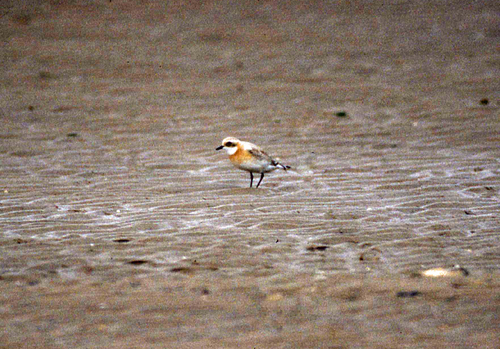 Tibetan Sand Plover
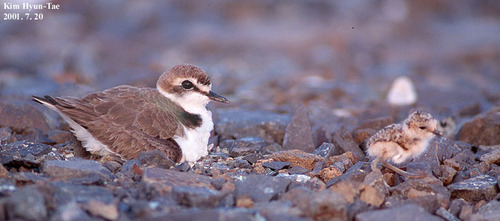 Kentish Plover
In short
The most reliable field separation between Tibetan Sand Plover and Kentish Plover is the pattern and color of the head and breast in breeding plumage, especially in males. Tibetan Sand Plover males show a black mask and a pale orange chest and neck, while Kentish Plover males have a black horizontal head bar, black ear coverts, and two incomplete dark breast bands, with a rufous nape and crown. In non-breeding plumage and juveniles, both species are plainer, but Kentish Plover males retain some dark markings on the head and breast sides, whereas Tibetan Sand Plover is generally paler and lacks strong breast bands. Structure and size are very similar, so careful attention to plumage details, especially in the head and breast, is key.
Identification tips
- Breeding male head and breast pattern: Tibetan Sand Plover males have a black mask and a pale orange chest and neck; Kentish Plover males have a black horizontal head bar, black ear coverts, two incomplete dark breast bands, and a rufous nape and crown. This is the most reliable field mark in spring and summer.
- Breast band presence: Kentish Plover (especially males) shows two incomplete dark breast bands on the sides; Tibetan Sand Plover lacks these, instead showing a pale orange wash (in males) or plain white breast (in females and non-breeding birds).
- Head markings in non-breeding/juvenile plumage: Kentish Plover may retain faint dark markings behind the eye and on the breast sides, even in females and juveniles. Tibetan Sand Plover is generally plainer-faced and lacks strong head or breast markings outside of breeding males.
- Orange coloration: Only Tibetan Sand Plover males show a pale orange wash on the chest and neck in breeding plumage; Kentish Plover never shows this color.
- Mask vs. ear coverts: Tibetan Sand Plover males have a full black mask; Kentish Plover males have black ear coverts and a horizontal bar, but not a full mask.
- Rufous nape/crown: Kentish Plover males in breeding plumage have a rufous (reddish) nape and crown, which is absent in Tibetan Sand Plover.
- Female/juvenile confusion: Females and juveniles of both species are much duller and can be very similar. Look for any hint of breast-side markings (favoring Kentish), or a completely plain face and breast (favoring Tibetan Sand Plover).
- Bill and leg color: Both species have dark bills and legs; this is not helpful for separation.
- Size and structure: Both are small, compact plovers with similar proportions; do not rely on size or jizz for separation.
- Habitat context: In high-elevation breeding sites (Tibetan Plateau, Tian Shan), Tibetan Sand Plover is expected; in lowland saline lakes, lagoons, and coasts, especially outside Central Asia, Kentish Plover is more likely. In wintering areas, both may occur together.
- Behavior: Kentish Plover males may be more aggressive and perform distraction displays, but this is not a reliable field mark for separation.
- Seasonal timing: Breeding plumage marks are most useful in spring and summer; in autumn and winter, rely on subtle differences in head and breast markings.
- Sexual dimorphism: Kentish Plover shows stronger sexual dimorphism in breeding plumage, with males much more strongly marked than females. Tibetan Sand Plover males are only slightly paler than females, with both sexes generally plainer outside the breeding season.
- Plumage variability: Be aware that Kentish Plover plumage can vary with rainfall and breeding system, but the presence of dark breast bands and rufous nape in males is consistent.
- No distinctive flight pattern: No unique upperwing or flight marks are described for either species; focus on head and breast pattern when birds are perched or foraging.
Size
Both species are small plovers and very close in size, with Kentish Plover averaging about 47 g in body mass. There is no strong size difference in the field, and both have similar proportions, so size is not a reliable separator. Bill and leg color are also similar (dark in both).
Plumage
Juvenile and non-breeding birds of both species are quite similar: both have brown upperparts and white underparts, with pale faces and dark bills and legs. However, Kentish Plover juveniles and females may show faint dark markings on the sides of the breast and behind the eye, while Tibetan Sand Plover juveniles are generally plainer, with less contrast and no breast band. In breeding plumage, Tibetan Sand Plover males have a distinctive black mask and a light orange wash across the chest and neck, while Kentish Plover males have a black horizontal head bar, black ear coverts, two incomplete dark breast bands, and a rufous nape and crown. Females of both species are duller, but Kentish Plover females may show faint breast-side markings, while Tibetan Sand Plover females are paler and lack strong head or breast markings. No distinctive upperwing or flight pattern differences are described for either species in the sources.
Behaviour
Both species are active, ground-foraging shorebirds, often seen running and pausing on open mudflats or sandy shores. Kentish Plover males are noted for being more aggressive in territorial defense, and both sexes perform distraction displays when threatened. These behaviors are not described for Tibetan Sand Plover in the available sources, but general foraging and movement style are likely similar.
Habitat
Tibetan Sand Plover breeds at high elevations in Central Asia (Pamir Mountains, Tian Shan, Tibetan Plateau, south Mongolia) and winters widely in Africa and southern Asia. Kentish Plover breeds on saline lakes, lagoons, and coastal habitats, including sand dunes, marshes, semi-arid deserts, and tundra, with a broad range from North Africa through Eurasia. In areas of overlap (Central Asia, some coastal wintering sites), habitat alone is not diagnostic, but Kentish Plover is more likely on lowland coasts and saline inland lakes, while Tibetan Sand Plover is associated with high-elevation breeding sites.