
Thekla's Lark vs Crested Lark
Galerida theklae versus Galerida cristata
Play a quiz with Thekla's Lark and Crested Lark
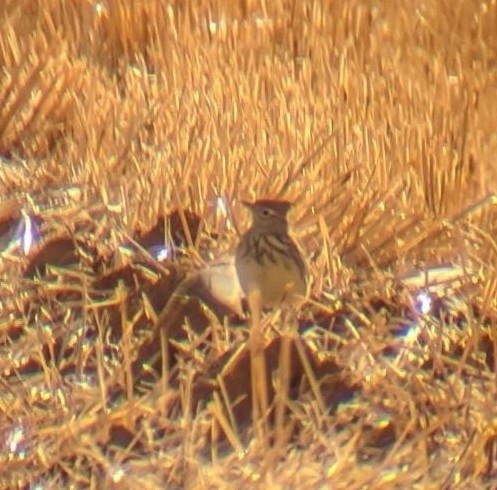 Thekla's Lark
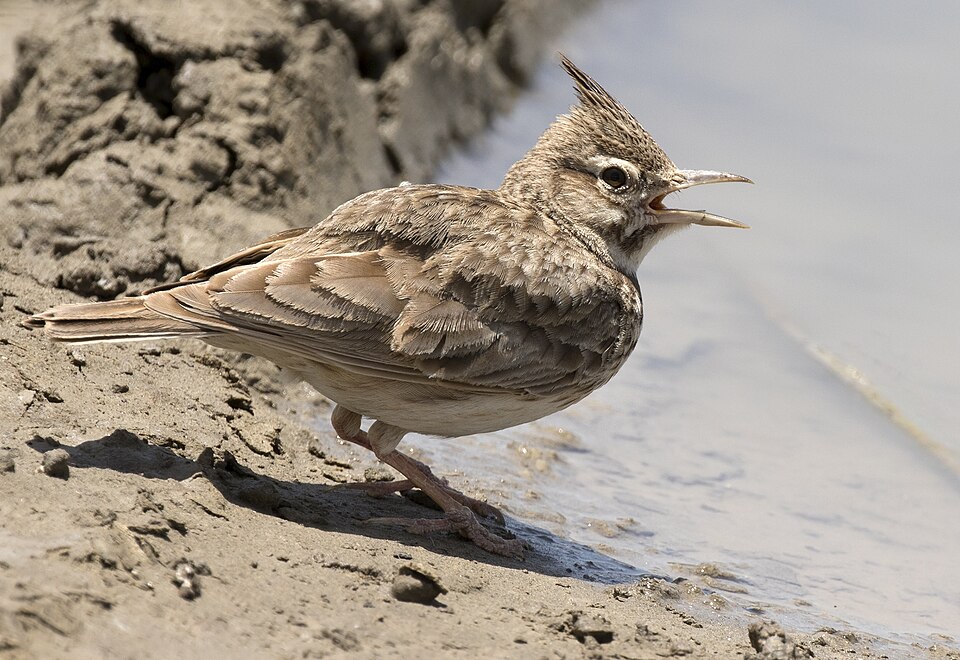 Crested Lark
In short
The most reliable field mark to separate Thekla's Lark from Crested Lark is the color of the underwing in flight: Thekla's Lark shows grey underwings, while Crested Lark displays reddish underwings. When perched, Thekla's Lark is generally greyer overall, especially on the back and rump, and has heavier, blacker breast streaks, whereas Crested Lark appears warmer brown and less streaked below. Bill structure also helps: Thekla's Lark has a shorter, stubbier bill compared to the longer, more curved bill of Crested Lark. Both species have a prominent crest, but subtle differences in body shape and plumage can help with careful observation.
Identification tips
- Underwing color in flight: Thekla's Lark shows grey underwings; Crested Lark shows reddish underwings. This is the most reliable mark when birds are flushed or flying.
- Back and rump color: Thekla's Lark is noticeably greyer above, especially on the back and rump, while Crested Lark is warmer brown. This is best judged in good light.
- Breast streaking: Thekla's Lark has heavier, blacker streaks on the breast; Crested Lark is paler and less streaked below. This is visible on perched birds at moderate range.
- Bill shape: Thekla's Lark has a shorter, stubbier bill; Crested Lark's bill is longer and more decurved. Bill shape is best seen in profile at close range.
- Crest shape: Both species have a prominent, spiky crest. Thekla's Lark's crest can appear more sharply pointed, but this is subtle and variable.
- Juvenile confusion: Young Crested Larks have more spots on the back, which can be confused with Thekla's heavier streaks. Focus on underwing color and overall tone for immatures.
- Tail pattern: Crested Lark has a short tail with light brown outer feathers; Thekla's tail pattern is not highlighted as distinctive.
- Overall jizz: Crested Lark appears bulkier, especially around the head and body, while Thekla's Lark is slimmer and shorter.
- Habitat context: Thekla's Lark is more likely in rocky, hilly, or higher-altitude terrain; Crested Lark favors open fields, wastelands, and urban edges.
- Song: Only Crested Lark's song is described; if you hear a liquid, warbling song from a bird singing high in the air or on the ground, Crested Lark is likely, but this is not diagnostic without more detail.
- Sex and season: Both sexes are similar in both species, and there is no strong seasonal variation in plumage described, so these are not useful for separation.
- Pitfalls: Do not rely solely on crest shape or size, as both species are similar. Underwing color in flight and overall grey vs brown tone are more reliable.
- When in doubt: If the bird is in flight and you cannot see the underwing color, use a combination of back color, breast streaking, and bill shape, but be cautious—some individuals are intermediate.
- Local abundance: Both species can occur in the same region, but habitat preference may help tip the balance if the bird is in especially rocky or high-altitude ground (favor Thekla's) or in open, disturbed fields (favor Crested).
Size
Crested Lark is slightly larger and bulkier, with a height of about 17 cm and a wingspan of 29–38 cm, weighing 37–55 g [wikipedia]. Thekla's Lark is a smallish lark, slightly smaller than Eurasian Skylark and also smaller than Crested Lark, but exact measurements are not provided in the notes. In the field, Crested Lark often appears more robust, especially around the head and body, while Thekla's Lark looks a bit slimmer and shorter overall.
Plumage
- Juvenile/immature birds: Young Crested Larks have more spots on the back than adults, which can be a pitfall if confused with the heavier streaking of Thekla's Lark. Thekla's Lark of all ages shows heavier, blacker streaking on the breast and a generally greyer tone above, especially on the back and rump.
- Adult/flight views: Thekla's Lark has grey underwings in flight, a key distinction from Crested Lark's reddish underwings. Crested Lark is warmer brown above, with sparser, paler streaking below, and its tail has light brown outer feathers. Both species have a long, spiky crest, but Thekla's is often described as more sharply pointed.
- Perched views: Thekla's Lark is overall greyer, especially on the back and rump, and has heavier, darker breast streaks. Crested Lark is browner and less streaked, with a paler, sparser appearance. Both sexes are similar in both species.
Behaviour
Both species are terrestrial and often found in open, dry habitats. Crested Lark is noted for its undulating flight and often sings from the ground or high in the air. Thekla's Lark is also a ground-dweller but is more often found at higher altitudes and in rougher, rockier terrain. Both species show a prominent crest, which is usually raised when excited or singing.
Habitat
Thekla's Lark prefers dry, open country, often at some altitude, and is more likely to be found in rocky or hilly terrain. Crested Lark is widespread across Eurasia and northern Africa, favoring wastelands, open fields, and the outskirts of towns, often at lower elevations. Overlap can occur, but Thekla's is more restricted to rougher, less cultivated ground.
Voice
Crested Lark has a liquid, warbling song, often described as 'whee-whee-wheeoo' or 'twee-tee-too,' and sings both from the ground and in flight. Thekla's Lark's vocalizations are not detailed in the provided notes, so song is not a reliable separation feature based on this information.