

Terek Sandpiper vs Common Sandpiper
Xenus cinereus versus Actitis hypoleucos
Play a quiz with Terek Sandpiper and Common Sandpiper
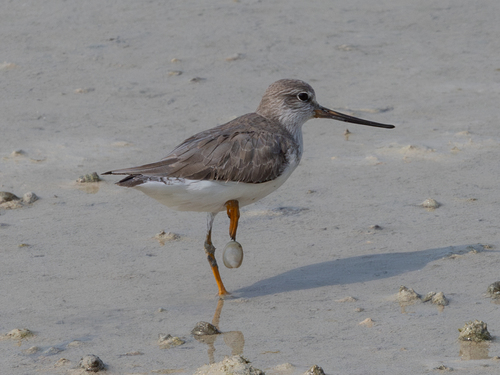 Terek Sandpiper
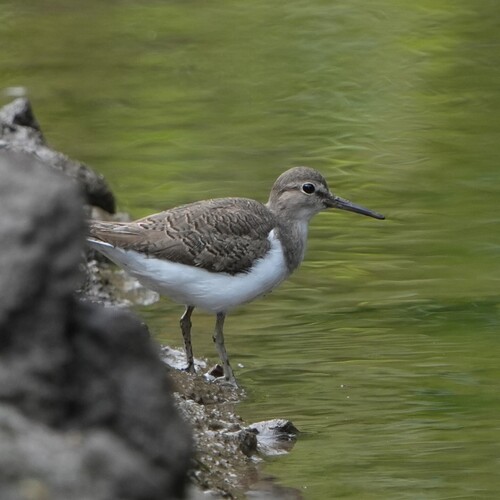 Common Sandpiper
In short
The most reliable field mark between Terek Sandpiper and Common Sandpiper is the Terek's long, upcurved bill, which stands out even at a distance. In flight or at rest, Terek Sandpiper shows a greyer overall tone with a white supercilium and yellow legs, while Common Sandpiper is browner above, with duller legs and a shorter, straight bill. Juvenile Common Sandpipers have more barring on the upperparts and wings, but neither species shows a striking upperwing pattern in flight. Size is only slightly different, so focus on bill shape and leg color for quick separation.
Identification tips
- Bill shape is the fastest separator: Terek Sandpiper has a long, upcurved bill (reminiscent of an avocet, but less extreme), while Common Sandpiper's bill is short, straight, and only slightly downcurved at the tip. This works at all ages and seasons.
- Leg color: Terek Sandpiper shows bright yellow legs and feet; Common Sandpiper's are duller, dark-yellowish. This is visible when birds are standing or wading.
- Overall color tone: Terek Sandpiper is greyer above, especially on the back, face, and breast, while Common Sandpiper is browner above and on the face. This is reliable in all plumages.
- Supercilium (eyebrow): Terek Sandpiper often shows a more distinct white supercilium, though it can be faint. Common Sandpiper's face is less contrasting.
- Belly and underparts: Both have white underparts, but Terek Sandpiper's grey breast contrasts more with the belly, while Common Sandpiper is more evenly brown above and white below.
- Juvenile/first-winter wing pattern: Juvenile Common Sandpipers show more barring on the upperparts and buff edges to wing feathers, but this is subtle and only visible at close range. Terek Sandpiper juveniles are not described as having distinctive wing patterns.
- Flight style: Common Sandpiper has a stiff-winged, low, direct flight over water. Terek Sandpiper's flight is less distinctive in this way.
- Behavior: Terek Sandpiper is more active, often running after prey and associating with other waders. Common Sandpiper is solitary, with characteristic tail-pumping and head-bobbing.
- Association with other species: Terek Sandpiper is more likely to be found in mixed-species flocks, especially with turnstones and small calidrids; Common Sandpiper is usually alone.
- Habitat preference: Terek Sandpiper prefers open muddy coasts and is less likely inland; Common Sandpiper is often along freshwater edges, rivers, and lakes.
- Size: Terek Sandpiper is only slightly larger, but this is not reliable unless both species are together.
- Bill color: Terek Sandpiper's bill has a yellowish base and black tip; Common Sandpiper's bill is pale at the base and dark at the tip, but shorter and straighter.
- Voice: If heard, Terek Sandpiper gives a high whistle. Use this if calls are given.
- Seasonal confusion: In winter, Common Sandpiper becomes duller and more barred, but the bill and leg color remain reliable.
- Pitfalls: Do not rely on size or subtle wing barring alone; always check bill shape and leg color first, especially in mixed flocks or poor light.
Size
Terek Sandpiper is slightly larger, measuring 22–25 cm in length, compared to the Common Sandpiper's 18–20 cm. This difference is subtle in the field, especially without direct comparison. Both are small waders, but the Terek's longer bill and legs can make it appear lankier. Wingspan is not distinctly diagnostic between them, and both are within the range of small to medium sandpipers. Use structure rather than size for reliable separation.
Plumage
Juvenile and first-winter Common Sandpipers have more heavily barred upperparts and buff-edged wing feathers, but these marks are subtle and require close views. In all plumages, Terek Sandpiper is greyer above and on the face and breast, with a consistently whitish belly and a more distinct white supercilium (though this can be faint). Common Sandpiper is browner above, with white underparts and less contrast on the face. In winter, Common Sandpiper becomes duller with more visible wing barring, but this is not a strong field mark at distance. The Terek's yellow legs and bill with a yellowish base are distinctive, while Common Sandpiper has duller, dark-yellowish legs and a straight bill with a pale base and dark tip. Neither species shows a bold upperwing pattern in flight, but Common Sandpiper's wing barring is more apparent in juveniles and winter birds at close range.
Behaviour
Terek Sandpiper is notably active, often running after prey and washing food at the water's edge. It frequently associates with other waders, sometimes even joining different species. Common Sandpiper is more solitary, usually seen alone or in small groups, and is famous for its teetering tail and head-bobbing movements while foraging. In flight, Common Sandpiper has a distinctive stiff-winged, low, direct flight over water, while Terek Sandpiper's flight is less described but is not noted for this stiff-winged style.
Habitat
Both species are found near water, but Terek Sandpiper prefers muddy coasts and is more likely to be seen in mixed wader flocks, especially on migration. It breeds in northern taiga regions and winters widely from Africa to Australia, but is a rare vagrant in western Europe and North America. Common Sandpiper is widespread in the Palearctic, breeding near freshwater and often seen along rivers, lakes, and coasts, but seldom joins multispecies flocks. Habitat overlap is possible, but Terek Sandpiper is more likely on open muddy shores, while Common Sandpiper favors quieter, less crowded freshwater edges.
Voice
Terek Sandpiper gives a high whistle, which can help with identification if heard. Common Sandpiper's call is not described in the notes, but is not a primary separation point here.