
Motmot

Temminck's Stint vs Sanderling

Calidris temminckii versus Calidris alba

Play a quiz with Temminck's Stint and Sanderling
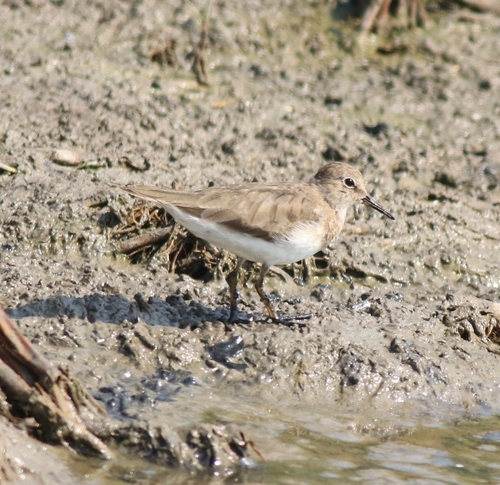
Temminck's Stint (Calidris temminckii) Temminck's Stint
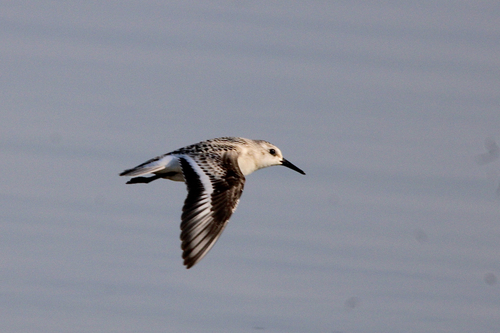
Sanderling (Calidris alba) Sanderling

Media

Loading…

In short

The most reliable field mark between Temminck's Stint and Sanderling is leg color: Temminck's Stint has dull yellowish or brown legs, while Sanderling has black legs. In flight, Sanderling shows a strong white wingbar, absent in Temminck's Stint. Temminck's Stint is a drab, small, short-legged wader with white outer tail feathers, while Sanderling is stouter, with a thicker bill and a distinctive running gait. Both are small sandpipers, but Sanderling is bulkier and more gregarious, often seen in tight flocks on sandy beaches.

Identification tips

  1. Leg color is the most consistent field mark: Temminck's Stint has dull yellowish or brown legs; Sanderling's are always black. This works for all ages and seasons.
  2. In flight, look for the white wingbar: Sanderling shows a strong white wingbar across the upperwing in all plumages; Temminck's Stint lacks this feature.
  3. Tail pattern: Temminck's Stint has white outer tail feathers, which can be seen when the bird fans its tail or in flight. Sanderling's tail is less distinctly marked.
  4. Bill structure: Sanderling has a thicker, stubbier bill compared to the finer, more delicate bill of Temminck's Stint. This is subtle but useful at close range.
  5. Body shape and jizz: Sanderling is noticeably bulkier and stouter, with a rounder body and thicker neck. Temminck's Stint is smaller, more delicate, and shorter-legged.
  6. Hind toe: Sanderling lacks a hind toe (unique among small sandpipers in the region), but this is hard to see except at very close range.
  7. Plumage tone: Temminck's Stint is drab brownish above with a darker breast and white belly; Sanderling is pale grey above and white below, often appearing much cleaner and brighter.
  8. Breeding plumage: Temminck's Stint shows some rufous or blackish mantle feathers, but remains overall plain. Sanderling in breeding plumage is much more patterned and rufous, but this is rarely seen outside the breeding grounds.
  9. Winter plumage: Temminck's Stint becomes even duller, resembling a tiny Common Sandpiper, while Sanderling remains pale and clean.
  10. Foraging behavior: Sanderling runs rapidly along the tideline with a distinctive 'bicycling' motion, often in groups; Temminck's Stint moves more slowly and is less gregarious.
  11. Habitat: Sanderling is almost always on open sandy beaches or tidal flats; Temminck's Stint prefers muddy or vegetated freshwater edges.
  12. Flock size: Sanderling is gregarious, often in large flocks; Temminck's Stint is usually solitary or in small groups.
  13. Relative size: Sanderling is bulkier and chunkier than Temminck's Stint, which is one of the smallest waders in its range.
  14. Voice: Not diagnostic with available information.
  15. Pitfalls: Juvenile and winter Sanderlings can appear drab and might be mistaken for Temminck's Stint, but the leg color and wingbar remain reliable. Temminck's Stint never shows the strong white wingbar or black legs of Sanderling.

Size

Temminck's Stint is very small (body mass ~26 g), with a length of 13.5–15 cm. Sanderling is similar in length to a Dunlin and is noticeably bulkier and stouter than Temminck's Stint, though precise mass is not given here. In the field, Sanderling appears chunkier, with a thicker bill and more robust build, while Temminck's Stint is daintier and more delicate overall.

Plumage

Juvenile and non-breeding Sanderlings are pale grey above and white below, with a strong white wingbar visible in flight across all ages. Temminck's Stint, in all plumages, is drabber: brownish above, with plain brown upperparts and a darker breast, and white underparts. The breeding adult Temminck's Stint may show some rufous or blackish mantle feathers, but remains overall plain. Sanderling lacks a hind toe, which can be noted if seen well. Temminck's Stint has white outer tail feathers, while Sanderling's tail is not as distinctly marked. Leg color is a key difference: Temminck's Stint has dull yellowish or brown legs, Sanderling's are black. In winter, Temminck's Stint resembles a miniature Common Sandpiper, with dull grey or brownish-grey above and white below, while Sanderling remains pale and clean-looking.

Behaviour

Sanderling is highly gregarious in winter, often forming large, tight flocks on open sandy beaches, and is famous for its energetic, 'bicycling' running action along the tideline. Temminck's Stint is more solitary or found in small groups, and does not show the same frenetic foraging style. Sanderling frequently stops to pick at food while running, while Temminck's Stint forages in a more deliberate, less conspicuous manner.

Habitat

Sanderling is most often found on open sandy beaches and tidal flats, especially in winter, and is rarely seen away from open coastlines. Temminck's Stint prefers muddy or vegetated margins of freshwater lakes, pools, or marshes, and is less likely to be found on open sandy beaches. If you see a small sandpiper in a tight flock on a wave-washed beach, it's almost certainly a Sanderling; a lone or scattered bird on muddy or vegetated edges is more likely Temminck's Stint.

Submit a better description

Use the same sections as the comparison. Your text is published immediately.

The most reliable field mark between Temminck's Stint and Sanderling is leg color: Temminck's Stint has dull yellowish or brown legs, while Sanderling has black legs. In flight, Sanderling shows a strong white wingbar, absent in Temminck's Stint. Temminck's Stint is a drab, small, short-legged wader with white outer tail feathers, while Sanderling is stouter, with a thicker bill and a distinctive running gait. Both are small sandpipers, but Sanderling is bulkier and more gregarious, often seen in tight flocks on sandy beaches.

  1. Leg color is the most consistent field mark: Temminck's Stint has dull yellowish or brown legs; Sanderling's are always black. This works for all ages and seasons.
  2. In flight, look for the white wingbar: Sanderling shows a strong white wingbar across the upperwing in all plumages; Temminck's Stint lacks this feature.
  3. Tail pattern: Temminck's Stint has white outer tail feathers, which can be seen when the bird fans its tail or in flight. Sanderling's tail is less distinctly marked.
  4. Bill structure: Sanderling has a thicker, stubbier bill compared to the finer, more delicate bill of Temminck's Stint. This is subtle but useful at close range.
  5. Body shape and jizz: Sanderling is noticeably bulkier and stouter, with a rounder body and thicker neck. Temminck's Stint is smaller, more delicate, and shorter-legged.
  6. Hind toe: Sanderling lacks a hind toe (unique among small sandpipers in the region), but this is hard to see except at very close range.
  7. Plumage tone: Temminck's Stint is drab brownish above with a darker breast and white belly; Sanderling is pale grey above and white below, often appearing much cleaner and brighter.
  8. Breeding plumage: Temminck's Stint shows some rufous or blackish mantle feathers, but remains overall plain. Sanderling in breeding plumage is much more patterned and rufous, but this is rarely seen outside the breeding grounds.
  9. Winter plumage: Temminck's Stint becomes even duller, resembling a tiny Common Sandpiper, while Sanderling remains pale and clean.
  10. Foraging behavior: Sanderling runs rapidly along the tideline with a distinctive 'bicycling' motion, often in groups; Temminck's Stint moves more slowly and is less gregarious.
  11. Habitat: Sanderling is almost always on open sandy beaches or tidal flats; Temminck's Stint prefers muddy or vegetated freshwater edges.
  12. Flock size: Sanderling is gregarious, often in large flocks; Temminck's Stint is usually solitary or in small groups.
  13. Relative size: Sanderling is bulkier and chunkier than Temminck's Stint, which is one of the smallest waders in its range.
  14. Voice: Not diagnostic with available information.
  15. Pitfalls: Juvenile and winter Sanderlings can appear drab and might be mistaken for Temminck's Stint, but the leg color and wingbar remain reliable. Temminck's Stint never shows the strong white wingbar or black legs of Sanderling.

Temminck's Stint is very small (body mass ~26 g), with a length of 13.5–15 cm. Sanderling is similar in length to a Dunlin and is noticeably bulkier and stouter than Temminck's Stint, though precise mass is not given here. In the field, Sanderling appears chunkier, with a thicker bill and more robust build, while Temminck's Stint is daintier and more delicate overall.

Juvenile and non-breeding Sanderlings are pale grey above and white below, with a strong white wingbar visible in flight across all ages. Temminck's Stint, in all plumages, is drabber: brownish above, with plain brown upperparts and a darker breast, and white underparts. The breeding adult Temminck's Stint may show some rufous or blackish mantle feathers, but remains overall plain. Sanderling lacks a hind toe, which can be noted if seen well. Temminck's Stint has white outer tail feathers, while Sanderling's tail is not as distinctly marked. Leg color is a key difference: Temminck's Stint has dull yellowish or brown legs, Sanderling's are black. In winter, Temminck's Stint resembles a miniature Common Sandpiper, with dull grey or brownish-grey above and white below, while Sanderling remains pale and clean-looking.

Sanderling is highly gregarious in winter, often forming large, tight flocks on open sandy beaches, and is famous for its energetic, 'bicycling' running action along the tideline. Temminck's Stint is more solitary or found in small groups, and does not show the same frenetic foraging style. Sanderling frequently stops to pick at food while running, while Temminck's Stint forages in a more deliberate, less conspicuous manner.

Sanderling is most often found on open sandy beaches and tidal flats, especially in winter, and is rarely seen away from open coastlines. Temminck's Stint prefers muddy or vegetated margins of freshwater lakes, pools, or marshes, and is less likely to be found on open sandy beaches. If you see a small sandpiper in a tight flock on a wave-washed beach, it's almost certainly a Sanderling; a lone or scattered bird on muddy or vegetated edges is more likely Temminck's Stint.

Discard your changes?

You have unsaved edits. If you leave now, those changes will be lost.

Temminck's Stint · Sanderling · My Tricky Birds