

Motmot

Tawny-throated Dotterel vs Whistling Heron

Oreopholus ruficollis versus Syrigma sibilatrix

Play a quiz with Tawny-throated Dotterel and Whistling Heron

Tawny-throated Dotterel (Oreopholus ruficollis) Tawny-throated Dotterel
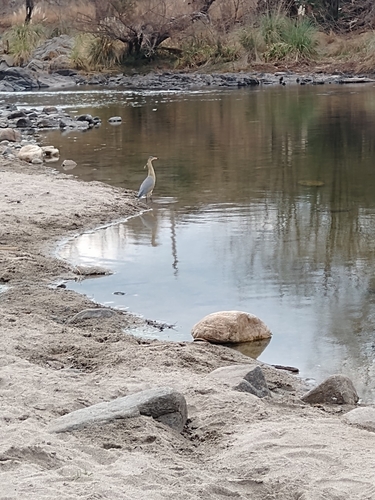
Whistling Heron (Syrigma sibilatrix) Whistling Heron

Media

Loading…

In short

The most reliable field mark between Tawny-throated Dotterel and Whistling Heron is overall structure: the dotterel is a compact, short-billed plover with a rich buff and streaked plumage, while the heron is a much larger, long-necked, long-legged bird with a mostly gray and white appearance and a colorful bill. In flight, the dotterel shows a white underwing and a small black belly patch, whereas the heron reveals extensive white on the rear and underparts, with fast, duck-like wingbeats and a neck that is only partially retracted. Juvenile dotterels are paler and less streaked, but never show the heron's long neck, colorful bare parts, or heron-like proportions. Even at a distance, the difference in size and jizz is striking.

Identification tips

  1. Size and Structure: Whistling Heron is over three times heavier and much taller than Tawny-throated Dotterel. If the bird is tall, long-legged, and long-necked, it is the heron; if compact, short-legged, and plover-like, it is the dotterel. This is reliable at all ages and distances.
  2. Bill Shape and Color: The heron has a long, pink bill with blue/violet at the base and a black tip; the dotterel has a short, inconspicuous plover bill. Bill color is especially helpful at close range.
  3. Neck and Leg Length: Heron’s neck and legs are much longer and more visible both at rest and in flight. Dotterel’s neck is short and legs are proportionally much shorter.
  4. Flight Profile: Whistling Heron flies with fast, duck-like wingbeats and does not fully retract its neck, giving a stretched, heron-like silhouette. Dotterel flies with rapid, direct wingbeats and a compact, plover-like profile. This is diagnostic in flight.
  5. Underwing and Belly Pattern: In flight, dotterel shows a white underwing and a small black belly patch (adults), while the heron shows extensive white on the rear and underparts, but never a black belly patch.
  6. Back and Upperparts: Dotterel’s back is heavily streaked and rich buff (adults), or paler with less streaking (juveniles). Heron’s upperparts are smooth blue-gray with no streaking.
  7. Throat and Breast: Dotterel has a white chin, orange-tawny throat, and gray breast; juvenile dotterels have a buff throat and paler underparts. Heron’s throat and breast are white to gold-stained, never orange or tawny.
  8. Crown and Crest: Heron has a black or slate-gray crown and a crest of long plumes; dotterel lacks any crest or contrasting crown.
  9. Leg Color: Heron’s legs are greenish and relatively short for a heron, but still much longer than the dotterel’s. Dotterel’s legs are short and not brightly colored.
  10. Bare Facial Skin: Heron has a large area of bare bluish skin around the eye, absent in dotterel.
  11. Juvenile Pitfalls: Juvenile dotterels are paler and less streaked, but always compact and plover-like. Juvenile herons are duller but still show the same heron structure and pattern.
  12. Vocalizations: If you hear loud, melodious whistles, it is the heron. Dotterel is not known for such calls.
  13. Habitat Context: In open grassland far from water, dotterel is more likely; in wet meadows or near water, especially with scattered trees, heron is more likely.
  14. Behavior: Dotterel runs and forages quickly on the ground; heron moves slowly, stands upright, and may be seen wading or near water.
  15. Group Size: Dotterel may be seen in small groups; heron is often solitary or in pairs.

Size

Whistling Heron is dramatically larger and heavier than Tawny-throated Dotterel: the heron weighs about 455 g and measures 53–64 cm in length, while the dotterel is much smaller at 133 g and 25–29 cm long [wikidata][wikipedia]. The heron stands tall with long legs and neck, towering over the dotterel’s squat, plover-like build. Even at a distance, the heron's size and elongated silhouette are unmistakable compared to the compact, low-to-the-ground dotterel.

Plumage

Juvenile Tawny-throated Dotterels are paler than adults, with a buff throat, less streaked back, and a brown belly patch, but still show the basic plover pattern and never approach the heron's gray and white coloration. Adults of the dotterel are rich buff with heavy dark streaking on the back, a white chin, orange-tawny throat, gray neck and breast, and a small black belly patch. In flight, both ages show a white underwing. Whistling Heron adults are mostly gray with white and gold-stained sides of the head and neck, a black or slate crown and crest, and cinnamon or honey-colored upperwing coverts depending on subspecies. The heron's underparts and rear are conspicuously white in flight, and the bill is strikingly pink with blue/violet at the base and a black tip. Juvenile herons are duller but maintain the same pattern, with a lighter crown and unstained white throat and sides. The heron's plumage is never streaked or buff overall, and it lacks any black belly patch.

Behaviour

Tawny-throated Dotterel behaves like a typical plover: it is terrestrial, runs in short bursts, and often forages on open ground. It is compact and quick-footed, rarely standing tall. Whistling Heron is often terrestrial for a heron, but moves with a slow, deliberate gait, stands upright, and is frequently seen alone or in pairs. In flight, the heron uses fast, duck-like wingbeats and does not fully retract its neck, unlike most herons. The dotterel’s flight is more typical of plovers, with rapid, direct wingbeats and a compact profile.

Habitat

Both species can be found in open country in South America, but the dotterel prefers grasslands and open plains, while the Whistling Heron is more often found in wet meadows, marshes, and sometimes drier fields, but always favors areas near water or with scattered trees. The dotterel is more likely in short grass or steppe, sometimes at higher elevations, while the heron is associated with wetlands and open savanna.

Voice

Whistling Heron is named for its loud, flute-like, melodious whistles ('kee, kee, kee' or 'wueeee'), which are distinctive and far-carrying. It may also give a harsh alarm call ('quah-h-h'). Tawny-throated Dotterel is not described as especially vocal in the sources provided, and is unlikely to give loud, whistled calls like the heron.

Submit a better description

Use the same sections as the comparison. Your text is published immediately.

The most reliable field mark between Tawny-throated Dotterel and Whistling Heron is overall structure: the dotterel is a compact, short-billed plover with a rich buff and streaked plumage, while the heron is a much larger, long-necked, long-legged bird with a mostly gray and white appearance and a colorful bill. In flight, the dotterel shows a white underwing and a small black belly patch, whereas the heron reveals extensive white on the rear and underparts, with fast, duck-like wingbeats and a neck that is only partially retracted. Juvenile dotterels are paler and less streaked, but never show the heron's long neck, colorful bare parts, or heron-like proportions. Even at a distance, the difference in size and jizz is striking.

  1. Size and Structure: Whistling Heron is over three times heavier and much taller than Tawny-throated Dotterel. If the bird is tall, long-legged, and long-necked, it is the heron; if compact, short-legged, and plover-like, it is the dotterel. This is reliable at all ages and distances.
  2. Bill Shape and Color: The heron has a long, pink bill with blue/violet at the base and a black tip; the dotterel has a short, inconspicuous plover bill. Bill color is especially helpful at close range.
  3. Neck and Leg Length: Heron’s neck and legs are much longer and more visible both at rest and in flight. Dotterel’s neck is short and legs are proportionally much shorter.
  4. Flight Profile: Whistling Heron flies with fast, duck-like wingbeats and does not fully retract its neck, giving a stretched, heron-like silhouette. Dotterel flies with rapid, direct wingbeats and a compact, plover-like profile. This is diagnostic in flight.
  5. Underwing and Belly Pattern: In flight, dotterel shows a white underwing and a small black belly patch (adults), while the heron shows extensive white on the rear and underparts, but never a black belly patch.
  6. Back and Upperparts: Dotterel’s back is heavily streaked and rich buff (adults), or paler with less streaking (juveniles). Heron’s upperparts are smooth blue-gray with no streaking.
  7. Throat and Breast: Dotterel has a white chin, orange-tawny throat, and gray breast; juvenile dotterels have a buff throat and paler underparts. Heron’s throat and breast are white to gold-stained, never orange or tawny.
  8. Crown and Crest: Heron has a black or slate-gray crown and a crest of long plumes; dotterel lacks any crest or contrasting crown.
  9. Leg Color: Heron’s legs are greenish and relatively short for a heron, but still much longer than the dotterel’s. Dotterel’s legs are short and not brightly colored.
  10. Bare Facial Skin: Heron has a large area of bare bluish skin around the eye, absent in dotterel.
  11. Juvenile Pitfalls: Juvenile dotterels are paler and less streaked, but always compact and plover-like. Juvenile herons are duller but still show the same heron structure and pattern.
  12. Vocalizations: If you hear loud, melodious whistles, it is the heron. Dotterel is not known for such calls.
  13. Habitat Context: In open grassland far from water, dotterel is more likely; in wet meadows or near water, especially with scattered trees, heron is more likely.
  14. Behavior: Dotterel runs and forages quickly on the ground; heron moves slowly, stands upright, and may be seen wading or near water.
  15. Group Size: Dotterel may be seen in small groups; heron is often solitary or in pairs.

Whistling Heron is dramatically larger and heavier than Tawny-throated Dotterel: the heron weighs about 455 g and measures 53–64 cm in length, while the dotterel is much smaller at 133 g and 25–29 cm long [wikidata][wikipedia]. The heron stands tall with long legs and neck, towering over the dotterel’s squat, plover-like build. Even at a distance, the heron's size and elongated silhouette are unmistakable compared to the compact, low-to-the-ground dotterel.

Juvenile Tawny-throated Dotterels are paler than adults, with a buff throat, less streaked back, and a brown belly patch, but still show the basic plover pattern and never approach the heron's gray and white coloration. Adults of the dotterel are rich buff with heavy dark streaking on the back, a white chin, orange-tawny throat, gray neck and breast, and a small black belly patch. In flight, both ages show a white underwing. Whistling Heron adults are mostly gray with white and gold-stained sides of the head and neck, a black or slate crown and crest, and cinnamon or honey-colored upperwing coverts depending on subspecies. The heron's underparts and rear are conspicuously white in flight, and the bill is strikingly pink with blue/violet at the base and a black tip. Juvenile herons are duller but maintain the same pattern, with a lighter crown and unstained white throat and sides. The heron's plumage is never streaked or buff overall, and it lacks any black belly patch.

Tawny-throated Dotterel behaves like a typical plover: it is terrestrial, runs in short bursts, and often forages on open ground. It is compact and quick-footed, rarely standing tall. Whistling Heron is often terrestrial for a heron, but moves with a slow, deliberate gait, stands upright, and is frequently seen alone or in pairs. In flight, the heron uses fast, duck-like wingbeats and does not fully retract its neck, unlike most herons. The dotterel’s flight is more typical of plovers, with rapid, direct wingbeats and a compact profile.

Both species can be found in open country in South America, but the dotterel prefers grasslands and open plains, while the Whistling Heron is more often found in wet meadows, marshes, and sometimes drier fields, but always favors areas near water or with scattered trees. The dotterel is more likely in short grass or steppe, sometimes at higher elevations, while the heron is associated with wetlands and open savanna.

Whistling Heron is named for its loud, flute-like, melodious whistles ('kee, kee, kee' or 'wueeee'), which are distinctive and far-carrying. It may also give a harsh alarm call ('quah-h-h'). Tawny-throated Dotterel is not described as especially vocal in the sources provided, and is unlikely to give loud, whistled calls like the heron.

Discard your changes?

You have unsaved edits. If you leave now, those changes will be lost.

Tawny-throated Dotterel · Whistling Heron · My Tricky Birds