
Tawny Pipit vs Tree Pipit
Anthus campestris versus Anthus trivialis
Play a quiz with Tawny Pipit and Tree Pipit
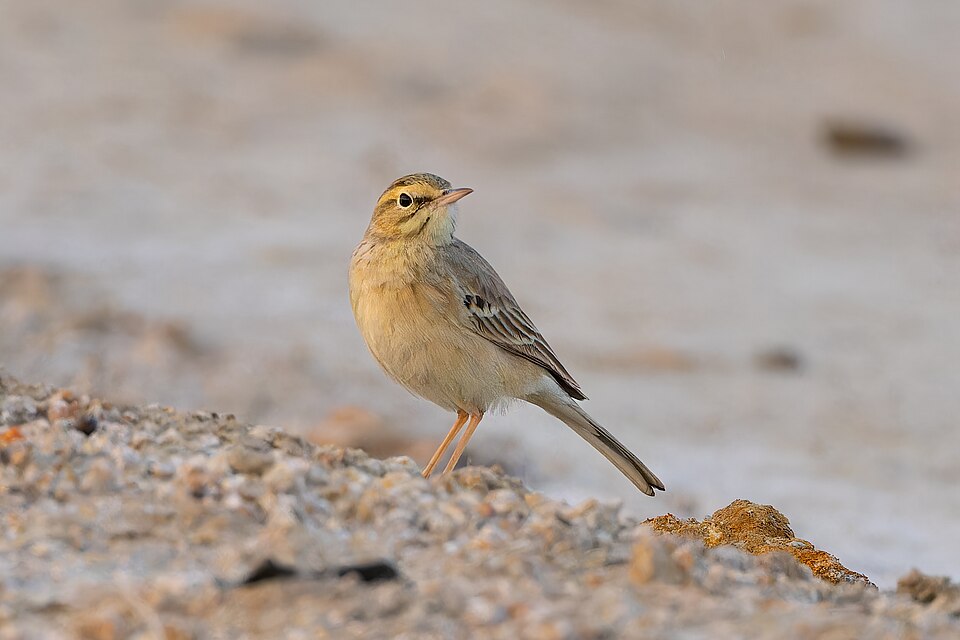 Tawny Pipit
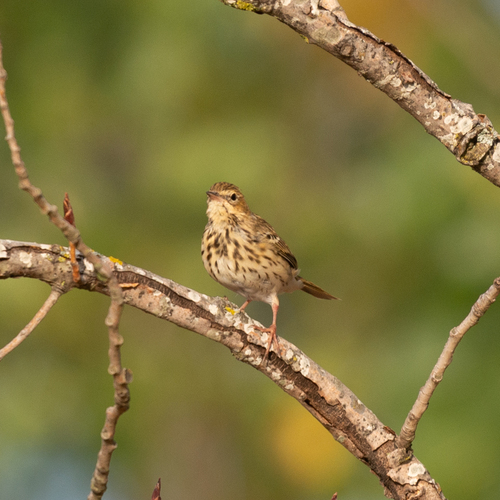 Tree Pipit
In short
The most reliable field mark between Tawny Pipit and Tree Pipit is the degree of streaking: Tree Pipit shows bold black streaks on the breast and upperparts, while Tawny Pipit is much plainer and less streaked overall. Tawny Pipit is slightly larger and longer-legged, with a sandier, more uniform appearance, whereas Tree Pipit has a stronger contrast between a buff breast and white belly, and is more likely to perch in trees. In flight or at rest, focus on the amount and placement of streaking, bill shape, and the bird's preferred perching location. Calls and songs are also distinct, with Tawny Pipit giving a higher-pitched 'schip' and Tree Pipit a stronger 'spek' and a characteristic song flight.
Identification tips
- Breast and upperpart streaking: Tree Pipit shows bold black streaks on the breast and upperparts, while Tawny Pipit is much plainer and less streaked. This is the most reliable visual separator in all plumages.
- Breast color contrast: Tree Pipit has a buff breast with a sharp contrast to the white belly; Tawny Pipit is more uniformly pale below, lacking strong contrast.
- Bill shape: Tawny Pipit has a narrower, more pointed bill compared to the heavier bill of Tree Pipit. This is subtle but can help at close range.
- Leg length and stance: Tawny Pipit often appears longer-legged and more upright, especially when walking on the ground.
- Perching behavior: Tree Pipit frequently perches and sings from trees or bushes; Tawny Pipit almost always stays on the ground.
- Flight style: Tree Pipit's song flight is a slow, parachuting descent with stiff wings and a drawn-out song; Tawny Pipit has a strong, direct flight and does not perform parachuting song flights.
- Call: Tawny Pipit gives a high-pitched 'schip'; Tree Pipit's call is a stronger 'spek'. These are best learned by ear in the field.
- Song: Tawny Pipit's song is a short, loud 'chir-ree chir-ree', while Tree Pipit's song is longer and delivered during a parachuting flight.
- Habitat: In open, treeless or sandy habitats, Tawny Pipit is more likely; in areas with scattered trees, bracken, or woodland edge, Tree Pipit is favored.
- Seasonal context: Both species are migrants, but Tree Pipit is more likely in woodland or edge habitats during migration, while Tawny Pipit prefers open country.
- Size: Tawny Pipit is slightly larger and heavier, but this is rarely obvious in the field unless both species are seen side by side.
- Jizz: Tawny Pipit often looks more elongated and upright, while Tree Pipit is more compact and crouched.
- Confusion risk: In wintering areas, both may occur together; always check for streaking and bill shape before deciding.
- Non-diagnostic marks: Both species are generally brown above and pale below, so do not rely on overall color alone.
- Age/sex: No age- or sex-specific field marks are described for separation; all tips above apply to both adults and immatures.
Size
Both species are similar in size, with Tree Pipit marginally heavier (23.5g vs 22.0g for Tawny Pipit) [wikidata]. Tawny Pipit is described as medium-large for a pipit, reaching about 16 cm in length with a wingspan of 25–28 cm, while Tree Pipit is noted as small but with no precise length given in the notes [wikipedia]. In practice, size alone is not a reliable separator in the field, but Tawny Pipit may appear slightly longer-legged and more upright.
Plumage
Age-specific upperwing pattern is not detailed for either species in the available notes, so focus on overall plumage. Adult and immature Tawny Pipits are sandy brown above and pale below, with very little streaking, giving a washed-out, uniform look. Tree Pipits, by contrast, are brown above with prominent black streaks, especially on the breast and upperparts, and show a marked contrast between the buff breast and white belly. These differences are visible in both perched and flying birds, and are especially helpful in autumn and winter when both species may be present together. The Tree Pipit's heavier streaking is the most consistent visual cue.
Behaviour
Tree Pipit is much more likely to perch in trees, often singing from a branch or launching into its distinctive parachuting song flight. Tawny Pipit is typically seen on the ground, walking upright in open areas, and rarely perches in trees. In flight, Tawny Pipit has a strong, direct flight, while Tree Pipit's song flight is a slow, parachuting descent with stiff wings.
Habitat
Tawny Pipit prefers open, sandy or grassy habitats such as steppe, heath, or dry fields, and avoids areas with much tree cover. Tree Pipit, as its name suggests, is associated with open woodland, woodland edges, and areas with scattered trees or bracken, often where there is a mix of grass and low scrub. If you see a pipit perched in a tree or singing from one, Tree Pipit is much more likely. In open, treeless terrain, Tawny Pipit is favored.
Voice
Tawny Pipit's call is a sharp, high-pitched 'schip', higher than Richard's Pipit and different from Tree Pipit. Its song is a short, loud, disyllabic 'chir-ree chir-ree'. Tree Pipit's call is a strong 'spek', and its song is delivered during a distinctive parachuting flight, becoming more drawn out towards the end. If you hear a drawn-out song from a bird parachuting down from a tree, it's Tree Pipit; a short, repeated 'chir-ree' from a bird on the ground suggests Tawny.