

Motmot

Tawny Owl vs Maghreb Owl

Strix aluco versus Strix mauritanica

Play a quiz with Tawny Owl and Maghreb Owl
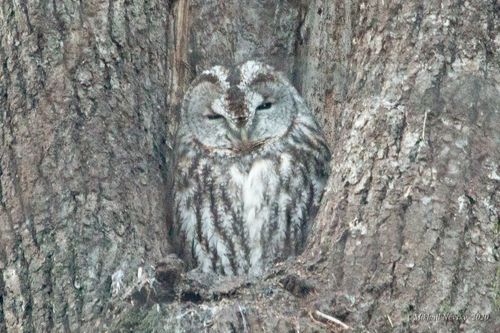
Tawny Owl (Strix aluco) Tawny Owl
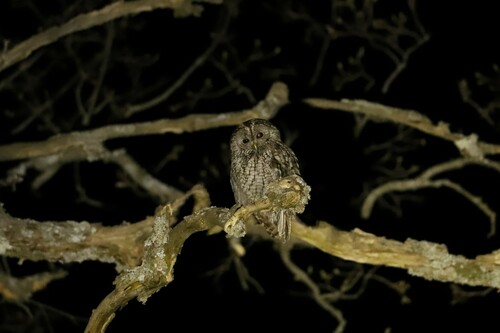
Maghreb Owl (Strix mauritanica) Maghreb Owl

Media

Loading…

In short

Separating Tawny Owl from Maghreb Owl in the field is extremely challenging, as both species are very similar in structure and plumage, with no well-documented differences in juvenile or immature wing patterns. The most reliable distinction is geographic: Tawny Owl is found across Europe and western Siberia, while Maghreb Owl is restricted to North Africa. Both are medium-sized, stocky owls with rounded heads, lacking ear tufts, and show pale underparts with dark streaks and variable brown or greyish upperparts. In the absence of range information, field marks alone are not reliably diagnostic with current knowledge.

Identification tips

  1. Geographic range is the most reliable separator: Tawny Owl occurs in Europe and western Siberia; Maghreb Owl is found only in North Africa. If you are outside North Africa, you are almost certainly seeing Tawny Owl.
  2. Plumage is not diagnostic: Both species show pale, streaked underparts and variable brown or greyish upperparts, with no ear tufts and a plain facial disc. Both morphs (brown and grey) and intermediate birds occur in both species.
  3. No known differences in juvenile or immature wing pattern: There are no documented differences in upperwing pattern, tail shape, or molt timing between the two, so flight views of young birds are not helpful for separation.
  4. Structure is extremely similar: Both are stocky, medium-sized owls with broad, rounded wings and a large, rounded head. Bill, wing formula, and tail shape do not differ in the field.
  5. Sexual dimorphism is not useful: Females are larger and heavier than males in both, but this is not a practical field mark without direct comparison.
  6. Behavior is not diagnostic: Both species fly with slow, heavy, silent glides and perch upright in wooded habitats.
  7. Habitat overlap is limited: Only Maghreb Owl occurs in North Africa; only Tawny Owl in Europe and Siberia. Both prefer woodlands.
  8. Vocalizations are not described as different in current sources: Do not rely on calls or songs for separation unless new research emerges.
  9. If in doubt, use location: In areas where ranges do not overlap, identification is straightforward. In rare cases of vagrancy, expert review is needed.
  10. Do not rely on subtle plumage shades: Both species show a range of brown and grey morphs, and intermediates, so color is not a safe separator.
  11. Facial disc and eye color are similar: Both have plain facial discs and dark brown eyes.
  12. No unique field marks for immatures: Young birds are not separable by field marks in current literature.
  13. No difference in molt timing: Both molt gradually from June to December.
  14. No difference in flight jizz: Both show similar flight style and structure.
  15. If you suspect a Maghreb Owl outside North Africa, document carefully and seek expert review.

Size

Tawny Owl has a documented average body mass of 475 g (adults), with a length of 37–46 cm and a wingspan of 81–105 cm. No direct measurements are available for Maghreb Owl, but it is described as similar in size and structure to Tawny Owl. Thus, size is not a useful field mark for separation.

Plumage

Both species have very similar plumage across all ages and morphs: adults and immatures show pale, streaked underparts and variable brown or greyish upperparts, with a plain, rounded facial disc and no ear tufts. There are no documented differences in juvenile or immature upperwing pattern, tail shape, or molt timing between the two. Both species are sexually dimorphic, with females larger and heavier than males, but this is not a practical field mark. The gradual molt from June to December is shared. In summary, plumage is not reliably diagnostic for any age or season.

Behaviour

Both species are robust, stocky owls with a slow, heavy, and silent flight, gliding on broad, rounded wings. Their flight is less undulating and with fewer wingbeats than other Eurasian owls, and they typically fly at greater height. Both perch upright and show similar nocturnal hunting behaviors. No behavioral differences are documented between the two.

Habitat

Tawny Owl is found in woodlands across Europe and western Siberia, while Maghreb Owl is restricted to North African habitats. Both prefer wooded areas, but only the Maghreb Owl occurs in North Africa. If seen in Europe or Siberia, the bird is almost certainly a Tawny Owl; in North Africa, it is likely a Maghreb Owl.

Submit a better description

Use the same sections as the comparison. Your text is published immediately.

Separating Tawny Owl from Maghreb Owl in the field is extremely challenging, as both species are very similar in structure and plumage, with no well-documented differences in juvenile or immature wing patterns. The most reliable distinction is geographic: Tawny Owl is found across Europe and western Siberia, while Maghreb Owl is restricted to North Africa. Both are medium-sized, stocky owls with rounded heads, lacking ear tufts, and show pale underparts with dark streaks and variable brown or greyish upperparts. In the absence of range information, field marks alone are not reliably diagnostic with current knowledge.

  1. Geographic range is the most reliable separator: Tawny Owl occurs in Europe and western Siberia; Maghreb Owl is found only in North Africa. If you are outside North Africa, you are almost certainly seeing Tawny Owl.
  2. Plumage is not diagnostic: Both species show pale, streaked underparts and variable brown or greyish upperparts, with no ear tufts and a plain facial disc. Both morphs (brown and grey) and intermediate birds occur in both species.
  3. No known differences in juvenile or immature wing pattern: There are no documented differences in upperwing pattern, tail shape, or molt timing between the two, so flight views of young birds are not helpful for separation.
  4. Structure is extremely similar: Both are stocky, medium-sized owls with broad, rounded wings and a large, rounded head. Bill, wing formula, and tail shape do not differ in the field.
  5. Sexual dimorphism is not useful: Females are larger and heavier than males in both, but this is not a practical field mark without direct comparison.
  6. Behavior is not diagnostic: Both species fly with slow, heavy, silent glides and perch upright in wooded habitats.
  7. Habitat overlap is limited: Only Maghreb Owl occurs in North Africa; only Tawny Owl in Europe and Siberia. Both prefer woodlands.
  8. Vocalizations are not described as different in current sources: Do not rely on calls or songs for separation unless new research emerges.
  9. If in doubt, use location: In areas where ranges do not overlap, identification is straightforward. In rare cases of vagrancy, expert review is needed.
  10. Do not rely on subtle plumage shades: Both species show a range of brown and grey morphs, and intermediates, so color is not a safe separator.
  11. Facial disc and eye color are similar: Both have plain facial discs and dark brown eyes.
  12. No unique field marks for immatures: Young birds are not separable by field marks in current literature.
  13. No difference in molt timing: Both molt gradually from June to December.
  14. No difference in flight jizz: Both show similar flight style and structure.
  15. If you suspect a Maghreb Owl outside North Africa, document carefully and seek expert review.

Tawny Owl has a documented average body mass of 475 g (adults), with a length of 37–46 cm and a wingspan of 81–105 cm. No direct measurements are available for Maghreb Owl, but it is described as similar in size and structure to Tawny Owl. Thus, size is not a useful field mark for separation.

Both species have very similar plumage across all ages and morphs: adults and immatures show pale, streaked underparts and variable brown or greyish upperparts, with a plain, rounded facial disc and no ear tufts. There are no documented differences in juvenile or immature upperwing pattern, tail shape, or molt timing between the two. Both species are sexually dimorphic, with females larger and heavier than males, but this is not a practical field mark. The gradual molt from June to December is shared. In summary, plumage is not reliably diagnostic for any age or season.

Both species are robust, stocky owls with a slow, heavy, and silent flight, gliding on broad, rounded wings. Their flight is less undulating and with fewer wingbeats than other Eurasian owls, and they typically fly at greater height. Both perch upright and show similar nocturnal hunting behaviors. No behavioral differences are documented between the two.

Tawny Owl is found in woodlands across Europe and western Siberia, while Maghreb Owl is restricted to North African habitats. Both prefer wooded areas, but only the Maghreb Owl occurs in North Africa. If seen in Europe or Siberia, the bird is almost certainly a Tawny Owl; in North Africa, it is likely a Maghreb Owl.

Discard your changes?

You have unsaved edits. If you leave now, those changes will be lost.

Tawny Owl · Maghreb Owl · My Tricky Birds