

Taiga Flycatcher vs European Pied Flycatcher
Ficedula albicilla versus Ficedula hypoleuca
Play a quiz with Taiga Flycatcher and European Pied Flycatcher
 Taiga Flycatcher
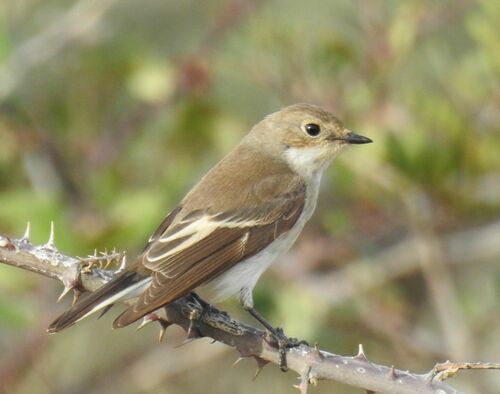 European Pied Flycatcher
In short
The most reliable field mark between Taiga Flycatcher and European Pied Flycatcher is the male's throat color in breeding plumage: Taiga males show a distinct orange-red throat, while Pied males are black-and-white with no red. Females and non-breeding birds are trickier; focus on tail color and wing pattern. Taiga Flycatcher females have a blackish tail with white edges, while Pied Flycatcher females and immatures have a brown tail and a prominent white wing patch. Juvenile and non-breeding Pied Flycatchers can be especially confusing, so careful attention to tail and wing pattern is essential. Both species are small, active flycatchers, but their subtle differences are critical for confident identification.
Identification tips
- Breeding male throat color: Taiga Flycatcher males show a clear orange-red throat patch (not extending to the breast), while Pied Flycatcher males never show red—look for black-and-white contrast instead. This is the most straightforward mark in spring/summer.
- Wing patch (all ages): Pied Flycatcher (especially males, but also females and immatures) shows a prominent white wing patch, visible both perched and in flight. Taiga Flycatcher lacks a strong white wing patch; any pale area on the wing is much less obvious.
- Tail color (females/immatures): Taiga Flycatcher females and immatures have a blackish tail with white edges. Pied Flycatcher females and immatures have a brown tail with white sides. This is a key mark for non-breeding birds.
- Tail pattern in flight: Pied Flycatcher shows white sides to the tail, which can be quite prominent in flight. Taiga Flycatcher also has white in the tail, but the tail is blackish overall, and the white is more restricted to the edges.
- Breast and underparts: Taiga Flycatcher females have a buffish breast with mostly white underparts. Pied Flycatcher females are white below but lack the buff wash.
- Head and ear coverts (breeding males): Taiga Flycatcher males have blue-grey tinges on the ear coverts and neck sides, which Pied Flycatcher males lack.
- Forehead patch (Pied Flycatcher males): Pied Flycatcher males have a small (or, in Iberian birds, larger) white forehead patch, absent in Taiga Flycatcher.
- Seasonal context: If seen in Europe during the breeding season, Pied Flycatcher is far more likely. Taiga Flycatcher is a rare vagrant in western Europe but regular in Asia.
- Bill and structure: Both are similar in structure, with no reliable difference in bill shape or overall jizz based on the sources.
- Juvenile confusion: Juvenile Pied Flycatchers can be very similar to Taiga Flycatcher females, but the combination of brown tail and strong white wing patch points to Pied, while a blackish tail and weak wing panel suggest Taiga.
- Male breast color (breeding): Pied Flycatcher males are white below, while Taiga Flycatcher males have a red throat but otherwise white underparts.
- White in tail (perched): Look for the extent and placement of white in the tail—Pied's is on the sides, Taiga's is on the edges.
- No strong difference in size: Do not rely on size or shape to separate these two in the field.
- No vocalization cues provided: Calls and songs are not covered in the sources, so use visual marks.
- Hybrid confusion: Pied Flycatcher can hybridize with Collared Flycatcher, but this does not affect separation from Taiga Flycatcher.
Size
Both species are similar in size, with the European Pied Flycatcher averaging around 12 grams in body mass [wikidata]. There is no specific mass data for Taiga Flycatcher in the provided sources, but structurally they are both small, slim flycatchers with no major size difference likely to be apparent in the field.
Plumage
- Juvenile and non-breeding birds: Pied Flycatcher juveniles, females, and non-breeding males are pale brown above with a prominent white wing patch and white sides to the tail. Taiga Flycatcher females and immatures are brown above but lack a strong white wing patch; their tail is blackish with white flanks, not brown.
- Adult breeding males: Pied Flycatcher males are strikingly black above and white below, with a large white wing patch, white tail sides, and a small white forehead patch. Taiga Flycatcher breeding males have blue-grey tinges on the head and a distinctive orange-red throat, with no large white wing patch and a blackish tail with white edges.
- Females: Taiga Flycatcher females have brown upperparts, a blackish tail with white edges, and buffish breast. Pied Flycatcher females are brown above, with a brown tail and a prominent white wing patch, but lack the orange-red throat.
- Tail color: Key difference—Taiga Flycatcher females/immatures have a blackish tail, Pied Flycatcher females/immatures have a brown tail.
Behaviour
Both species are active, insectivorous flycatchers, often sallying from perches to catch prey. No diagnostic behavioral differences are noted in the sources provided.
Habitat
Taiga Flycatcher breeds in northern Eurasian taiga forests and winters in South and Southeast Asia. European Pied Flycatcher breeds in most of Europe and the Western Palearctic, often in deciduous or mixed woodlands. Habitat overlap is rare except on migration or as vagrants, but both can be found in wooded habitats during passage.
Taiga Flycatcher · European Pied Flycatcher · My Tricky Birds