

Motmot

Syrian Woodpecker vs Lesser Spotted Woodpecker

Dendrocopos syriacus versus Dryobates minor

Play a quiz with Syrian Woodpecker and Lesser Spotted Woodpecker
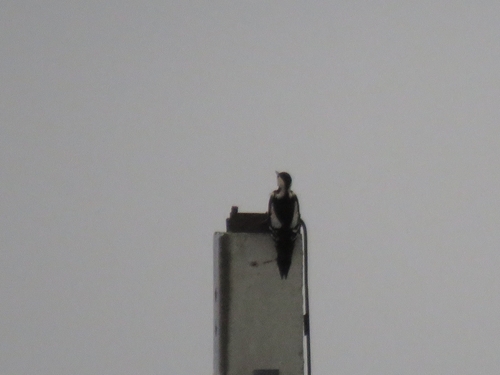
Syrian Woodpecker (Dendrocopos syriacus) Syrian Woodpecker
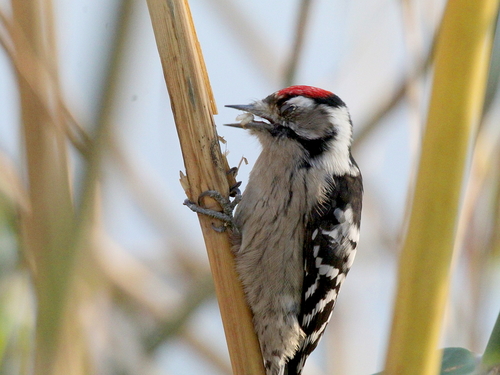
Lesser Spotted Woodpecker (Dryobates minor) Lesser Spotted Woodpecker

Media

Loading…

In short

The most reliable field mark to separate Syrian Woodpecker from Lesser Spotted Woodpecker is size: Syrian is much larger and more robust, with a longer bill and a prominent white shoulder patch, while Lesser Spotted is distinctly small, with broad black-and-white barring across the wings and back. Juvenile and adult Lesser Spotted Woodpeckers show strong barring on the lower back and wings, unlike the Syrian, which has more limited white spotting and a cleaner black back. Syrian Woodpecker also shows reddish under-tail coverts and a pale face with more white, while Lesser Spotted has a streaked white underside and a darker, more barred upper side. In flight or at a distance, focus on overall size, bill length, and the pattern of white on the wings and back. Both species can be overlooked in the canopy, but their structure and wing pattern are usually enough to tell them apart.

Identification tips

  1. Size is the quickest separator: Syrian Woodpecker is much larger and bulkier than Lesser Spotted; if the bird looks small and delicate, focus on Lesser Spotted.
  2. Bill length and shape: Syrian has a noticeably longer, more robust bill; Lesser Spotted's bill is short and stubby, almost dainty.
  3. White shoulder patch (Syrian): Look for a large, clean white patch on the shoulder of Syrian Woodpecker; Lesser Spotted lacks this and instead has a more uniformly barred upperwing.
  4. Back and wing barring: Lesser Spotted shows broad black-and-white barring across the lower back and wings (all ages), while Syrian's back is mostly solid black with only white spots forming three wingbars.
  5. Tail pattern: Lesser Spotted's outer tail feathers are barred; Syrian's show only a few white spots, not full barring.
  6. Underparts color: Syrian has buffish white underparts with reddish under-tail coverts; Lesser Spotted is cleaner white below, with fine streaks on the flanks and no reddish wash.
  7. Head pattern (male): Male Syrian shows a red nape spot; male Lesser Spotted has a red crown. Females of both lack red on the head, but juvenile Lesser Spotted may show red on the crown.
  8. Facial markings: Syrian has a paler face with more white, while Lesser Spotted has a black supercilium and moustachial stripe, and a brownish forehead.
  9. Jizz in flight: Syrian appears robust and direct; Lesser Spotted looks stumpy and almost triangular, especially when bounding between trees.
  10. Foraging height: Lesser Spotted is usually high in the canopy, often on thin dead branches; Syrian is more often seen at mid-levels or on thicker trunks.
  11. Drumming: Syrian's drumming is longer and decreases in volume; Lesser Spotted's is a short, rapid rattle. With practice, this can be diagnostic.
  12. Calls: Syrian's 'quit, quit' is softer; Lesser Spotted's 'keek' is louder and more insistent for its size.
  13. Habitat context: If the bird is in open parkland or farmland with old trees, Syrian is more likely; deep, mature woodland with lots of dead wood favors Lesser Spotted.
  14. Juvenile confusion: Juvenile Lesser Spotted may show red on the crown, but still has strong barring on the back and wings; Syrian juveniles lack the nape spot but otherwise resemble adults structurally and in wing pattern.
  15. Pitfalls: Do not confuse female or juvenile Syrian with Lesser Spotted based on lack of red on the head; always check size, bill, and upperwing pattern as primary clues.

Size

Syrian Woodpecker is substantially larger, measuring about 23 cm in length, whereas Lesser Spotted Woodpecker is only 14–16.5 cm long [wikipedia]. The Syrian is also heavier and bulkier, with a noticeably longer bill and a stouter build. Lesser Spotted is the smallest European woodpecker, appearing delicate and compact, with a short, stubby bill. In the field, size alone is often enough to rule out Lesser Spotted if the bird appears anywhere near the size of a Great Spotted Woodpecker.

Plumage

Juveniles and adults of Lesser Spotted Woodpecker are characterized by broad, conspicuous black-and-white barring across the wings and lower back, and the outer tail feathers are also barred. This strong barring is absent in Syrian Woodpecker, which instead has black upperparts with a large white shoulder patch and three white-spotted wingbars, but the back itself is not barred. Syrian Woodpecker's underparts are buffish white with reddish under-tail coverts, while Lesser Spotted has clean white underparts with fine streaks on the flanks. Male Syrian Woodpecker has a crimson nape spot, while male Lesser Spotted has a crimson crown; females of both species lack these red head markings, but juvenile Lesser Spotted may show some red on the crown. The face of Syrian is paler, with more white, and the bill is longer and darker. Lesser Spotted's face is more patterned, with a black supercilium and moustachial stripe, and a brownish forehead.

Behaviour

Both species forage on tree trunks and branches, but Lesser Spotted Woodpecker spends more time high in the canopy and is often overlooked due to its small size and preference for thin, dead branches. Syrian Woodpecker is more likely to be seen at mid-levels or lower on trunks and thicker branches. In flight, Syrian appears more robust and direct, while Lesser Spotted has a stumpy, almost triangular look, especially when bounding between trees. Both drum and chip at wood, but the scale and strength of the activity is greater in Syrian due to its size.

Habitat

Syrian Woodpecker favors open woodlands, parks, and cultivated areas with old trees, often in more open or edge habitats. Lesser Spotted Woodpecker is more tied to mature woodland, especially with a good supply of dead or decaying wood, and is more likely to be found high in the canopy of broadleaf woods and parks. Syrian's range is more southeastern and expanding northwest, while Lesser Spotted is more widespread but declining in some areas due to loss of old trees.

Voice

Syrian Woodpecker's call is a sharp, soft 'quit, quit', less harsh than Great Spotted, and its drumming is longer and decreases in volume. Lesser Spotted Woodpecker gives a repeated 'keek', which is surprisingly loud for its size, and its drumming is a short, rapid rattle, distinguishable with experience from larger species. Both drum, but the pattern and volume differ: Syrian's drumming is longer and more variable in loudness, Lesser Spotted's is shorter and more even.

Submit a better description

Use the same sections as the comparison. Your text is published immediately.

The most reliable field mark to separate Syrian Woodpecker from Lesser Spotted Woodpecker is size: Syrian is much larger and more robust, with a longer bill and a prominent white shoulder patch, while Lesser Spotted is distinctly small, with broad black-and-white barring across the wings and back. Juvenile and adult Lesser Spotted Woodpeckers show strong barring on the lower back and wings, unlike the Syrian, which has more limited white spotting and a cleaner black back. Syrian Woodpecker also shows reddish under-tail coverts and a pale face with more white, while Lesser Spotted has a streaked white underside and a darker, more barred upper side. In flight or at a distance, focus on overall size, bill length, and the pattern of white on the wings and back. Both species can be overlooked in the canopy, but their structure and wing pattern are usually enough to tell them apart.

  1. Size is the quickest separator: Syrian Woodpecker is much larger and bulkier than Lesser Spotted; if the bird looks small and delicate, focus on Lesser Spotted.
  2. Bill length and shape: Syrian has a noticeably longer, more robust bill; Lesser Spotted's bill is short and stubby, almost dainty.
  3. White shoulder patch (Syrian): Look for a large, clean white patch on the shoulder of Syrian Woodpecker; Lesser Spotted lacks this and instead has a more uniformly barred upperwing.
  4. Back and wing barring: Lesser Spotted shows broad black-and-white barring across the lower back and wings (all ages), while Syrian's back is mostly solid black with only white spots forming three wingbars.
  5. Tail pattern: Lesser Spotted's outer tail feathers are barred; Syrian's show only a few white spots, not full barring.
  6. Underparts color: Syrian has buffish white underparts with reddish under-tail coverts; Lesser Spotted is cleaner white below, with fine streaks on the flanks and no reddish wash.
  7. Head pattern (male): Male Syrian shows a red nape spot; male Lesser Spotted has a red crown. Females of both lack red on the head, but juvenile Lesser Spotted may show red on the crown.
  8. Facial markings: Syrian has a paler face with more white, while Lesser Spotted has a black supercilium and moustachial stripe, and a brownish forehead.
  9. Jizz in flight: Syrian appears robust and direct; Lesser Spotted looks stumpy and almost triangular, especially when bounding between trees.
  10. Foraging height: Lesser Spotted is usually high in the canopy, often on thin dead branches; Syrian is more often seen at mid-levels or on thicker trunks.
  11. Drumming: Syrian's drumming is longer and decreases in volume; Lesser Spotted's is a short, rapid rattle. With practice, this can be diagnostic.
  12. Calls: Syrian's 'quit, quit' is softer; Lesser Spotted's 'keek' is louder and more insistent for its size.
  13. Habitat context: If the bird is in open parkland or farmland with old trees, Syrian is more likely; deep, mature woodland with lots of dead wood favors Lesser Spotted.
  14. Juvenile confusion: Juvenile Lesser Spotted may show red on the crown, but still has strong barring on the back and wings; Syrian juveniles lack the nape spot but otherwise resemble adults structurally and in wing pattern.
  15. Pitfalls: Do not confuse female or juvenile Syrian with Lesser Spotted based on lack of red on the head; always check size, bill, and upperwing pattern as primary clues.

Syrian Woodpecker is substantially larger, measuring about 23 cm in length, whereas Lesser Spotted Woodpecker is only 14–16.5 cm long [wikipedia]. The Syrian is also heavier and bulkier, with a noticeably longer bill and a stouter build. Lesser Spotted is the smallest European woodpecker, appearing delicate and compact, with a short, stubby bill. In the field, size alone is often enough to rule out Lesser Spotted if the bird appears anywhere near the size of a Great Spotted Woodpecker.

Juveniles and adults of Lesser Spotted Woodpecker are characterized by broad, conspicuous black-and-white barring across the wings and lower back, and the outer tail feathers are also barred. This strong barring is absent in Syrian Woodpecker, which instead has black upperparts with a large white shoulder patch and three white-spotted wingbars, but the back itself is not barred. Syrian Woodpecker's underparts are buffish white with reddish under-tail coverts, while Lesser Spotted has clean white underparts with fine streaks on the flanks. Male Syrian Woodpecker has a crimson nape spot, while male Lesser Spotted has a crimson crown; females of both species lack these red head markings, but juvenile Lesser Spotted may show some red on the crown. The face of Syrian is paler, with more white, and the bill is longer and darker. Lesser Spotted's face is more patterned, with a black supercilium and moustachial stripe, and a brownish forehead.

Both species forage on tree trunks and branches, but Lesser Spotted Woodpecker spends more time high in the canopy and is often overlooked due to its small size and preference for thin, dead branches. Syrian Woodpecker is more likely to be seen at mid-levels or lower on trunks and thicker branches. In flight, Syrian appears more robust and direct, while Lesser Spotted has a stumpy, almost triangular look, especially when bounding between trees. Both drum and chip at wood, but the scale and strength of the activity is greater in Syrian due to its size.

Syrian Woodpecker favors open woodlands, parks, and cultivated areas with old trees, often in more open or edge habitats. Lesser Spotted Woodpecker is more tied to mature woodland, especially with a good supply of dead or decaying wood, and is more likely to be found high in the canopy of broadleaf woods and parks. Syrian's range is more southeastern and expanding northwest, while Lesser Spotted is more widespread but declining in some areas due to loss of old trees.

Syrian Woodpecker's call is a sharp, soft 'quit, quit', less harsh than Great Spotted, and its drumming is longer and decreases in volume. Lesser Spotted Woodpecker gives a repeated 'keek', which is surprisingly loud for its size, and its drumming is a short, rapid rattle, distinguishable with experience from larger species. Both drum, but the pattern and volume differ: Syrian's drumming is longer and more variable in loudness, Lesser Spotted's is shorter and more even.

Discard your changes?

You have unsaved edits. If you leave now, those changes will be lost.

Syrian Woodpecker · Lesser Spotted Woodpecker · My Tricky Birds