

Streaked Weaver vs Baya Weaver
Ploceus manyar versus Ploceus philippinus
Play a quiz with Streaked Weaver and Baya Weaver
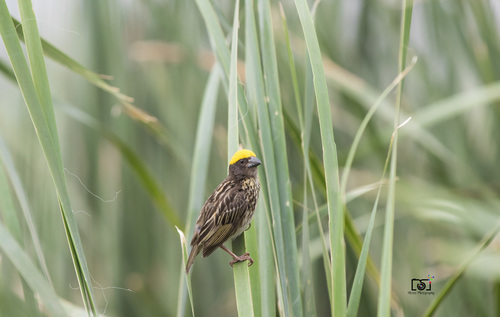 Streaked Weaver
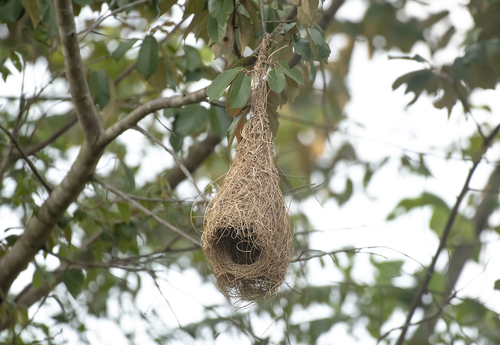 Baya Weaver
In short
The most reliable field mark between Streaked Weaver and Baya Weaver is the presence of streaked underparts on the Streaked Weaver, which are absent in Baya Weaver. Both species are similar in overall shape and coloration, leading to frequent confusion, but careful attention to the patterning below is diagnostic. Habitat overlap is extensive, but Streaked Weaver is generally less common and more tied to reed beds, while Baya Weaver is widespread in open country and often seen in larger flocks. Juvenile and non-breeding birds can be especially tricky, so focus on underpart streaking and context for the best chance at a correct ID.
Identification tips
- Streaked underparts: Streaked Weaver always shows obvious dark streaks on the breast and belly, visible at close range and sometimes even at a distance in good light. Baya Weaver is always plain below, regardless of age or sex. This is the single most reliable field mark.
- Breeding male head color: In breeding season, male Baya Weaver has a bright yellow crown and breast, which Streaked Weaver lacks. If you see a weaver with a vivid yellow head and plain underparts, it's a Baya Weaver. Streaked Weaver males are more subdued, with no extensive yellow and always streaked below.
- Non-breeding and juvenile confusion: Immature and non-breeding birds of both species are dull brownish and lack bright yellow, but Streaked Weaver juveniles and females still show streaked underparts. Baya Weaver of all ages is plain below.
- Habitat context: Streaked Weaver is strongly tied to reed beds and marshy water edges, often in small colonies. Baya Weaver is much more likely in open fields, grasslands, and even urban parks, usually in larger flocks.
- Nest placement: If you see the nest, Baya Weaver's is a large, retort-shaped structure often suspended from trees or palms, sometimes over water or dry ground. Streaked Weaver nests are colonial but more often built among reeds near water.
- Flock size and behavior: Large, noisy flocks in open country are almost always Baya Weaver. Streaked Weaver is rarely seen in such numbers or in such open situations.
- Bill and structure: Both species have similar conical bills and compact bodies; structure is not a reliable separator in the field.
- Flight and wing pattern: No distinctive upperwing or flight marks are described for either species, so do not rely on wing pattern for separation.
- Sex differences: Female and non-breeding male Baya Weavers are plain below, while all Streaked Weavers (male, female, juvenile) are streaked below.
- Abundance: Baya Weaver is generally much more common and widespread; if you are in typical open-country habitat and see a plain-bellied weaver, Baya Weaver is the default.
- Pitfalls: Do not rely on yellow tones alone, as non-breeding Baya Weavers can appear dull and overlap with Streaked Weaver in overall color. Always check the underparts for streaking.
- Seasonal context: Breeding males are easiest to separate by head color (yellow in Baya, not in Streaked), but in non-breeding season or among juveniles, underpart streaking is the only safe mark.
- Geographic range: Both species overlap widely in South and Southeast Asia, so do not use range alone for ID.
- Perched vs. in flight: Both species are most easily separated when perched and the underparts are visible. In flight, separation is difficult unless you get a good look at the belly.
- When in doubt: If you cannot see the underparts clearly, do not attempt a confident ID between these two species.
Size
Both species are very similar in size and structure, making size an unreliable field mark. The Baya Weaver has a documented average mass of about 25 g [wikidata], while no specific mass is given for Streaked Weaver, but field experience and references suggest they are closely matched. Expect both to appear as small, compact weavers with short tails and conical bills.
Plumage
The most consistent plumage difference is the streaked underparts of Streaked Weaver (all ages and sexes), which contrast with the plain, unstreaked underparts of Baya Weaver. This difference holds true even in juveniles and non-breeding birds, which are otherwise very similar in overall color and lack the bright breeding plumage of adult males. In breeding season, male Baya Weavers develop a bright yellow crown and breast, but Streaked Weaver males do not show such extensive yellow, instead retaining a more subdued, streaked look below. Upperwing and flight patterns are not described as distinctive for either species, so focus on underpart streaking and head color in adults. Immature and juvenile birds of both species are duller, but the streaking on Streaked Weaver's underparts remains a key mark.
Behaviour
Both species are social and nest colonially, but Baya Weaver is more likely to be seen in large, conspicuous flocks in open country, including agricultural fields, grasslands, and urban edges. Streaked Weaver tends to nest in smaller colonies, often in reed beds or near water, and is less likely to be seen in large, open flocks. Both species weave elaborate nests, but Baya Weaver's retort-shaped, hanging nests are especially distinctive and often suspended from trees or palms over water or dry ground. Streaked Weaver nests are also colonial but more often placed in reeds close to water.
Habitat
Habitat overlap is broad: both occur across South and Southeast Asia, often near water. Baya Weaver is more abundant and adaptable, found in grasslands, cultivated fields, scrub, and secondary growth, and is often seen in open country and even urban areas. Streaked Weaver is less common and more closely associated with reed beds and marshy edges of water bodies, rarely venturing far from such habitats. If you see a weaver in a dense reed bed, especially in a small group, consider Streaked Weaver; in open fields or large flocks, Baya Weaver is more likely.