

Motmot

Straw-headed Bulbul vs Ayeyarwady Bulbul

Pycnonotus zeylanicus versus Pycnonotus blanfordi

Play a quiz with Straw-headed Bulbul and Ayeyarwady Bulbul
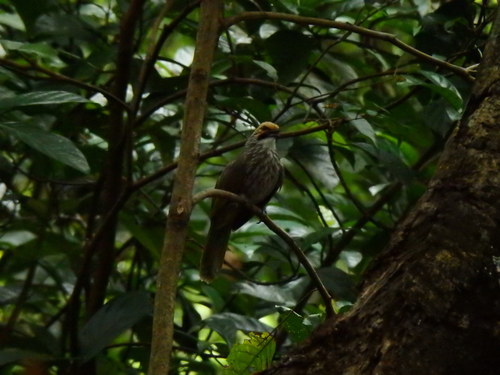
Straw-headed Bulbul (Pycnonotus zeylanicus) Straw-headed Bulbul
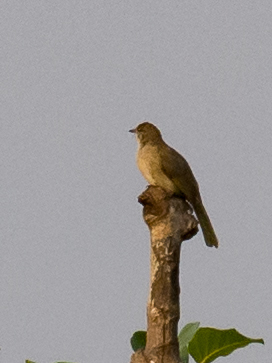
Ayeyarwady Bulbul (Pycnonotus blanfordi) Ayeyarwady Bulbul

Media

Loading…

In short

The most reliable way to separate Straw-headed Bulbul from Ayeyarwady Bulbul is by size: Straw-headed is more than twice as heavy and appears much larger and bulkier in the field. If you see both species together, the difference is striking. Both are typical bulbuls in shape and general coloration, but their ranges do not overlap: Straw-headed occurs from the Malay Peninsula to Borneo, while Ayeyarwady is endemic to Myanmar. Habitat preferences overlap in lowland forests, but Straw-headed is also found in mangroves, plantations, and gardens. If you are unsure, focus on overall bulk, range, and context.

Identification tips

  1. Size is the most immediate clue: Straw-headed Bulbul is more than twice as heavy as Ayeyarwady Bulbul and looks much larger and bulkier in the field. Use this as your primary separator if you get a good look.
  2. Geographic range is diagnostic: Straw-headed Bulbul is found from the Malay Peninsula to Borneo, while Ayeyarwady Bulbul is endemic to Myanmar. If you are outside Myanmar, Straw-headed is the only option of these two.
  3. Habitat context can help: If you see a bulbul in mangrove forest, plantations, or rural gardens, it is likely Straw-headed, as Ayeyarwady is only documented in moist lowland forests.
  4. Plumage is not a reliable separator: No distinctive plumage or age-specific wing patterns are described for either species in the available sources. Do not rely on color or pattern alone.
  5. Structure/jizz: Straw-headed Bulbul appears robust, with a large head and thick neck, while Ayeyarwady is more slender and compact. This is most apparent when you have a direct comparison or are familiar with bulbul proportions.
  6. No documented differences in flight or perched wing pattern: Neither species has described age-specific upperwing or flight marks, so do not use these features for separation.
  7. Behavior is not a separator: Both are typical bulbuls in activity and posture; no unique behaviors are noted.
  8. Vocalizations are not described: If you hear a song, it is not diagnostic based on current sources.
  9. Sex and season: No sexual dimorphism or seasonal plumage differences are documented for either species; all ages and sexes are best separated by size and range.
  10. If in doubt, use a combination of size, range, and habitat: These are the only reliable field marks based on current knowledge.

Size

Straw-headed Bulbul is a very large bulbul, weighing about 86 g, while Ayeyarwady Bulbul is much smaller at 33 g ([wikidata]). In the field, Straw-headed appears robust and heavyset, with a noticeably larger head and body compared to the more slender, compact Ayeyarwady. If you are familiar with the typical size of bulbuls, Straw-headed will stand out as exceptionally large, while Ayeyarwady is closer to the average for the family.

Plumage

No age-specific or wing pattern marks are documented for either species in the provided sources. Both are typical bulbuls in overall coloration, but detailed differences in plumage are not described in the notes. Therefore, plumage is not a reliable field separator based on the current information.

Behaviour

Both species are described as typical bulbuls in their family, but no specific behavioral differences are given. Both are likely to be active, arboreal, and vocal, as is common for the group. Without further detail, behavior is not a strong separator.

Habitat

Habitat overlap exists in subtropical or tropical moist lowland forests, but Straw-headed Bulbul uses a wider range of habitats, including mangrove forests, moist shrubland, arable land, plantations, and rural gardens ([wikipedia]). Ayeyarwady Bulbul is more restricted, occurring only in Myanmar and only in moist lowland forests. If you encounter a bulbul in mangroves or agricultural areas outside Myanmar, it is almost certainly Straw-headed. Conversely, in Myanmar's interior forests, Ayeyarwady is the expected species.

Submit a better description

Use the same sections as the comparison. Your text is published immediately.

The most reliable way to separate Straw-headed Bulbul from Ayeyarwady Bulbul is by size: Straw-headed is more than twice as heavy and appears much larger and bulkier in the field. If you see both species together, the difference is striking. Both are typical bulbuls in shape and general coloration, but their ranges do not overlap: Straw-headed occurs from the Malay Peninsula to Borneo, while Ayeyarwady is endemic to Myanmar. Habitat preferences overlap in lowland forests, but Straw-headed is also found in mangroves, plantations, and gardens. If you are unsure, focus on overall bulk, range, and context.

  1. Size is the most immediate clue: Straw-headed Bulbul is more than twice as heavy as Ayeyarwady Bulbul and looks much larger and bulkier in the field. Use this as your primary separator if you get a good look.
  2. Geographic range is diagnostic: Straw-headed Bulbul is found from the Malay Peninsula to Borneo, while Ayeyarwady Bulbul is endemic to Myanmar. If you are outside Myanmar, Straw-headed is the only option of these two.
  3. Habitat context can help: If you see a bulbul in mangrove forest, plantations, or rural gardens, it is likely Straw-headed, as Ayeyarwady is only documented in moist lowland forests.
  4. Plumage is not a reliable separator: No distinctive plumage or age-specific wing patterns are described for either species in the available sources. Do not rely on color or pattern alone.
  5. Structure/jizz: Straw-headed Bulbul appears robust, with a large head and thick neck, while Ayeyarwady is more slender and compact. This is most apparent when you have a direct comparison or are familiar with bulbul proportions.
  6. No documented differences in flight or perched wing pattern: Neither species has described age-specific upperwing or flight marks, so do not use these features for separation.
  7. Behavior is not a separator: Both are typical bulbuls in activity and posture; no unique behaviors are noted.
  8. Vocalizations are not described: If you hear a song, it is not diagnostic based on current sources.
  9. Sex and season: No sexual dimorphism or seasonal plumage differences are documented for either species; all ages and sexes are best separated by size and range.
  10. If in doubt, use a combination of size, range, and habitat: These are the only reliable field marks based on current knowledge.

Straw-headed Bulbul is a very large bulbul, weighing about 86 g, while Ayeyarwady Bulbul is much smaller at 33 g ([wikidata]). In the field, Straw-headed appears robust and heavyset, with a noticeably larger head and body compared to the more slender, compact Ayeyarwady. If you are familiar with the typical size of bulbuls, Straw-headed will stand out as exceptionally large, while Ayeyarwady is closer to the average for the family.

No age-specific or wing pattern marks are documented for either species in the provided sources. Both are typical bulbuls in overall coloration, but detailed differences in plumage are not described in the notes. Therefore, plumage is not a reliable field separator based on the current information.

Both species are described as typical bulbuls in their family, but no specific behavioral differences are given. Both are likely to be active, arboreal, and vocal, as is common for the group. Without further detail, behavior is not a strong separator.

Habitat overlap exists in subtropical or tropical moist lowland forests, but Straw-headed Bulbul uses a wider range of habitats, including mangrove forests, moist shrubland, arable land, plantations, and rural gardens ([wikipedia]). Ayeyarwady Bulbul is more restricted, occurring only in Myanmar and only in moist lowland forests. If you encounter a bulbul in mangroves or agricultural areas outside Myanmar, it is almost certainly Straw-headed. Conversely, in Myanmar's interior forests, Ayeyarwady is the expected species.

Discard your changes?

You have unsaved edits. If you leave now, those changes will be lost.

Straw-headed Bulbul · Ayeyarwady Bulbul · My Tricky Birds