

Stejneger's Scoter vs American Bittern
Melanitta stejnegeri versus Botaurus lentiginosus
Play a quiz with Stejneger's Scoter and American Bittern
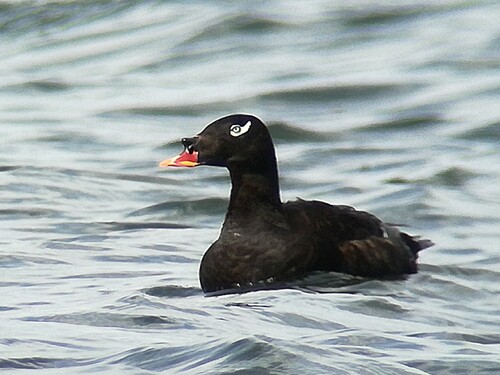 Stejneger's Scoter
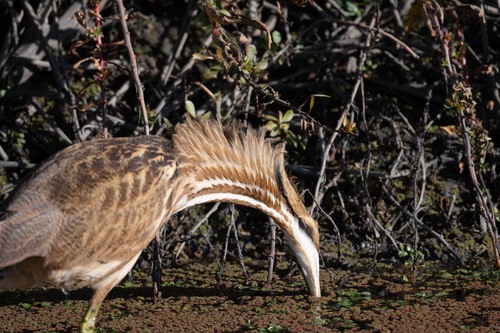 American Bittern
In short
The most reliable way to separate Stejneger's Scoter from American Bittern is by overall structure and context: Stejneger's Scoter is a bulky sea duck with a distinctive sloping 'Roman nose' profile and a tall bill knob, while American Bittern is a cryptic, streaky marsh heron with a long neck and dagger-like bill. In flight or on water, Stejneger's Scoter shows classic duck proportions and dark, uniform plumage, whereas American Bittern is more elongated, with broad, rounded wings and bold streaking below. Juvenile and adult Stejneger's Scoter males can be confused with other scoters but never with a bittern in any plumage or age. Habitat is a strong clue: scoters are found on open water, bitterns in dense marshes. If you see a bird standing upright, blending into reeds, or hear a booming call, it's a bittern; if it's diving or floating in a flock on the sea, it's a scoter.
Identification tips
- Head and Bill Shape: Stejneger's Scoter has a long, sloping 'Roman nose' profile with a tall, orange-yellow bill knob (adult male); American Bittern has a long, straight, dagger-like bill and a flat forehead. The scoter's bill is broad and high at the base, while the bittern's is narrow and pointed.
- Plumage Pattern: Scoter is uniformly dark (males black, females and immatures dark brown), never streaked or speckled; bittern is boldly streaked and speckled with brown, buff, and black, especially on the underparts and neck.
- Wing Pattern in Flight: Stejneger's Scoter (all ages) shows plain, dark wings with no bold markings; American Bittern's wings are blackish-brown with buff or chestnut tips, but the overall impression is still much paler and more patterned than any scoter.
- Neck Length: Bittern has a long, flexible neck that it extends or retracts; scoter's neck is short and thick, typical of diving ducks.
- Body Shape: Scoter is compact, broad-chested, and sits low on the water; bittern is elongated, with a narrow body and long legs, often seen standing upright or creeping through reeds.
- Legs and Feet: Bittern has long, yellowish-green legs adapted for wading; scoter's legs are short and set far back for diving, rarely visible when swimming.
- Behavior: Scoter is gregarious, often in tight flocks on open water, diving and surfacing together; bittern is solitary, skulking in marshes, and rarely seen in flight except when flushed.
- Habitat: Scoter on open water (lakes, sea); bittern in dense marshes with tall vegetation. Never expect a scoter in a reedbed or a bittern on open water.
- Posture: Bittern often adopts a 'freeze' pose with bill pointed skyward to blend into reeds; scoter never does this, always horizontal on water.
- Vocalization: Bittern gives a loud, booming call at dusk or night; scoter is silent or gives only soft, indistinct calls on breeding grounds.
- Flight Style: Bittern flies with slow, deep wingbeats, neck retracted, and legs trailing; scoter flies fast and direct, with rapid wingbeats, often in flocks.
- Bill Color: Adult male Stejneger's Scoter has a striking orange-yellow bill with a high knob; bittern's bill is yellowish-green, never with a knob.
- Facial Pattern: Bittern shows a buff supercilium and mustachial stripe; scoter's face is plain, with no pale stripes.
- Sex/Age Pitfalls: No age or sex of either species is likely to be confused with the other; even juvenile scoters are plain and dark, while juvenile bitterns are streaked and patterned like adults.
- Context: If you see a bird diving, flocking, or floating on open water, it's a scoter; if it's creeping through reeds, standing motionless, or booming at dusk, it's a bittern.
Size
American Bittern is a large heron, measuring 58–85 cm in length with a 92–115 cm wingspan and a mass of 370–1,072 g [wikipedia]. Stejneger's Scoter is a large sea duck, but still smaller and much more compact than a bittern: it has a shorter neck, shorter legs, and a stouter body. In the field, the bittern appears lanky and elongated, especially when neck is extended, while the scoter is broad-chested and sits low on the water. The bittern's wings are broader and more rounded in flight compared to the scoter's long, pointed, duck-like wings.
Plumage
There is no overlap in wing pattern or age-specific marks between these species. Stejneger's Scoter (all ages) is dark overall, with males showing a mostly black body and a tall orange-yellow bill knob. Females and immatures are also dark but lack the bright bill. In flight, scoters show uniform dark wings with no bold patterning. American Bittern, adult and juvenile, is heavily streaked below with brown, buff, and black, and has a complex, speckled upperpart pattern. Its wings are blackish-brown with buff or chestnut tips, and its underparts are boldly striped, never plain. The bittern's cryptic coloration is designed for camouflage in reeds, while the scoter's is for open water. No age or sex of either species could be confused on plumage alone.
Behaviour
Stejneger's Scoter is a gregarious diver, often seen in tight flocks on open water, diving for food and taking off together. It rarely perches and is almost never seen on land except when nesting. American Bittern is solitary and secretive, stalking prey in marshes or standing motionless with bill pointed up, blending into vegetation. When flushed, bitterns fly low and drop quickly back into cover; scoters take off in groups and fly strongly over water. Bitterns are mostly nocturnal and crepuscular, while scoters are active by day.
Habitat
Stejneger's Scoter is found on large lakes, rivers, and coastal waters, especially in the far north of Asia and occasionally in western Alaska [wikipedia]. It is never found in dense marshes or reedbeds. American Bittern breeds and winters in freshwater and brackish marshes with tall emergent vegetation (bulrushes, cattails) across North America. It is never found on open water or in flocks. If the bird is in a marsh or reedbed, it's a bittern; if on open water, it's a scoter.
Voice
American Bittern has a distinctive, deep, booming call described as 'oong, kach, oonk,' often heard at dusk or night and likened to a congested pump [wikipedia]. Stejneger's Scoter is generally silent, especially outside the breeding season, and does not make any sound remotely similar to a bittern's call. If you hear a booming or pumping call, it's a bittern.