

Spotted Sandpiper vs Green Sandpiper
Actitis macularius versus Tringa ochropus
Play a quiz with Spotted Sandpiper and Green Sandpiper
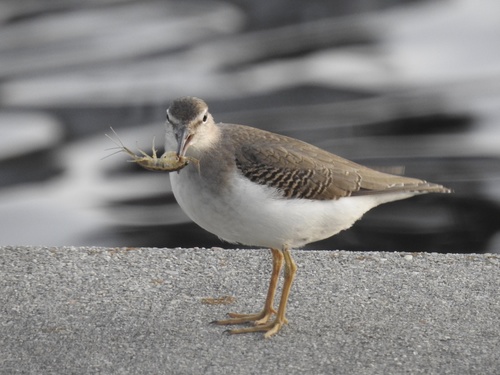 Spotted Sandpiper
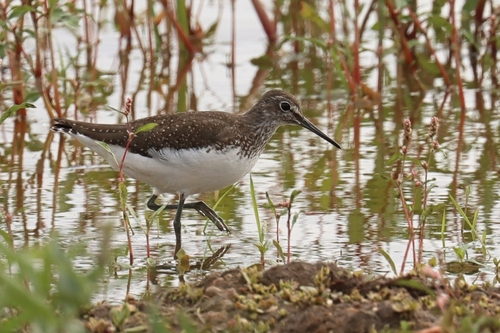 Green Sandpiper
In short
The most reliable way to separate Spotted Sandpiper from Green Sandpiper is by their flight pattern and rump: Green Sandpiper always shows a bright white rump and dark wings in flight, while Spotted Sandpiper lacks this white rump and has a more washed-out wing pattern. On the ground, Spotted Sandpiper in breeding plumage is heavily spotted below, but in non-breeding or immature plumages, both species can appear similar and require careful attention to leg color (yellowish in Spotted, dark green in Green) and bill color. Structure and behavior also help: Spotted Sandpiper bobs its tail constantly and is smaller and lighter, while Green Sandpiper is bulkier and less animated. Both can be confusing in dull plumages, but the white rump of Green Sandpiper in flight is diagnostic at all ages.
Identification tips
- White rump in flight (all ages): Green Sandpiper always shows a brilliant white rump and dark wings when flushed or flying, while Spotted Sandpiper lacks this feature. If you see a white rump, it's Green Sandpiper.
- Wing pattern in flight (all ages): Spotted Sandpiper has a more washed-out, less contrasting wing pattern compared to Green Sandpiper's dark wings above and below. This is especially helpful with non-breeding or immature birds.
- Underpart spotting (breeding adults only): Spotted Sandpiper in breeding plumage has bold black spots on its white underparts; Green Sandpiper never shows underpart spots, only a greyish breast.
- Back spotting (all ages): Green Sandpiper's back is spotted white, most strongly in breeding adults but still visible in immatures and winter birds. Spotted Sandpiper lacks these white spots on the back.
- Leg color: Spotted Sandpiper has yellowish legs; Green Sandpiper's legs are dark green. This is visible at close range, but can be hard to judge in poor light or muddy conditions.
- Bill color: Spotted Sandpiper's bill is orange with a dark tip; Green Sandpiper's bill is short and dark green. Bill color is subtle but can help at close range.
- Facial markings: Spotted Sandpiper has a white supercilium (eyebrow); Green Sandpiper's head is greyer with less distinct facial markings.
- Tail-bobbing behavior: Spotted Sandpiper constantly bobs its tail when walking or standing; Green Sandpiper does not, or does so much less.
- Size and structure: Green Sandpiper is bulkier and heavier (about 80 g) compared to the lighter, more delicate Spotted Sandpiper (34–50 g). This is most useful with experience or direct comparison.
- Flight style: Both species fly low with stiff, shallow wingbeats, but Spotted Sandpiper looks more delicate and erratic, while Green Sandpiper is steadier and more direct.
- Vocalization: Green Sandpiper gives a distinctive three-note whistle in flight, which Spotted Sandpiper does not.
- Habitat context: In the Old World, Green Sandpiper is the default; in North America, Spotted Sandpiper is expected. Vagrancy is rare but possible, so always check plumage and structure.
- Seasonal pitfalls: In non-breeding and immature plumages, Spotted Sandpiper loses its spots and can look very similar to Green Sandpiper, so rely on rump, wing pattern, and leg color.
- Sex differences: Not diagnostic in the field; both species have similar plumage in both sexes, though Spotted Sandpiper females are heavier.
- Hybrid confusion: Rare suspected hybrids between Green and Common Sandpiper exist, but not with Spotted Sandpiper. If you see a bird that doesn't fit either, consider hybrid or vagrant possibilities, but focus on the white rump and underpart spotting for a confident ID.
Size
Green Sandpiper is distinctly heavier and bulkier than Spotted Sandpiper. Green Sandpiper averages about 80 g in mass, making it nearly twice as heavy as Spotted Sandpiper (34–50 g). Spotted Sandpiper is shorter and more delicate overall, while Green Sandpiper appears plumper and more robust. This size difference is most apparent when seen side by side, but can be subtle at a distance or in poor light.
Plumage
-
Juvenile/Non-breeding/Immature birds: Both species can appear similarly plain with brownish upperparts and white underparts, but Green Sandpiper always shows a brilliant white rump and dark wings in flight, while Spotted Sandpiper lacks the white rump and has a more washed-out wing pattern. Green Sandpiper's back is spotted white to varying degrees, most in breeding adults but still present (though reduced) in immatures and winter birds. Spotted Sandpiper in non-breeding and immature plumage lacks underpart spots and can closely resemble Common Sandpiper, but its upperwing pattern is less contrasting than Green Sandpiper's.
-
Breeding adults: Spotted Sandpiper has bold black spots on the white underparts, which are absent in Green Sandpiper. Green Sandpiper's upperparts are dark greenish-brown with white spotting on the back, and underparts remain clean white except for a greyish breast.
-
Leg and bill color: Spotted Sandpiper has yellowish legs and an orange bill with a dark tip; Green Sandpiper has dark green legs and a short, dark green bill.
-
Face: Spotted Sandpiper shows a white supercilium (eyebrow), while Green Sandpiper has a greyer head and less distinct facial markings.
Behaviour
Spotted Sandpiper is famous for its constant tail-bobbing walk, both when feeding and when perched. This tail-bobbing is less pronounced or absent in Green Sandpiper. In flight, both species fly low with stiff, shallow wingbeats, but Spotted Sandpiper often appears more delicate and erratic, while Green Sandpiper is steadier and more direct. Green Sandpiper is less animated on the ground and appears more deliberate in its movements.
Habitat
Both species are found near water, but Spotted Sandpiper is typically seen along the edges of lakes, rivers, and streams in North America, often singly. Green Sandpiper is an Old World species, favoring wooded ponds, marshes, and quiet backwaters, and is more likely to be found in forested or shaded wetland habitats. Both can be seen on migration at muddy margins, but their ranges do not normally overlap except as rare vagrants.
Voice
Green Sandpiper gives a distinctive three-note whistle in flight, which is a useful field clue. Spotted Sandpiper's typical call is not described in the provided notes, but is not mentioned as a key separator. Thus, the three-note flight call is a good mark for Green Sandpiper.