
Spotted Bowerbird vs Great Bowerbird
Chlamydera maculata versus Chlamydera nuchalis
Play a quiz with Spotted Bowerbird and Great Bowerbird
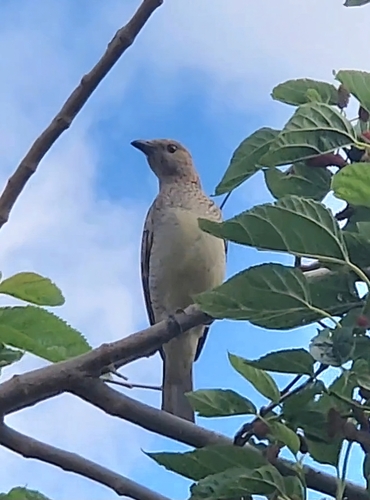 Spotted Bowerbird
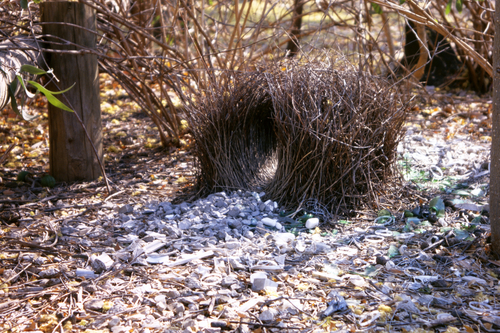 Great Bowerbird
In short
The most reliable field mark to separate Spotted Bowerbird from Great Bowerbird is the overall plumage pattern: Spotted Bowerbird shows striking amber spotting on the upperparts and a pale rufous, streaked head, while Great Bowerbird is plainer and lacks the bold spotting. Both species have a colorful nuchal crest (lilac-pink in Spotted, lavender in Great), but the crest is usually concealed and only obvious during display. Structure is similar, but Spotted Bowerbird is slightly smaller and more compact. Habitat is a strong clue: Spotted Bowerbird is found in dry, open woodlands of eastern Australia, while Great Bowerbird is a conspicuous resident of northern Australia, often near monsoon forests or mangroves.
Identification tips
- Upperpart spotting: Spotted Bowerbird has bold amber spots across the blackish-brown upperparts, easily visible in perched birds and diagnostic at close range. Great Bowerbird lacks these spots and appears much plainer above. This is the single most reliable field mark for all ages and sexes.
- Head color and pattern: Spotted Bowerbird shows a pale rufous head streaked with grey-brown, contrasting with the body. Great Bowerbird's head is less distinctly marked and blends more with the rest of the plumage.
- Nuchal crest color: Both species have a colorful nuchal crest (lilac-pink in Spotted, lavender in Great), but this is usually hidden except during display. If seen, the color difference can help, but do not rely on it unless the bird is actively displaying.
- Underparts: Spotted Bowerbird has cream underparts with greyish scalloping and barring, and a yellowish tinge to the lower belly and undertail. Great Bowerbird's underparts are less distinctly patterned.
- Size and structure: Spotted Bowerbird is slightly smaller, slimmer, and more compact than Great Bowerbird, which is larger and bulkier. This is a subtle difference and best used as supporting evidence.
- Habitat and range: Location is a strong clue—Spotted Bowerbird is found in dry, open woodlands of eastern Australia, while Great Bowerbird is in northern Australia, often near monsoon forests or mangroves. If you know your location, use this to narrow down the options.
- Behavior at bowers: Both species build and decorate bowers, but Spotted Bowerbird males often use decorations as props and display with jerky, upright movements. Great Bowerbird males orient their bowers north–south and display at the north end, using light to highlight the crest. Behavioral context may help if you observe a displaying male.
- Vocal mimicry: Both are excellent mimics, so voice is not a reliable separator unless you recognize a species-specific sequence.
- Sex and age: Both species are sexually monomorphic, and no age-specific plumage differences are described that would confuse the two. Juveniles and immatures should show the same key differences as adults.
- Perched vs. in flight: No distinctive flight or wing pattern differences are noted, so rely on body plumage and structure in all viewing situations.
- Plumage pitfalls: Do not confuse the nuchal crest color unless it is fully visible; both species usually keep it concealed. Focus on upperpart spotting and head color for the most reliable separation.
- Contextual clues: If seen in orchards, gardens, or rural homesteads in the east, Spotted Bowerbird is likely. In the north, especially near mangroves or monsoon forest, Great Bowerbird is expected.
- Display behavior: If you see a male displaying with a colored object in its bill and bobbing its head at the north end of a north–south bower, this suggests Great Bowerbird. Jerky, upright displays with thrown decorations are more typical of Spotted Bowerbird.
- Bill and legs: No strong differences are described, but Spotted Bowerbird has a black bill and olive-brown legs, which may be slightly more delicate than Great Bowerbird.
- When in doubt: If plumage is not clearly visible, use a combination of location, habitat, and overall impression, but prioritize upperpart spotting and head pattern when possible.
Size
Spotted Bowerbird averages 142 g, making it a mid-sized, slim, and compact bowerbird. Great Bowerbird is generally larger and bulkier, though exact mass is not given here. In the field, Spotted Bowerbird may appear more delicate and less robust than Great Bowerbird, but size overlap and posture can make this a subtle distinction. Use size only as a supporting clue, not a primary separator.
Plumage
No age-specific upperwing or flight pattern differences are described for either species, so focus on body plumage. Adult Spotted Bowerbird is distinctive with blackish-brown upperparts covered in extensive amber spots, a pale rufous head streaked with grey-brown, and a lilac-pink nuchal crest (usually hidden). Underparts are cream with greyish scalloping and barring, with a yellowish tinge to the lower belly and undertail. Great Bowerbird lacks the bold spotting and is generally plainer above, with a bright lavender nuchal crest (also usually concealed except in display). Both species are sexually monomorphic, so these marks apply to all ages and sexes. No information is provided on juvenile or immature-specific plumage differences, so assume the above contrasts hold for all visible ages.
Behaviour
Both species are classic bowerbirds, with males building and decorating elaborate bowers and performing complex displays. Spotted Bowerbird males circle their bower with raised head and drooped wings, often using decorations as props, and display their lilac-pink crest with jerky, upright postures. Great Bowerbird males orient their bowers north–south and display at the north end, using the morning light to highlight their lavender crest, often holding colored objects in the bill while bobbing the head. Both species use vocal mimicry and have a wide range of display behaviors, but the overall behavioral repertoire is similar and not reliably diagnostic except for context.
Habitat
Habitat is a strong separator. Spotted Bowerbird is found in the drier, open sclerophyll woodlands of eastern Australia, especially where eucalypt or brigalow dominate, and is often seen in orchards, parks, and rural gardens. Great Bowerbird is restricted to northern Australia, favoring a wide range of forest and woodland types, including the edges of vine forests, monsoon forest, and mangrove swamps. If you are in the Top End or Cape York, Great Bowerbird is the likely candidate; in the drier inland east, Spotted Bowerbird is expected.
Voice
Both species are accomplished vocal mimics, capable of imitating a wide range of bird calls and even non-avian sounds. Spotted Bowerbird is noted for mimicking calls of local predatory birds and various environmental noises, especially when threatened. Great Bowerbird's vocalizations are less detailed in the notes, but as a bowerbird, it likely has a similarly varied repertoire. Voice alone is not a reliable separator unless you hear a known mimicry sequence unique to one species.