

Southern Fulmar vs Westland Petrel
Fulmarus glacialoides versus Procellaria westlandica
Play a quiz with Southern Fulmar and Westland Petrel
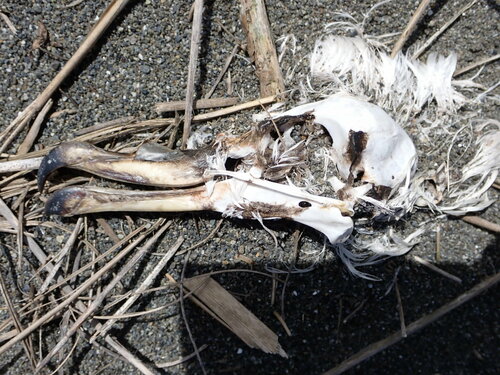 Southern Fulmar
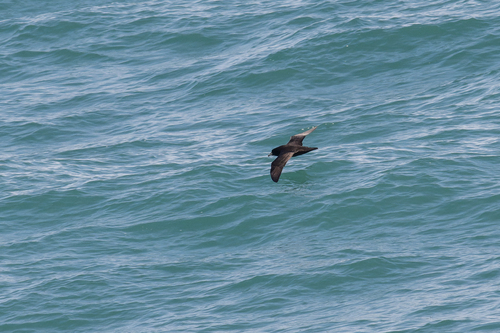 Westland Petrel
In short
The most reliable way to separate Southern Fulmar from Westland Petrel is by overall plumage: Southern Fulmar is pale silvery-grey above and white below with a distinctive white patch on the wing, while Westland Petrel is entirely dark blackish-brown. In flight, even at a distance, the Southern Fulmar's pale upperparts and contrasting blackish wingtips stand out, whereas Westland Petrel appears uniformly dark. Structurally, Southern Fulmar is smaller, with a stubbier, pinkish bill, while Westland Petrel is heavier and bulkier with a pale yellow bill tipped dark. Both species are stocky petrels, but their coloration and bill color are strong field marks in all plumages.
Identification tips
- Overall coloration is the fastest check: Southern Fulmar is pale grey above and white below, with a white head; Westland Petrel is entirely dark blackish-brown. This works for all ages and seasons.
- Wing pattern in flight: Southern Fulmar shows a large white patch on the upperwing, blackish wingtips, and a dark trailing edge; Westland Petrel's wings are uniformly dark with no pale panels or patches. This is diagnostic at any distance.
- Bill color: Southern Fulmar has a pink bill with a black tip and bluish naricorns; Westland Petrel has a pale yellow bill with a dark tip. Bill color is visible at moderate range in good light.
- Leg and foot color: Southern Fulmar's legs and feet are pale blue, while Westland Petrel's are black. This is best seen on perched or grounded birds, rarely at sea.
- Size and bulk: Westland Petrel is heavier and more robust (1204 g vs 795 g), but size can be hard to judge without direct comparison.
- Head and crown: Southern Fulmar has a white head with a pale grey crown; Westland Petrel's head is uniformly dark.
- Underparts: Southern Fulmar is white below; Westland Petrel is dark below. This is especially obvious in banking or gliding birds.
- Habitat and range: Southern Fulmar is found in Antarctic and subantarctic waters, Westland Petrel only in New Zealand waters. If you are in the Southern Ocean near Antarctica, Westland Petrel is extremely unlikely.
- Flight style: Southern Fulmar glides with stiff, broad wings and shallow flaps; Westland Petrel is likely more direct and less buoyant, but this is less reliable than plumage.
- Juvenile confusion: No special juvenile wing patterns are noted for either species, so the adult marks apply to all ages.
- White feathers on Westland Petrel: Some Westland Petrels may show a few white feathers, but never the extensive pale or white areas of Southern Fulmar.
- Bill shape: Southern Fulmar's bill is stubbier and pinkish; Westland Petrel's is longer, pale yellow, and more robust. In first-year Southern Fulmar, the bill is more slender but still pinkish.
- Contextual clues: Southern Fulmar breeds on Antarctic cliffs; Westland Petrel breeds in New Zealand's coastal forests. Breeding habitat is a strong clue if observed.
- Voice: Southern Fulmar can be noisy at colonies, but both species are usually silent at sea. Do not rely on voice for separation.
- Sex and age: Both species show little sexual dimorphism in the field; all field marks above apply to both sexes and all ages.
Size
Southern Fulmar is notably lighter, with an average adult mass of about 795 g, compared to the much heavier Westland Petrel at 1204 g. In the field, this size difference can be subtle, but Westland Petrel often appears bulkier and more robust, especially when seen alongside other seabirds. Southern Fulmar is still a large petrel, but it is less massive and slightly more compact than the Westland Petrel.
Plumage
- Juvenile/immature plumage: No specific age-dependent upperwing pattern is described for either species, but all ages of Southern Fulmar show a pale silvery-grey upperwing with a large white patch and blackish wingtips, plus a dark trailing edge. Westland Petrel, regardless of age, is entirely dark blackish-brown with no pale markings on the wing or body, though a few white feathers may occur in some individuals.
- Adult plumage: Southern Fulmar adults are pale grey above and white below, with a white head and pale grey crown. The blackish wingtips and white wing patch are always present. Westland Petrel adults are uniformly dark, with black legs and feet, and a pale yellow bill with a dark tip. Southern Fulmar's bill is pink with a black tip and bluish naricorns, while Westland Petrel's is pale yellow with a dark tip. The leg color is also distinctive: pale blue in Southern Fulmar, black in Westland Petrel.
Behaviour
Southern Fulmar flies with a combination of shallow flaps and long, stiff-winged glides, often scanning the water below. Its wings are broad and rounded, and it tends to hold them stiffly. Westland Petrel's flight style is not detailed in the sources, but as a large, stocky burrowing petrel, it is likely less buoyant and more direct in flight, with less gliding than the fulmar. Both species are colonial nesters, but Southern Fulmar breeds on Antarctic cliffs, while Westland Petrel breeds in steep, forested coastal hills in New Zealand.
Habitat
Southern Fulmar is a Southern Ocean species, breeding on Antarctic and subantarctic cliffs and moving northward in winter. Westland Petrel is endemic to New Zealand, breeding only in a small area of forested coastal hills near Punakaiki. In the field, Southern Fulmar is expected in cold, open southern seas, often near pack ice, while Westland Petrel is strictly associated with New Zealand waters and never occurs near Antarctica. Their ranges do not overlap.
Voice
Southern Fulmar is usually silent at sea but gives loud, cackling calls at the nest or in feeding flocks, and softer droning or croaking during courtship. No vocalization details are provided for Westland Petrel in the sources. Voice is not a reliable field mark for separating these two at sea.