

Motmot

Sooty-capped Babbler vs Rufous-crowned Babbler

Malacopteron affine versus Malacopteron magnum

Play a quiz with Sooty-capped Babbler and Rufous-crowned Babbler
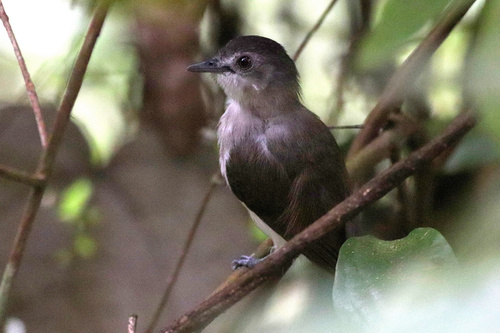
Sooty-capped Babbler (Malacopteron affine) Sooty-capped Babbler
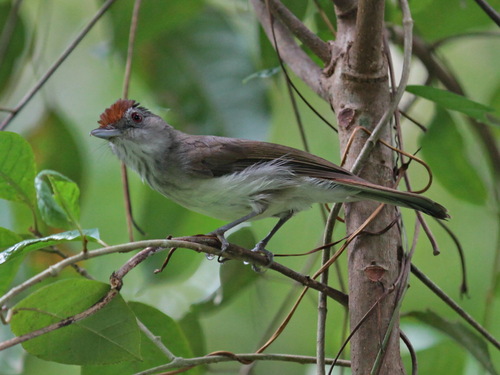
Rufous-crowned Babbler (Malacopteron magnum) Rufous-crowned Babbler

Media

Loading…

In short

The most reliable way to separate Sooty-capped Babbler from Rufous-crowned Babbler is by focusing on the crown color: Sooty-capped has a distinctly dark (sooty) crown, while Rufous-crowned shows a warm rufous or chestnut crown. Both species are similar in shape and general coloration, and occur in overlapping regions of Southeast Asia, but the crown color is the key field mark in all ages and seasons. Structural and size differences are subtle, with Rufous-crowned Babbler being slightly heavier on average, but this is rarely useful in the field. Habitat preferences overlap broadly, so context is not a strong separator.

Identification tips

  1. Crown color is the single best field mark: Sooty-capped Babbler always shows a dark, sooty (almost blackish) crown, while Rufous-crowned Babbler has a warm rufous or chestnut crown. This difference is visible in all ages and seasons.
  2. No distinctive age-specific wing or flight marks: Neither species shows unique juvenile or immature upperwing patterns, so do not rely on flight views for separation.
  3. General plumage is similar: Both have olive-brown upperparts and paler underparts, so do not use body color alone.
  4. Structure is not diagnostic: Both are medium-sized, short-tailed babblers with similar proportions. Bill shape and tail length are not reliable in the field.
  5. Size is only marginally different: Rufous-crowned averages slightly heavier, but this is not useful unless birds are side-by-side.
  6. Habitat overlap is extensive: Both species occur in the same regions and habitats, so do not use location or habitat as a primary separator within the overlap zone.
  7. No documented seasonal or sex-based plumage changes: Crown color remains reliable year-round and in both sexes.
  8. Behavior is similar: Both forage in dense undergrowth, often in small groups; movement and foraging style do not help with identification.
  9. If in the Philippines or Myanmar: Only Rufous-crowned Babbler occurs, but in Malaysia, Indonesia, Brunei, and Thailand, both are possible.
  10. Local names may help: In Malaysia, Sooty-capped Babbler is sometimes called 'rimba tinjau belukar,' but this is not a visual field mark.
  11. If unsure, focus on the head: Even in poor light, the difference between a dark (sooty) and a rufous (chestnut) crown is usually visible with binoculars.
  12. No reliable vocal differences documented in sources: Do not rely on calls or songs for separation based on current information.
  13. Avoid over-interpreting slight color differences elsewhere: The rest of the plumage is too similar to be useful for ID.
  14. Check multiple views: If crown color is unclear from one angle, try to get another look, as light can sometimes obscure the contrast.
  15. Photographs: If possible, use photos to confirm crown color, especially in mixed flocks or poor light.

Size

Rufous-crowned Babbler is slightly heavier, with an average body mass of 27.0g [wikidata], but this difference is not easily appreciated in the field. Both species are medium-sized babblers and share a similar overall structure. Unless seen side-by-side, size is not a reliable separator.

Plumage

No age-specific wing or flight pattern differences are documented for either species. The key plumage distinction at all ages is the crown: Sooty-capped Babbler has a dark, sooty (almost blackish) crown, sharply contrasting with the paler underparts and olive-brown upperparts. Rufous-crowned Babbler, in contrast, has a rich rufous or chestnut crown that stands out against the rest of the plumage. Both species otherwise show fairly plain, olive-brown upperparts and paler underparts, so the crown color remains the most consistent and visible difference. There are no documented seasonal or sex-based changes in plumage for either species that would affect this mark.

Behaviour

Both species behave similarly, foraging in dense undergrowth and low vegetation, often in small groups. Their movements and general 'babbling' activity are not distinctive enough to separate them reliably in the field.

Habitat

Both species inhabit lowland forests and secondary growth in Southeast Asia, with significant range overlap in Malaysia, Indonesia, Brunei, and Thailand. Rufous-crowned Babbler is also found in Myanmar and the Philippines, but this is not helpful within the core overlap zone. Both prefer humid, dense forest habitats and are often found in similar microhabitats, so habitat alone is not a reliable separator.

Submit a better description

Use the same sections as the comparison. Your text is published immediately.

The most reliable way to separate Sooty-capped Babbler from Rufous-crowned Babbler is by focusing on the crown color: Sooty-capped has a distinctly dark (sooty) crown, while Rufous-crowned shows a warm rufous or chestnut crown. Both species are similar in shape and general coloration, and occur in overlapping regions of Southeast Asia, but the crown color is the key field mark in all ages and seasons. Structural and size differences are subtle, with Rufous-crowned Babbler being slightly heavier on average, but this is rarely useful in the field. Habitat preferences overlap broadly, so context is not a strong separator.

  1. Crown color is the single best field mark: Sooty-capped Babbler always shows a dark, sooty (almost blackish) crown, while Rufous-crowned Babbler has a warm rufous or chestnut crown. This difference is visible in all ages and seasons.
  2. No distinctive age-specific wing or flight marks: Neither species shows unique juvenile or immature upperwing patterns, so do not rely on flight views for separation.
  3. General plumage is similar: Both have olive-brown upperparts and paler underparts, so do not use body color alone.
  4. Structure is not diagnostic: Both are medium-sized, short-tailed babblers with similar proportions. Bill shape and tail length are not reliable in the field.
  5. Size is only marginally different: Rufous-crowned averages slightly heavier, but this is not useful unless birds are side-by-side.
  6. Habitat overlap is extensive: Both species occur in the same regions and habitats, so do not use location or habitat as a primary separator within the overlap zone.
  7. No documented seasonal or sex-based plumage changes: Crown color remains reliable year-round and in both sexes.
  8. Behavior is similar: Both forage in dense undergrowth, often in small groups; movement and foraging style do not help with identification.
  9. If in the Philippines or Myanmar: Only Rufous-crowned Babbler occurs, but in Malaysia, Indonesia, Brunei, and Thailand, both are possible.
  10. Local names may help: In Malaysia, Sooty-capped Babbler is sometimes called 'rimba tinjau belukar,' but this is not a visual field mark.
  11. If unsure, focus on the head: Even in poor light, the difference between a dark (sooty) and a rufous (chestnut) crown is usually visible with binoculars.
  12. No reliable vocal differences documented in sources: Do not rely on calls or songs for separation based on current information.
  13. Avoid over-interpreting slight color differences elsewhere: The rest of the plumage is too similar to be useful for ID.
  14. Check multiple views: If crown color is unclear from one angle, try to get another look, as light can sometimes obscure the contrast.
  15. Photographs: If possible, use photos to confirm crown color, especially in mixed flocks or poor light.

Rufous-crowned Babbler is slightly heavier, with an average body mass of 27.0g [wikidata], but this difference is not easily appreciated in the field. Both species are medium-sized babblers and share a similar overall structure. Unless seen side-by-side, size is not a reliable separator.

No age-specific wing or flight pattern differences are documented for either species. The key plumage distinction at all ages is the crown: Sooty-capped Babbler has a dark, sooty (almost blackish) crown, sharply contrasting with the paler underparts and olive-brown upperparts. Rufous-crowned Babbler, in contrast, has a rich rufous or chestnut crown that stands out against the rest of the plumage. Both species otherwise show fairly plain, olive-brown upperparts and paler underparts, so the crown color remains the most consistent and visible difference. There are no documented seasonal or sex-based changes in plumage for either species that would affect this mark.

Both species behave similarly, foraging in dense undergrowth and low vegetation, often in small groups. Their movements and general 'babbling' activity are not distinctive enough to separate them reliably in the field.

Both species inhabit lowland forests and secondary growth in Southeast Asia, with significant range overlap in Malaysia, Indonesia, Brunei, and Thailand. Rufous-crowned Babbler is also found in Myanmar and the Philippines, but this is not helpful within the core overlap zone. Both prefer humid, dense forest habitats and are often found in similar microhabitats, so habitat alone is not a reliable separator.

Discard your changes?

You have unsaved edits. If you leave now, those changes will be lost.

Sooty-capped Babbler · Rufous-crowned Babbler · My Tricky Birds