

Motmot

Sooty Barbet vs Black-eared Barbet

Caloramphus hayii versus Psilopogon duvaucelii

Play a quiz with Sooty Barbet and Black-eared Barbet
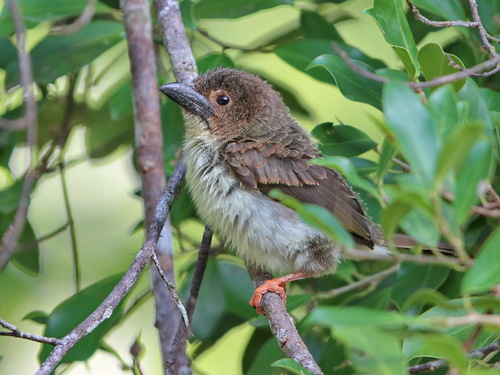
Sooty Barbet (Caloramphus hayii) Sooty Barbet
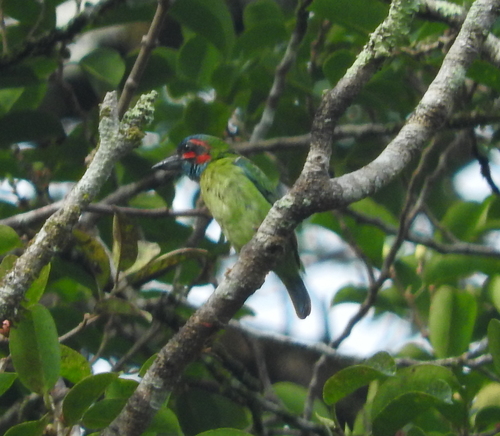
Black-eared Barbet (Psilopogon duvaucelii) Black-eared Barbet

Media

Loading…

In short

The most reliable way to separate Sooty Barbet from Black-eared Barbet is by overall plumage color and facial pattern: Sooty Barbet is a uniform brownish bird with a plain face, while Black-eared Barbet is bright olive-green with a blue throat, a black facial streak, and distinctive red and black marks below the eye. Black-eared Barbet also shows a noticeably smaller size and a more colorful, patterned head. These differences are visible in both perched and flying birds, though the Black-eared Barbet's facial markings are especially diagnostic at close range. Juvenile or immature-specific wing patterns are not described for either species in the sources, so focus on adult and general plumage and structure.

Identification tips

  1. Facial pattern is the top field mark: Black-eared Barbet shows a bold black streak between the eyes, red spots below the eyes surrounded by black, and a blue throat and nape. Sooty Barbet lacks all of these, showing a plain, unmarked face and throat. This is the most reliable mark at any range where facial detail is visible.
  2. Overall coloration: Sooty Barbet is a uniform brownish or sooty color, lacking bright greens or blues. Black-eared Barbet is olive-green with blue and red highlights on the head. If the bird looks mostly brown and plain, it is Sooty Barbet; if it is greenish with a colorful head, it is Black-eared.
  3. Bill color and structure: Black-eared Barbet has a black bill, which contrasts with its colorful face. Sooty Barbet's bill color is not specified, but it does not show the same strong contrast with the face. Bill size may also appear proportionately larger in Sooty Barbet due to its overall bulkier build.
  4. Size and jizz: Black-eared Barbet is smaller and lighter, appearing more compact and less robust than Sooty Barbet. In mixed flocks or when size reference is available, use this as a supporting mark.
  5. Throat and nape color: The blue throat and nape of Black-eared Barbet are distinctive and absent in Sooty Barbet. Look for blue tones in good light.
  6. Perched vs. flying views: Both species are most easily separated when perched, as facial and throat patterns are best seen. In flight, color impression (brown vs. green) may help, but details are harder to discern.
  7. Juvenile/immature confusion: No distinctive age-specific wing or flight patterns are described for either species, so do not rely on upperwing marks for separation.
  8. Habitat context: If seen above 1,000 m or in shrubland, Black-eared Barbet is more likely, but both can occur in lowland forest. Use habitat only as a supporting clue.
  9. Geographic range: Both species overlap in Peninsular Malaysia and Sumatra. Black-eared Barbet also occurs in Borneo, while Sooty Barbet is absent from Singapore (now extirpated).
  10. Sexual dimorphism: No sex-specific plumage differences are described for either species, so all field marks apply to both sexes.
  11. Pitfalls: In poor light, Black-eared Barbet may appear darker or less colorful, but the facial pattern should still be visible at close range. Sooty Barbet should never show blue, red, or black facial markings.
  12. Voice: No vocal differences are described in the notes; do not use voice for separation based on current information.
  13. Seasonal variation: No seasonal plumage changes are noted for either species, so field marks are reliable year-round.
  14. Bill size in context: If seen with other barbets, Sooty Barbet may appear to have a proportionately heavier bill, but this is subtle and not diagnostic alone.
  15. Summary tip: Always prioritize facial pattern and overall color impression for a confident separation in the field.

Size

Black-eared Barbet is smaller and lighter, measuring 16–17 cm in length and weighing 26.3–37 g [wikipedia]. Sooty Barbet's exact measurements are not provided in the notes, but it is generally described as a larger, more robust barbet. In the field, Black-eared Barbet will appear noticeably more petite and compact compared to the stockier Sooty Barbet.

Plumage

There are no age-specific upperwing or flight pattern differences described for either species. For all ages, Sooty Barbet is a uniform brownish or sooty color overall, with a plain face and no strong facial markings. In contrast, Black-eared Barbet is olive-green with a blue throat and nape, a black beak, and a large black streak between the eyes. It also has red spots below the eyes, encircled by black, giving it a much more patterned and colorful appearance. These facial and throat colors are present in adults and are not described as age- or season-dependent, so they should be visible in most individuals.

Behaviour

No specific behavioral differences are described in the notes. Both species are typical barbets, likely to be seen perched in trees or moving through the canopy. Any behavioral differences would be subtle and not reliable for field separation based on the provided information.

Habitat

Both species can be found in lowland forests of Peninsular Malaysia and Sumatra, but Black-eared Barbet also occurs in Borneo and is found in both shrubland and forest up to 1,200 m elevation [wikipedia]. Sooty Barbet is more restricted to subtropical or tropical moist lowland forests and is now extirpated from Singapore. In areas of overlap, habitat alone is not diagnostic, but Black-eared Barbet may be encountered at higher elevations and in a broader range of wooded habitats.

Submit a better description

Use the same sections as the comparison. Your text is published immediately.

The most reliable way to separate Sooty Barbet from Black-eared Barbet is by overall plumage color and facial pattern: Sooty Barbet is a uniform brownish bird with a plain face, while Black-eared Barbet is bright olive-green with a blue throat, a black facial streak, and distinctive red and black marks below the eye. Black-eared Barbet also shows a noticeably smaller size and a more colorful, patterned head. These differences are visible in both perched and flying birds, though the Black-eared Barbet's facial markings are especially diagnostic at close range. Juvenile or immature-specific wing patterns are not described for either species in the sources, so focus on adult and general plumage and structure.

  1. Facial pattern is the top field mark: Black-eared Barbet shows a bold black streak between the eyes, red spots below the eyes surrounded by black, and a blue throat and nape. Sooty Barbet lacks all of these, showing a plain, unmarked face and throat. This is the most reliable mark at any range where facial detail is visible.
  2. Overall coloration: Sooty Barbet is a uniform brownish or sooty color, lacking bright greens or blues. Black-eared Barbet is olive-green with blue and red highlights on the head. If the bird looks mostly brown and plain, it is Sooty Barbet; if it is greenish with a colorful head, it is Black-eared.
  3. Bill color and structure: Black-eared Barbet has a black bill, which contrasts with its colorful face. Sooty Barbet's bill color is not specified, but it does not show the same strong contrast with the face. Bill size may also appear proportionately larger in Sooty Barbet due to its overall bulkier build.
  4. Size and jizz: Black-eared Barbet is smaller and lighter, appearing more compact and less robust than Sooty Barbet. In mixed flocks or when size reference is available, use this as a supporting mark.
  5. Throat and nape color: The blue throat and nape of Black-eared Barbet are distinctive and absent in Sooty Barbet. Look for blue tones in good light.
  6. Perched vs. flying views: Both species are most easily separated when perched, as facial and throat patterns are best seen. In flight, color impression (brown vs. green) may help, but details are harder to discern.
  7. Juvenile/immature confusion: No distinctive age-specific wing or flight patterns are described for either species, so do not rely on upperwing marks for separation.
  8. Habitat context: If seen above 1,000 m or in shrubland, Black-eared Barbet is more likely, but both can occur in lowland forest. Use habitat only as a supporting clue.
  9. Geographic range: Both species overlap in Peninsular Malaysia and Sumatra. Black-eared Barbet also occurs in Borneo, while Sooty Barbet is absent from Singapore (now extirpated).
  10. Sexual dimorphism: No sex-specific plumage differences are described for either species, so all field marks apply to both sexes.
  11. Pitfalls: In poor light, Black-eared Barbet may appear darker or less colorful, but the facial pattern should still be visible at close range. Sooty Barbet should never show blue, red, or black facial markings.
  12. Voice: No vocal differences are described in the notes; do not use voice for separation based on current information.
  13. Seasonal variation: No seasonal plumage changes are noted for either species, so field marks are reliable year-round.
  14. Bill size in context: If seen with other barbets, Sooty Barbet may appear to have a proportionately heavier bill, but this is subtle and not diagnostic alone.
  15. Summary tip: Always prioritize facial pattern and overall color impression for a confident separation in the field.

Black-eared Barbet is smaller and lighter, measuring 16–17 cm in length and weighing 26.3–37 g [wikipedia]. Sooty Barbet's exact measurements are not provided in the notes, but it is generally described as a larger, more robust barbet. In the field, Black-eared Barbet will appear noticeably more petite and compact compared to the stockier Sooty Barbet.

There are no age-specific upperwing or flight pattern differences described for either species. For all ages, Sooty Barbet is a uniform brownish or sooty color overall, with a plain face and no strong facial markings. In contrast, Black-eared Barbet is olive-green with a blue throat and nape, a black beak, and a large black streak between the eyes. It also has red spots below the eyes, encircled by black, giving it a much more patterned and colorful appearance. These facial and throat colors are present in adults and are not described as age- or season-dependent, so they should be visible in most individuals.

No specific behavioral differences are described in the notes. Both species are typical barbets, likely to be seen perched in trees or moving through the canopy. Any behavioral differences would be subtle and not reliable for field separation based on the provided information.

Both species can be found in lowland forests of Peninsular Malaysia and Sumatra, but Black-eared Barbet also occurs in Borneo and is found in both shrubland and forest up to 1,200 m elevation [wikipedia]. Sooty Barbet is more restricted to subtropical or tropical moist lowland forests and is now extirpated from Singapore. In areas of overlap, habitat alone is not diagnostic, but Black-eared Barbet may be encountered at higher elevations and in a broader range of wooded habitats.

Discard your changes?

You have unsaved edits. If you leave now, those changes will be lost.

Sooty Barbet · Black-eared Barbet · My Tricky Birds