

Soft-plumaged Petrel vs Parkinson's Petrel
Pterodroma mollis versus Procellaria parkinsoni
Play a quiz with Soft-plumaged Petrel and Parkinson's Petrel
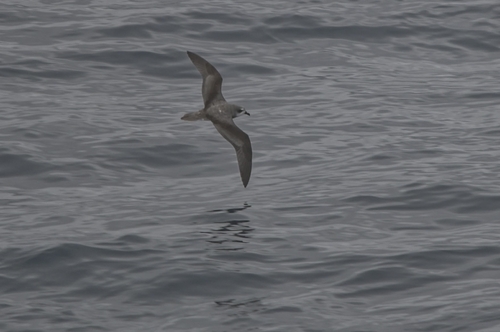 Soft-plumaged Petrel
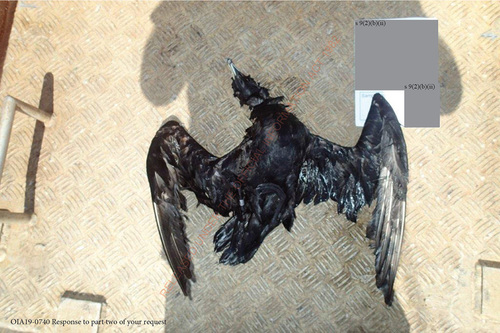 Parkinson's Petrel
In short
The most reliable field mark to separate Soft-plumaged Petrel from Parkinson's Petrel is overall plumage color: Soft-plumaged is distinctly two-toned with a white underside and dark upperparts, while Parkinson's Petrel is entirely black. In flight, Soft-plumaged Petrel shows a sharp contrast between white underparts and dark underwings, plus a white face with a dark eye patch, unlike the uniformly dark Parkinson's. Structural differences also help: Soft-plumaged is much lighter-bodied and more delicate, with a pointed tail and narrow wings, while Parkinson's is heavier, with a stouter bill and broad wings. If you see any white on the body or face, it's Soft-plumaged; if the bird is all black, it's Parkinson's.
Identification tips
- Overall color is diagnostic: Soft-plumaged Petrel is always two-toned (dark above, white below), while Parkinson's Petrel is uniformly black. If you see any white on the bird, it's not Parkinson's.
- Face pattern: Soft-plumaged shows a white face with a dark eye patch and white cheeks/throat; Parkinson's is black-faced with no pale areas.
- Underwing and belly: Soft-plumaged has a white belly and dark underwings; Parkinson's is black throughout, including the underwing and belly.
- Bill color and shape: Soft-plumaged has a black, sharply hooked bill about 25–32 mm; Parkinson's has a stouter, all-black bill with some pale areas, but the difference is subtle at distance.
- Leg color: Soft-plumaged has pink legs with black on the outer webs and toes; Parkinson's has all-black legs. This is most visible when birds are sitting on the water or in close flight.
- Size and structure: Parkinson's is much larger and heavier (over double the mass), with a longer wingspan and bulkier body. Soft-plumaged is more delicate, with narrow wings and a pointed tail.
- Tail shape: Soft-plumaged has a pointed tail, especially obvious in flight; Parkinson's tail is less pointed and appears more squared-off due to its bulk.
- Flight style: Soft-plumaged is agile and buoyant, with rapid, light wingbeats; Parkinson's is more powerful and direct, reflecting its heavier build.
- Dark morph confusion: Even dark morph Soft-plumaged Petrels retain some contrast and never appear fully black. If the bird is truly all black, it's Parkinson's.
- Juvenile confusion: No age or seasonal plumage of either species resembles the other; juvenile Soft-plumaged is still two-toned, and juvenile Parkinson's is all black.
- Habitat/range: If seen near New Zealand's Hauraki Gulf in breeding season (Oct–June), Parkinson's is more likely, but always confirm with plumage.
- Voice: Soft-plumaged can be noisy with moans and squeaks, but both are usually silent at sea; do not rely on voice for separation.
- Bill size at distance: If you can see the bill is proportionally large and thick, this supports Parkinson's, but beware of angle and distance effects.
- On water: Parkinson's will look larger, bulkier, and darker; Soft-plumaged sits higher and looks more delicate, with obvious white underparts.
- Checklist fallback: If you are unsure, look for any white on the bird (especially face or belly)—this rules out Parkinson's Petrel.
Size
Soft-plumaged Petrel is considerably smaller and lighter, with a body mass around 300g [wikidata], compared to Parkinson's Petrel, which is more than twice as heavy (males ~720g, females ~680g) [wikipedia]. Parkinson's also has a much longer wingspan (average 115 cm) and overall length (46 cm), making it a noticeably bulkier, more robust bird in flight or on the water. Soft-plumaged Petrel appears more delicate, with a lighter build and finer proportions.
Plumage
There is no overlap in overall plumage: Soft-plumaged Petrel (all ages) is sharply two-toned, with dark grey upperparts, a white underside, and a striking white face with a dark eye patch and white cheeks and throat [wikipedia]. The underwings are dark grey, contrasting with the white belly. There is also a dark morph, but even these birds retain some contrast and never appear fully black. Parkinson's Petrel (all ages) is entirely black, including the head, body, wings, and tail, with only some pale areas on the bill [wikipedia]. Its legs are also black, in contrast to the pinkish legs of Soft-plumaged. No age or seasonal plumage in either species resembles the other: even juvenile Soft-plumaged Petrels are two-toned, and Parkinson's never shows white on the body or face.
Behaviour
Soft-plumaged Petrel is described as having narrow wings and a pointed tail, giving it a more buoyant, agile flight style. Parkinson's Petrel, being heavier and bulkier, flies with broader wings and a more powerful, direct flight. On the water, Parkinson's will appear larger and more imposing, while Soft-plumaged is more delicate and sits higher. Both are pelagic and rarely seen near land except at breeding sites.
Habitat
Both species are pelagic and can be seen far offshore, but Parkinson's Petrel is endemic as a breeder to New Zealand's Hauraki Gulf and adjacent islands, and is most likely encountered near New Zealand or across the South Pacific [wikipedia]. Soft-plumaged Petrel has a wider southern ocean distribution. If seen near the Hauraki Gulf, especially October–June, Parkinson's is more likely, but plumage is always more reliable than range for separating these two at sea.
Voice
Soft-plumaged Petrel is described as noisy, with medium-pitched moans and shrill squeaks [wikipedia]. No field vocalization information is provided for Parkinson's Petrel, and both are typically silent at sea. Voice is not a reliable separator in field conditions.