

Motmot

Slender-billed Gull vs Pallas's Gull

Chroicocephalus genei versus Ichthyaetus ichthyaetus

Play a quiz with Slender-billed Gull and Pallas's Gull
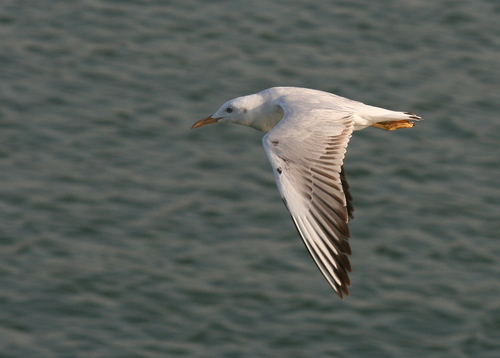
Slender-billed Gull (Chroicocephalus genei) Slender-billed Gull
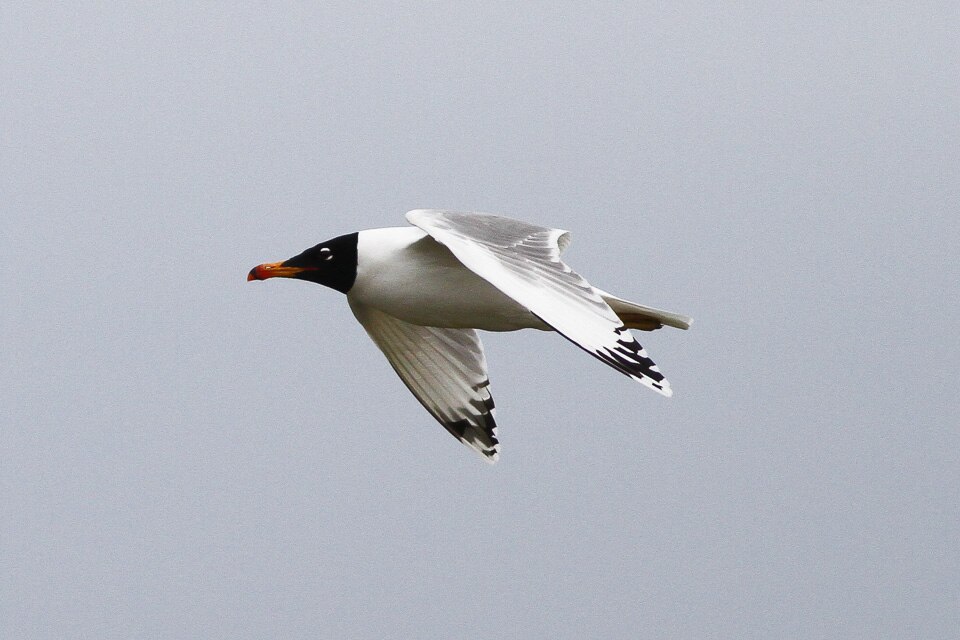
Pallas's Gull (Ichthyaetus ichthyaetus) Pallas's Gull

Media

Loading…

In short

The most reliable field mark between Slender-billed Gull and Pallas's Gull is size: Pallas's is vastly larger, with a bulkier build and much longer wingspan. For immatures and non-breeding birds, check the head pattern and bill color—Slender-billed has a long, slender red bill and a white or faintly pink-tinged head, while Pallas's shows a heavy yellowish bill and a dark eye mask. In flight, immature Slender-billeds show a black tail band and dark wing areas, while Pallas's immatures quickly develop grey upperparts and lack a strong tail band. Adult Pallas's in summer are unmistakable with their huge size and full black hood, which Slender-billed never shows. Both species can be found near water but differ in preferred habitats and regional abundance.

Identification tips

  1. Size is decisive: Pallas's Gull is over five times heavier than Slender-billed and much longer and broader-winged. If the bird looks huge compared to nearby gulls, it's Pallas's; if mid-sized, consider Slender-billed.
  2. Bill structure and color: Slender-billed has a long, slender, dark red bill; Pallas's has a thick, heavy, orangey-yellow bill with a red tip. Bill color and thickness are visible even at a distance in good light.
  3. Leg color: Slender-billed shows dark red legs, while Pallas's has yellow legs. This is most useful at close range or when perched.
  4. Head pattern (non-breeding/immature): Slender-billed is clean-headed or faintly pink on the breast in summer, never with a hood or mask. Pallas's in non-breeding or immature plumage has a dark mask through the eye, a remnant of the adult hood.
  5. Adult summer plumage: Only Pallas's Gull has a full black hood in breeding season, combined with massive size and white wing mirrors. Slender-billed never shows a hood.
  6. Immature/first-year tail pattern: Slender-billed immatures have a black terminal tail band and dark areas on the wings—look for this in flight. Pallas's immatures lack a strong tail band and quickly develop grey upperparts.
  7. Upperwing pattern (immatures): Slender-billed shows dark areas on the wings in first-year birds; Pallas's immatures become mostly grey above without strong contrast.
  8. Jizz and posture: Slender-billed is long-necked, slim, and elegant, often with a slightly drooping bill. Pallas's is stocky, heavy, and upright, with a thick neck and massive head.
  9. Wing length and projection: Pallas's has very long wings, often extending well past the tail at rest. Slender-billed's wings are proportionally shorter.
  10. Habitat context: Slender-billed is most likely in Mediterranean or coastal lagoons; Pallas's is more likely on large inland lakes and rivers, especially in central Asia. Out of range, both are rare but Pallas's is exceptional in Western Europe.
  11. Feeding behavior: Slender-billed often picks at mud or catches insects in flight; Pallas's is more likely to be seen dominating other gulls at food sources.
  12. Voice: If heard, Pallas's gives a deep 'aargh' call, much deeper than anything Slender-billed produces.
  13. Breast color (summer): Slender-billed may have a faint pink flush on the breast in summer; Pallas's does not.
  14. Iris color: Slender-billed has a yellow iris; iris color is less distinctive in Pallas's but may help at close range.
  15. Pitfalls: Beware of distant or lone birds where size is hard to judge—use a combination of bill, head pattern, and structure. Immature Slender-billeds can look dark-winged and confusing, but the tail band and slim build are key. Pallas's immatures may lack the full hood but always look massive and masked.

Size

Pallas's Gull is dramatically larger than Slender-billed Gull in every dimension. Pallas's averages about 1394 g in body mass, with a length of 55–72 cm and a wingspan of 142–170 cm. In contrast, Slender-billed Gull is much lighter at 255.5 g, 37–40 cm long, and with a wingspan of 90–102 cm. Even at a distance, Pallas's appears massive and heavy-billed, towering over any Slender-billeds nearby. This size gap is the single most foolproof separation in mixed flocks or when seen together.

Plumage

For first-year and immature birds, Slender-billed Gull shows a distinctive black terminal tail band and dark areas on the wings—look for these in flight or when the tail is spread. Pallas's Gull immatures, in contrast, rapidly acquire grey upperparts and do not retain a strong black tail band; instead, their head pattern develops a dark mask through the eye, a vestige of the adult hood. Adult breeding Slender-billed Gulls have a white head and breast (sometimes faintly pink), pale grey upperparts, and black primary tips, but never a hood. Adult Pallas's Gulls in summer are unmistakable: huge, with a full black hood, grey wings and back, and prominent white 'mirrors' at the wingtips. Non-breeding and immature Pallas's retain a dark eye mask, while Slender-billed remains clean-headed. Leg and bill color also differ: Slender-billed has dark red legs and bill, while Pallas's shows yellow legs and an orangey-yellow bill with a red tip.

Behaviour

Slender-billed Gull is more delicate and graceful, often appearing long-necked and slender in flight and at rest, with a tendency to probe mud or catch insects on the wing. Pallas's Gull is heavyset, powerful, and slow-moving, with deep, strong wingbeats and a commanding presence. Pallas's often dominates other gulls at food sources. Both species are gregarious in winter, but Pallas's is more likely to be seen in smaller numbers or as a standout among mixed gull flocks due to its size.

Habitat

Slender-billed Gull breeds and forages around coastal lagoons, estuaries, and inland lakes, rarely venturing far from land. It is most often seen in the Mediterranean region and parts of the northwestern Indian Ocean, feeding in deltas, marshes, grasslands, and even landfill sites. Pallas's Gull prefers large inland lakes and rivers, especially in central Asia, and is less coastal. While both may occur in similar wetland habitats on migration or in winter, Pallas's is much less likely to be found in the Mediterranean basin and is generally rarer in Western Europe.

Voice

Pallas's Gull gives a deep, harsh 'aargh' cry, which is much deeper and more resonant than the typical calls of Slender-billed Gull. Slender-billed's calls are not described in detail in the sources, but are not noted as especially deep or distinctive compared to Pallas's.

Submit a better description

Use the same sections as the comparison. Your text is published immediately.

The most reliable field mark between Slender-billed Gull and Pallas's Gull is size: Pallas's is vastly larger, with a bulkier build and much longer wingspan. For immatures and non-breeding birds, check the head pattern and bill color—Slender-billed has a long, slender red bill and a white or faintly pink-tinged head, while Pallas's shows a heavy yellowish bill and a dark eye mask. In flight, immature Slender-billeds show a black tail band and dark wing areas, while Pallas's immatures quickly develop grey upperparts and lack a strong tail band. Adult Pallas's in summer are unmistakable with their huge size and full black hood, which Slender-billed never shows. Both species can be found near water but differ in preferred habitats and regional abundance.

  1. Size is decisive: Pallas's Gull is over five times heavier than Slender-billed and much longer and broader-winged. If the bird looks huge compared to nearby gulls, it's Pallas's; if mid-sized, consider Slender-billed.
  2. Bill structure and color: Slender-billed has a long, slender, dark red bill; Pallas's has a thick, heavy, orangey-yellow bill with a red tip. Bill color and thickness are visible even at a distance in good light.
  3. Leg color: Slender-billed shows dark red legs, while Pallas's has yellow legs. This is most useful at close range or when perched.
  4. Head pattern (non-breeding/immature): Slender-billed is clean-headed or faintly pink on the breast in summer, never with a hood or mask. Pallas's in non-breeding or immature plumage has a dark mask through the eye, a remnant of the adult hood.
  5. Adult summer plumage: Only Pallas's Gull has a full black hood in breeding season, combined with massive size and white wing mirrors. Slender-billed never shows a hood.
  6. Immature/first-year tail pattern: Slender-billed immatures have a black terminal tail band and dark areas on the wings—look for this in flight. Pallas's immatures lack a strong tail band and quickly develop grey upperparts.
  7. Upperwing pattern (immatures): Slender-billed shows dark areas on the wings in first-year birds; Pallas's immatures become mostly grey above without strong contrast.
  8. Jizz and posture: Slender-billed is long-necked, slim, and elegant, often with a slightly drooping bill. Pallas's is stocky, heavy, and upright, with a thick neck and massive head.
  9. Wing length and projection: Pallas's has very long wings, often extending well past the tail at rest. Slender-billed's wings are proportionally shorter.
  10. Habitat context: Slender-billed is most likely in Mediterranean or coastal lagoons; Pallas's is more likely on large inland lakes and rivers, especially in central Asia. Out of range, both are rare but Pallas's is exceptional in Western Europe.
  11. Feeding behavior: Slender-billed often picks at mud or catches insects in flight; Pallas's is more likely to be seen dominating other gulls at food sources.
  12. Voice: If heard, Pallas's gives a deep 'aargh' call, much deeper than anything Slender-billed produces.
  13. Breast color (summer): Slender-billed may have a faint pink flush on the breast in summer; Pallas's does not.
  14. Iris color: Slender-billed has a yellow iris; iris color is less distinctive in Pallas's but may help at close range.
  15. Pitfalls: Beware of distant or lone birds where size is hard to judge—use a combination of bill, head pattern, and structure. Immature Slender-billeds can look dark-winged and confusing, but the tail band and slim build are key. Pallas's immatures may lack the full hood but always look massive and masked.

Pallas's Gull is dramatically larger than Slender-billed Gull in every dimension. Pallas's averages about 1394 g in body mass, with a length of 55–72 cm and a wingspan of 142–170 cm. In contrast, Slender-billed Gull is much lighter at 255.5 g, 37–40 cm long, and with a wingspan of 90–102 cm. Even at a distance, Pallas's appears massive and heavy-billed, towering over any Slender-billeds nearby. This size gap is the single most foolproof separation in mixed flocks or when seen together.

For first-year and immature birds, Slender-billed Gull shows a distinctive black terminal tail band and dark areas on the wings—look for these in flight or when the tail is spread. Pallas's Gull immatures, in contrast, rapidly acquire grey upperparts and do not retain a strong black tail band; instead, their head pattern develops a dark mask through the eye, a vestige of the adult hood. Adult breeding Slender-billed Gulls have a white head and breast (sometimes faintly pink), pale grey upperparts, and black primary tips, but never a hood. Adult Pallas's Gulls in summer are unmistakable: huge, with a full black hood, grey wings and back, and prominent white 'mirrors' at the wingtips. Non-breeding and immature Pallas's retain a dark eye mask, while Slender-billed remains clean-headed. Leg and bill color also differ: Slender-billed has dark red legs and bill, while Pallas's shows yellow legs and an orangey-yellow bill with a red tip.

Slender-billed Gull is more delicate and graceful, often appearing long-necked and slender in flight and at rest, with a tendency to probe mud or catch insects on the wing. Pallas's Gull is heavyset, powerful, and slow-moving, with deep, strong wingbeats and a commanding presence. Pallas's often dominates other gulls at food sources. Both species are gregarious in winter, but Pallas's is more likely to be seen in smaller numbers or as a standout among mixed gull flocks due to its size.

Slender-billed Gull breeds and forages around coastal lagoons, estuaries, and inland lakes, rarely venturing far from land. It is most often seen in the Mediterranean region and parts of the northwestern Indian Ocean, feeding in deltas, marshes, grasslands, and even landfill sites. Pallas's Gull prefers large inland lakes and rivers, especially in central Asia, and is less coastal. While both may occur in similar wetland habitats on migration or in winter, Pallas's is much less likely to be found in the Mediterranean basin and is generally rarer in Western Europe.

Pallas's Gull gives a deep, harsh 'aargh' cry, which is much deeper and more resonant than the typical calls of Slender-billed Gull. Slender-billed's calls are not described in detail in the sources, but are not noted as especially deep or distinctive compared to Pallas's.

Discard your changes?

You have unsaved edits. If you leave now, those changes will be lost.

Slender-billed Gull · Pallas's Gull · My Tricky Birds