

Motmot

Slender-billed Gull vs Bonaparte's Gull

Chroicocephalus genei versus Chroicocephalus philadelphia

Play a quiz with Slender-billed Gull and Bonaparte's Gull
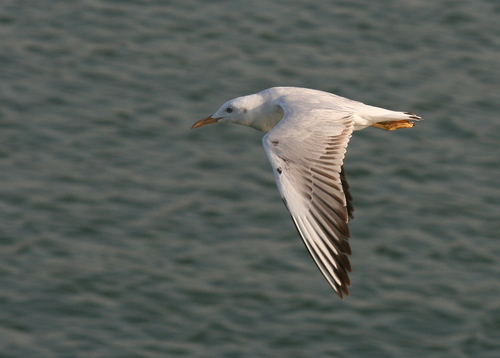
Slender-billed Gull (Chroicocephalus genei) Slender-billed Gull
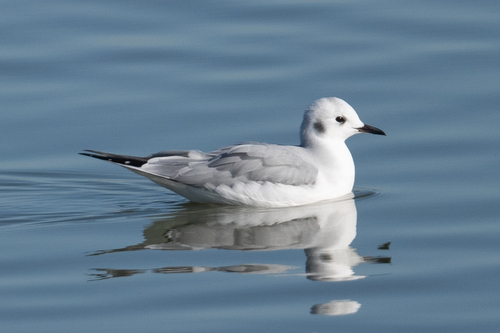
Bonaparte's Gull (Chroicocephalus philadelphia) Bonaparte's Gull

Media

Loading…

In short

The most reliable way to separate Slender-billed Gull from Bonaparte's Gull is by size and structure: Slender-billed is distinctly larger and longer-necked, with a long, slender, dark red bill and legs, while Bonaparte's is much smaller, with a short, thin black bill and pinkish to orangish-red legs. In flight, immature Bonaparte's Gulls show a brown bar across the forewing and a black tail tip, but Slender-billed immatures have a black tail band and dark wing areas that are less sharply marked. Adults differ in head and bill shape, leg color, and in breeding season, Bonaparte's has a full black hood, while Slender-billed always has a white head. Both species have pale grey upperparts and black wingtips, but Bonaparte's underwing is notably whiter. These differences are most apparent when birds are seen together, but careful attention to structure and age-specific wing patterns is key even when alone.

Identification tips

  1. Size and structure: Slender-billed Gull is significantly larger and longer-necked than Bonaparte's. If the bird looks dainty and small-headed, suspect Bonaparte's.
  2. Bill color and shape: Slender-billed has a long, slender, dark red bill; Bonaparte's has a short, thin, black bill. This is often visible even at a distance.
  3. Leg color: Slender-billed's legs are dark red, while Bonaparte's are pinkish-red in winter and orangish-red in summer. Leg color is best seen on perched birds.
  4. Head pattern (breeding season): Bonaparte's Gull has a full slaty black hood in breeding plumage; Slender-billed never has a hood, always showing a white head (sometimes with a faint pink breast in summer).
  5. Head and neck shape: Slender-billed appears long-necked and has an elongated, tapering head and bill. Bonaparte's is short-necked and small-headed.
  6. Juvenile/first-winter wing pattern: Bonaparte's shows a clear brown bar across the forewing and blackish tips to the secondaries, with a black tail tip. Slender-billed immatures have a black terminal tail band and dark areas on the wings, but not a sharply defined brown bar.
  7. Adult underwing in flight: Bonaparte's has a conspicuously white underwing, while Slender-billed's underwing is not described as especially white.
  8. Upperparts: Both have pale grey upperparts, so this is not a useful distinction.
  9. Bill and leg color in immatures: These marks are less reliable in young birds but still useful if visible.
  10. Context and range: Bonaparte's is a North American breeder, Slender-billed is Old World; vagrancy is rare but possible, so always check structure and plumage.
  11. Behavior: Slender-billed often forages by diving or probing, Bonaparte's is more likely to dip or pick at the surface.
  12. Tail pattern in immatures: Both have black on the tail in first year, but Bonaparte's is a black tip, Slender-billed is a terminal band.
  13. Sex and age: Both species lack sex differences in plumage; age-related differences are most obvious in the wing and tail patterns described above.
  14. Bare part color in summer: Bonaparte's legs become orangish-red in breeding season, Slender-billed's remain dark red.
  15. Pitfalls: Do not rely solely on upperpart color or black wingtips; focus on size, structure, bill/leg color, and age-specific wing/tail marks for confident ID.

Size

Slender-billed Gull is notably larger, with a body mass of about 255.5 g [wikidata], a length of 37–40 cm, and a wingspan of 90–102 cm. Bonaparte's Gull is much smaller, at 28–38 cm in length, wingspan 76–84 cm, and weight 180–225 g [wikipedia]. In the field, Slender-billed appears longer-necked and more elongated overall, while Bonaparte's is compact, small-headed, and daintier. When seen side by side, the size gap is obvious, but even singly, Bonaparte's will look noticeably petite for a gull.

Plumage

Juvenile and first-winter Bonaparte's Gulls show a distinctive brown bar across the forewing, blackish tips to the secondaries, and a black tail tip. This brown bar is a strong mark in flight and is retained through the first winter and into the following summer, though it fades with wear. Slender-billed Gull immatures (first year) have a black terminal tail band and dark areas on the wings, but these are less sharply defined than Bonaparte's brown bar. Adult Bonaparte's in breeding plumage have a full slaty black hood, while Slender-billed never has a hood—its head remains white year-round, sometimes with a faint pinkish wash on the breast in summer. Both species have pale grey upperparts and black-tipped primaries, but Bonaparte's has a whiter underwing in flight, lacking the dusky primary undersides seen in some other gulls. Bill and leg color also differ: Slender-billed has dark red bill and legs, Bonaparte's has a black bill and pinkish to orangish-red legs (brighter in summer).

Behaviour

Slender-billed Gull often appears elongated and long-necked, both at rest and in flight, with a distinctive tapering head and bill. It is gregarious, especially in winter, and often forages by flying low over water and diving, or probing mud. Bonaparte's Gull is more compact and buoyant, often feeding by dipping or picking at the water surface, and is agile in flight. Both species can be seen in flocks, but Bonaparte's is more likely to be seen in North America, while Slender-billed is restricted to the Old World.

Habitat

Slender-billed Gull breeds around the Mediterranean and northwestern Indian Ocean, favoring coastal lagoons and islands, and winters in estuaries, bays, and sometimes inland lakes. It is rarely found far from land. Bonaparte's Gull breeds in northern North America, mainly around boreal lakes and rivers, and winters along coasts, estuaries, and large inland waters. While both can occur in coastal wetlands and estuaries, their normal ranges do not overlap except as rare vagrants.

Submit a better description

Use the same sections as the comparison. Your text is published immediately.

The most reliable way to separate Slender-billed Gull from Bonaparte's Gull is by size and structure: Slender-billed is distinctly larger and longer-necked, with a long, slender, dark red bill and legs, while Bonaparte's is much smaller, with a short, thin black bill and pinkish to orangish-red legs. In flight, immature Bonaparte's Gulls show a brown bar across the forewing and a black tail tip, but Slender-billed immatures have a black tail band and dark wing areas that are less sharply marked. Adults differ in head and bill shape, leg color, and in breeding season, Bonaparte's has a full black hood, while Slender-billed always has a white head. Both species have pale grey upperparts and black wingtips, but Bonaparte's underwing is notably whiter. These differences are most apparent when birds are seen together, but careful attention to structure and age-specific wing patterns is key even when alone.

  1. Size and structure: Slender-billed Gull is significantly larger and longer-necked than Bonaparte's. If the bird looks dainty and small-headed, suspect Bonaparte's.
  2. Bill color and shape: Slender-billed has a long, slender, dark red bill; Bonaparte's has a short, thin, black bill. This is often visible even at a distance.
  3. Leg color: Slender-billed's legs are dark red, while Bonaparte's are pinkish-red in winter and orangish-red in summer. Leg color is best seen on perched birds.
  4. Head pattern (breeding season): Bonaparte's Gull has a full slaty black hood in breeding plumage; Slender-billed never has a hood, always showing a white head (sometimes with a faint pink breast in summer).
  5. Head and neck shape: Slender-billed appears long-necked and has an elongated, tapering head and bill. Bonaparte's is short-necked and small-headed.
  6. Juvenile/first-winter wing pattern: Bonaparte's shows a clear brown bar across the forewing and blackish tips to the secondaries, with a black tail tip. Slender-billed immatures have a black terminal tail band and dark areas on the wings, but not a sharply defined brown bar.
  7. Adult underwing in flight: Bonaparte's has a conspicuously white underwing, while Slender-billed's underwing is not described as especially white.
  8. Upperparts: Both have pale grey upperparts, so this is not a useful distinction.
  9. Bill and leg color in immatures: These marks are less reliable in young birds but still useful if visible.
  10. Context and range: Bonaparte's is a North American breeder, Slender-billed is Old World; vagrancy is rare but possible, so always check structure and plumage.
  11. Behavior: Slender-billed often forages by diving or probing, Bonaparte's is more likely to dip or pick at the surface.
  12. Tail pattern in immatures: Both have black on the tail in first year, but Bonaparte's is a black tip, Slender-billed is a terminal band.
  13. Sex and age: Both species lack sex differences in plumage; age-related differences are most obvious in the wing and tail patterns described above.
  14. Bare part color in summer: Bonaparte's legs become orangish-red in breeding season, Slender-billed's remain dark red.
  15. Pitfalls: Do not rely solely on upperpart color or black wingtips; focus on size, structure, bill/leg color, and age-specific wing/tail marks for confident ID.

Slender-billed Gull is notably larger, with a body mass of about 255.5 g [wikidata], a length of 37–40 cm, and a wingspan of 90–102 cm. Bonaparte's Gull is much smaller, at 28–38 cm in length, wingspan 76–84 cm, and weight 180–225 g [wikipedia]. In the field, Slender-billed appears longer-necked and more elongated overall, while Bonaparte's is compact, small-headed, and daintier. When seen side by side, the size gap is obvious, but even singly, Bonaparte's will look noticeably petite for a gull.

Juvenile and first-winter Bonaparte's Gulls show a distinctive brown bar across the forewing, blackish tips to the secondaries, and a black tail tip. This brown bar is a strong mark in flight and is retained through the first winter and into the following summer, though it fades with wear. Slender-billed Gull immatures (first year) have a black terminal tail band and dark areas on the wings, but these are less sharply defined than Bonaparte's brown bar. Adult Bonaparte's in breeding plumage have a full slaty black hood, while Slender-billed never has a hood—its head remains white year-round, sometimes with a faint pinkish wash on the breast in summer. Both species have pale grey upperparts and black-tipped primaries, but Bonaparte's has a whiter underwing in flight, lacking the dusky primary undersides seen in some other gulls. Bill and leg color also differ: Slender-billed has dark red bill and legs, Bonaparte's has a black bill and pinkish to orangish-red legs (brighter in summer).

Slender-billed Gull often appears elongated and long-necked, both at rest and in flight, with a distinctive tapering head and bill. It is gregarious, especially in winter, and often forages by flying low over water and diving, or probing mud. Bonaparte's Gull is more compact and buoyant, often feeding by dipping or picking at the water surface, and is agile in flight. Both species can be seen in flocks, but Bonaparte's is more likely to be seen in North America, while Slender-billed is restricted to the Old World.

Slender-billed Gull breeds around the Mediterranean and northwestern Indian Ocean, favoring coastal lagoons and islands, and winters in estuaries, bays, and sometimes inland lakes. It is rarely found far from land. Bonaparte's Gull breeds in northern North America, mainly around boreal lakes and rivers, and winters along coasts, estuaries, and large inland waters. While both can occur in coastal wetlands and estuaries, their normal ranges do not overlap except as rare vagrants.

Discard your changes?

You have unsaved edits. If you leave now, those changes will be lost.

Slender-billed Gull · Bonaparte's Gull · My Tricky Birds