

Slaty-backed Flycatcher vs Rufous-gorgeted Flycatcher
Ficedula erithacus versus Ficedula strophiata
Play a quiz with Slaty-backed Flycatcher and Rufous-gorgeted Flycatcher
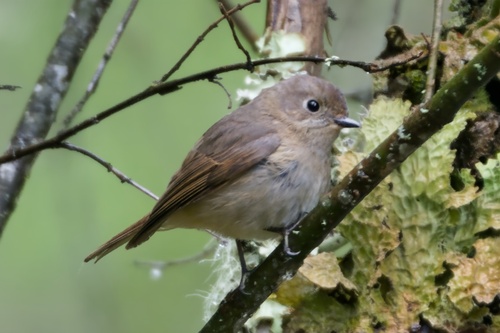 Slaty-backed Flycatcher
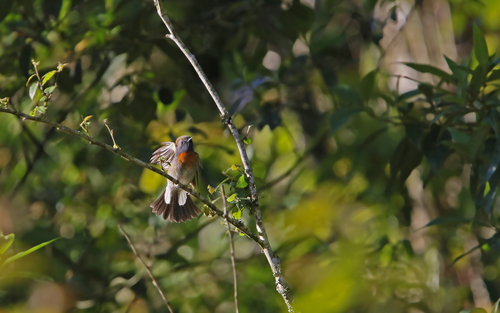 Rufous-gorgeted Flycatcher
In short
The most reliable way to separate Slaty-backed Flycatcher from Rufous-gorgeted Flycatcher in the field is by focusing on plumage differences, especially the presence or absence of a rufous throat patch (gorget) in adults. Both species are small, active flycatchers of Asian montane forests and can overlap in range and habitat. Structural differences are subtle and not well-documented in the available sources, so plumage—especially on the throat and upperparts—remains your best bet. Immature birds may be more challenging, as age-specific wing and flight patterns are not described in the sources.
Identification tips
- Adult throat color is key: Rufous-gorgeted Flycatcher males have a prominent rufous-orange throat patch (gorget), which is absent in Slaty-backed Flycatcher. This is the single most reliable mark for adults.
- Upperpart coloration: Slaty-backed Flycatcher shows a slaty or bluish-grey back and crown, while Rufous-gorgeted tends to have duller, browner upperparts. This difference is subtle but can help, especially in good light.
- Females and immatures: Both species' females and young birds may lack the full gorget. In these cases, look for the overall colder (greyer) tone of Slaty-backed versus the warmer, browner tones of Rufous-gorgeted.
- No documented wing pattern differences: There are no described age-specific upperwing or flight marks for either species, so do not rely on wing panels or flight patterns for separation.
- Habitat overlap: Both species can occur together in montane forests, so do not use habitat alone as a separator in overlapping regions.
- Size is not helpful: Both are similar in size; Rufous-gorgeted averages 12.5g, but this is not a field mark.
- Behavior is similar: Both sally for insects and perch in similar ways; do not use behavior for separation.
- Seasonal context: Both species can be found in the same regions in winter, so time of year is not a strong separator.
- Sex differences: Males are easier to separate due to the gorget; females and immatures require more caution and reliance on subtle color differences.
- Lighting matters: Subtle differences in upperpart color can be masked or exaggerated by lighting—try to view birds in natural light and from multiple angles.
- Be honest about uncertainty: If you cannot see the throat clearly and the upperpart color is ambiguous, it may not be possible to identify the bird to species with confidence.
- Photograph when possible: For tricky individuals, especially immatures or females, a photo may allow later comparison to reference images.
- Check multiple features: Never rely on a single mark (except the adult gorget); use a combination of throat color, upperpart tone, and context.
- Consult local checklists: In some areas, one species may be much more common than the other, but both can occur together in parts of their range.
- Review reference images: Familiarize yourself with the range of variation in both species, especially for non-breeding and immature plumages.
Size
Only Rufous-gorgeted Flycatcher has a documented average body mass (12.5g [wikidata]), but both species are similar in size and likely overlap in the field. Any size difference is subtle and not a reliable field mark with binoculars.
Plumage
For adults, Rufous-gorgeted Flycatcher is named for its distinctive rufous-orange patch on the throat (the 'gorget'), which is absent in Slaty-backed Flycatcher. Slaty-backed Flycatcher has a slaty or bluish-grey upperpart coloration, especially on the back, which is less pronounced or absent in Rufous-gorgeted. Both species have typical Ficedula flycatcher patterns, but the gorget is the standout mark for adults. There is no detailed information on juvenile or immature wing patterns or flight marks for either species in the available sources, so these ages may be more difficult to separate without the throat coloration. Females and immatures of both species may lack the full adult gorget, making separation challenging and requiring careful attention to subtle differences in upperpart coloration.
Behaviour
Both species are typical small flycatchers, sallying from perches to catch insects and frequently flicking their tails. No behavioral differences are noted in the available sources that would reliably separate them in the field.
Habitat
Both species occur in subtropical or tropical moist montane forests and can overlap in the eastern Himalayas, central/southern China, and northern Indochina. Slaty-backed Flycatcher may also be found in moist lowland forests, while Rufous-gorgeted is more strictly montane. However, habitat alone is not a reliable separator where their ranges overlap, as both can be found in similar forest types.
Slaty-backed Flycatcher · Rufous-gorgeted Flycatcher · My Tricky Birds