

Motmot

Short-tailed Shearwater vs Little Shearwater

Ardenna tenuirostris versus Puffinus assimilis

Play a quiz with Short-tailed Shearwater and Little Shearwater
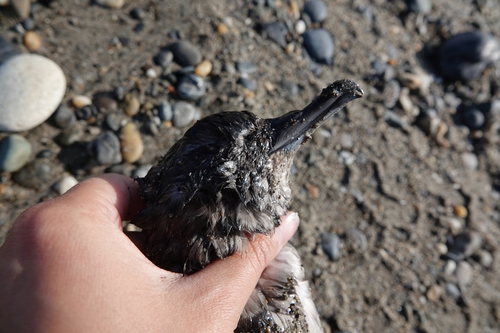
Short-tailed Shearwater (Ardenna tenuirostris) Short-tailed Shearwater
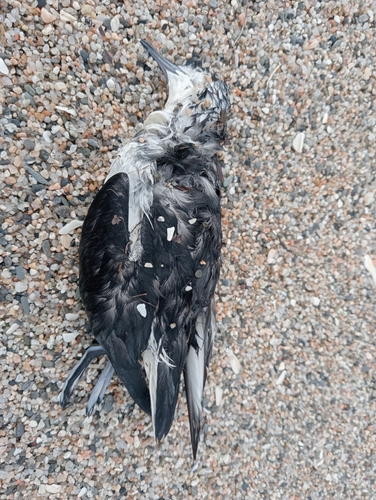
Little Shearwater (Puffinus assimilis) Little Shearwater

Media

Loading…

In short

The most reliable way to separate Short-tailed Shearwater from Little Shearwater is by size and structure: Short-tailed is much larger and heavier-bodied, with longer, narrower wings and a more robust, blunt bill. In flight, Little Shearwater appears distinctly smaller, with proportionally shorter and broader wings, and often shows a pale panel on the inner flight feathers, which Short-tailed lacks. Plumage differences are subtle at a distance, but Little Shearwater’s crisp black-and-white contrast and cross-shaped flight silhouette are distinctive. If you are unsure, focus on overall bulk, wing shape, and flight style before fine plumage details.

Identification tips

  1. Size and bulk: Short-tailed Shearwater is much larger and heavier-bodied than Little Shearwater; use this as your first check if you have any size reference or mixed flock.
  2. Wing shape: Little Shearwater has proportionally shorter, broader wings, often appearing cross-shaped in flight; Short-tailed’s wings are longer and narrower, contributing to a more streamlined look.
  3. Flight style: Little Shearwater flaps more frequently and rapidly, especially in light winds, and appears more buoyant and erratic; Short-tailed uses steadier, longer glides with fewer wingbeats.
  4. Upperwing pattern: Look for a pale panel on the inner flight feathers of Little Shearwater in flight—this is absent in Short-tailed, which is more uniformly dark above.
  5. Underparts contrast: Little Shearwater shows sharp black-and-white contrast as it banks, with white underparts and black upperparts; Short-tailed is more uniformly sooty or brownish, with less crisp contrast.
  6. Facial pattern: Little Shearwater’s dark eye stands out against a white face, while Short-tailed’s face is less contrasting and more blended with the rest of the head.
  7. Bill shape: Short-tailed Shearwater has a more robust, blunt bill; Little Shearwater’s bill is slender and finer, though this is hard to see at a distance.
  8. Tail shape: Both species have relatively short tails, but Short-tailed’s is especially blunt and squared-off, while Little Shearwater’s may appear slightly more tapered in proportion to its smaller body.
  9. Flock size/context: Large, dense flocks in southern Australia are almost always Short-tailed Shearwater; Little Shearwater is much less numerous and rarely forms large aggregations.
  10. Perched views: If seen on land, Short-tailed appears much bulkier and heavier, with a more powerful stance; Little Shearwater is daintier and more delicate.
  11. Habitat and season: If you are in Tasmania or Bass Strait during the breeding season and see birds coming to burrows, they are almost certainly Short-tailed Shearwater.
  12. Confusion risk: At sea, distant views of a lone bird can be tricky, but size, wing shape, and flight style remain the best clues.
  13. Age/sex: No age- or sex-specific field marks are described for either species in the notes, so rely on structure and flight pattern for all ages.
  14. Voice: Not diagnostic in the field for these two species based on available notes.
  15. Lighting pitfalls: In poor light, the pale panel on Little Shearwater’s wing may be hard to see, so do not rely on this alone—use size and jizz as primary cues.

Size

Short-tailed Shearwater is a large shearwater (body mass ~544 g [wikidata]), while Little Shearwater is much smaller (length 25–30 cm, wingspan 58–67 cm [wikipedia]; no direct mass given, but much lighter). The difference is striking in the field: Short-tailed looks heavy and long-winged, whereas Little Shearwater is compact and dainty. If seen together, Short-tailed would dwarf Little Shearwater.

Plumage

Age-specific upperwing patterns are not described for either species in the provided notes, but Little Shearwater is noted for a pale area on the inner flight feathers, visible in flight at all ages. This pale panel is absent in Short-tailed Shearwater, which appears more uniformly dark above. Little Shearwater shows sharp contrast between black upperparts and white underparts, especially as it banks, while Short-tailed Shearwater is more uniformly sooty-brown to dark above and below, with less crisp contrast. The dark eye of Little Shearwater stands out against the white face, while Short-tailed’s face is less contrasting. No seasonal or sex-based plumage differences are noted for either species.

Behaviour

Both species exhibit typical shearwater 'shearing' flight, but Little Shearwater has a more flapping, rapid wingbeat in light winds and appears cross-shaped with wings held at right angles. Short-tailed Shearwater tends to use longer, more powerful glides and appears steadier and heavier in flight. Little Shearwater’s flight is lower, more buoyant, and shows more frequent changes in direction, while Short-tailed is steadier and more direct.

Habitat

Short-tailed Shearwater is the most abundant seabird in Australian waters and breeds mainly on islands in Bass Strait and Tasmania, migrating to the Northern Hemisphere for the boreal summer. Little Shearwater is also pelagic but is much less numerous and not associated with large commercial harvests. Both are oceanic, but Short-tailed is far more likely to be seen in large flocks, especially near breeding colonies. Contextually, if you are seeing huge numbers of 'muttonbirds,' they are almost certainly Short-tailed.

Submit a better description

Use the same sections as the comparison. Your text is published immediately.

The most reliable way to separate Short-tailed Shearwater from Little Shearwater is by size and structure: Short-tailed is much larger and heavier-bodied, with longer, narrower wings and a more robust, blunt bill. In flight, Little Shearwater appears distinctly smaller, with proportionally shorter and broader wings, and often shows a pale panel on the inner flight feathers, which Short-tailed lacks. Plumage differences are subtle at a distance, but Little Shearwater’s crisp black-and-white contrast and cross-shaped flight silhouette are distinctive. If you are unsure, focus on overall bulk, wing shape, and flight style before fine plumage details.

  1. Size and bulk: Short-tailed Shearwater is much larger and heavier-bodied than Little Shearwater; use this as your first check if you have any size reference or mixed flock.
  2. Wing shape: Little Shearwater has proportionally shorter, broader wings, often appearing cross-shaped in flight; Short-tailed’s wings are longer and narrower, contributing to a more streamlined look.
  3. Flight style: Little Shearwater flaps more frequently and rapidly, especially in light winds, and appears more buoyant and erratic; Short-tailed uses steadier, longer glides with fewer wingbeats.
  4. Upperwing pattern: Look for a pale panel on the inner flight feathers of Little Shearwater in flight—this is absent in Short-tailed, which is more uniformly dark above.
  5. Underparts contrast: Little Shearwater shows sharp black-and-white contrast as it banks, with white underparts and black upperparts; Short-tailed is more uniformly sooty or brownish, with less crisp contrast.
  6. Facial pattern: Little Shearwater’s dark eye stands out against a white face, while Short-tailed’s face is less contrasting and more blended with the rest of the head.
  7. Bill shape: Short-tailed Shearwater has a more robust, blunt bill; Little Shearwater’s bill is slender and finer, though this is hard to see at a distance.
  8. Tail shape: Both species have relatively short tails, but Short-tailed’s is especially blunt and squared-off, while Little Shearwater’s may appear slightly more tapered in proportion to its smaller body.
  9. Flock size/context: Large, dense flocks in southern Australia are almost always Short-tailed Shearwater; Little Shearwater is much less numerous and rarely forms large aggregations.
  10. Perched views: If seen on land, Short-tailed appears much bulkier and heavier, with a more powerful stance; Little Shearwater is daintier and more delicate.
  11. Habitat and season: If you are in Tasmania or Bass Strait during the breeding season and see birds coming to burrows, they are almost certainly Short-tailed Shearwater.
  12. Confusion risk: At sea, distant views of a lone bird can be tricky, but size, wing shape, and flight style remain the best clues.
  13. Age/sex: No age- or sex-specific field marks are described for either species in the notes, so rely on structure and flight pattern for all ages.
  14. Voice: Not diagnostic in the field for these two species based on available notes.
  15. Lighting pitfalls: In poor light, the pale panel on Little Shearwater’s wing may be hard to see, so do not rely on this alone—use size and jizz as primary cues.

Short-tailed Shearwater is a large shearwater (body mass ~544 g [wikidata]), while Little Shearwater is much smaller (length 25–30 cm, wingspan 58–67 cm [wikipedia]; no direct mass given, but much lighter). The difference is striking in the field: Short-tailed looks heavy and long-winged, whereas Little Shearwater is compact and dainty. If seen together, Short-tailed would dwarf Little Shearwater.

Age-specific upperwing patterns are not described for either species in the provided notes, but Little Shearwater is noted for a pale area on the inner flight feathers, visible in flight at all ages. This pale panel is absent in Short-tailed Shearwater, which appears more uniformly dark above. Little Shearwater shows sharp contrast between black upperparts and white underparts, especially as it banks, while Short-tailed Shearwater is more uniformly sooty-brown to dark above and below, with less crisp contrast. The dark eye of Little Shearwater stands out against the white face, while Short-tailed’s face is less contrasting. No seasonal or sex-based plumage differences are noted for either species.

Both species exhibit typical shearwater 'shearing' flight, but Little Shearwater has a more flapping, rapid wingbeat in light winds and appears cross-shaped with wings held at right angles. Short-tailed Shearwater tends to use longer, more powerful glides and appears steadier and heavier in flight. Little Shearwater’s flight is lower, more buoyant, and shows more frequent changes in direction, while Short-tailed is steadier and more direct.

Short-tailed Shearwater is the most abundant seabird in Australian waters and breeds mainly on islands in Bass Strait and Tasmania, migrating to the Northern Hemisphere for the boreal summer. Little Shearwater is also pelagic but is much less numerous and not associated with large commercial harvests. Both are oceanic, but Short-tailed is far more likely to be seen in large flocks, especially near breeding colonies. Contextually, if you are seeing huge numbers of 'muttonbirds,' they are almost certainly Short-tailed.

Discard your changes?

You have unsaved edits. If you leave now, those changes will be lost.

Short-tailed Shearwater · Little Shearwater · My Tricky Birds