
Motmot

Short-tailed Hawk vs Red-tailed Hawk

Buteo brachyurus versus Buteo jamaicensis

Play a quiz with Short-tailed Hawk and Red-tailed Hawk
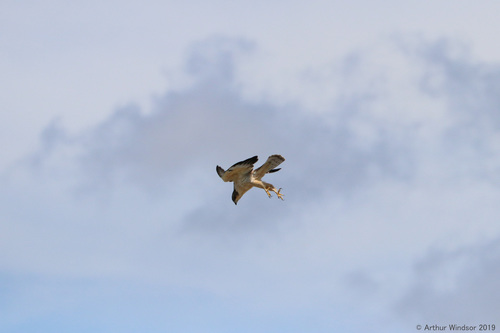
Short-tailed Hawk (Buteo brachyurus) Short-tailed Hawk
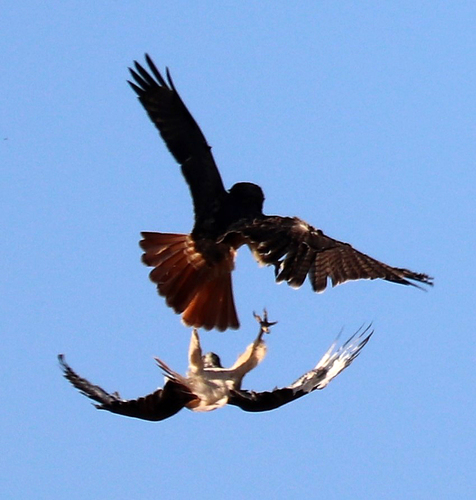
Red-tailed Hawk (Buteo jamaicensis) Red-tailed Hawk

Media

Loading…

In short

The most reliable field mark to separate Short-tailed Hawk from Red-tailed Hawk is the tail: adult Red-tailed Hawks show a distinctive brick-red tail above, while Short-tailed Hawks always have a much shorter, banded tail lacking any red tones. In flight, Short-tailed Hawks appear more compact with shorter tails and narrower wings, often kiting or soaring high, while Red-tailed Hawks are bulkier with broader wings and a longer, fanned tail. Juvenile Red-tailed Hawks lack the red tail but still show a longer, banded tail and a characteristic dark belly band, which Short-tailed Hawks never show. Perched, Short-tailed Hawks are much harder to spot, often hidden in dense canopy, while Red-tailed Hawks favor exposed perches. Be especially careful with dark-morph Short-tailed Hawks and dark-morph Red-tailed Hawks, as both can appear very dark below, but structural differences and tail pattern remain reliable.

Identification tips

  1. Tail color and pattern: Adult Red-tailed Hawks have a brick-red tail above, while Short-tailed Hawks always have a short, banded tail with no red tones. Juvenile Red-tailed Hawks have a longer, brown, banded tail, still never as short as Short-tailed Hawk.
  2. Tail length and shape: Short-tailed Hawk's tail is noticeably shorter and more square-tipped in all ages and morphs, while Red-tailed Hawk's tail is longer and more rounded/fanned.
  3. Belly band: Red-tailed Hawks (all ages) show a broad, dark belly band of horizontal streaks across the pale underparts, especially obvious in light-morph birds. Short-tailed Hawks never show a belly band; light morphs have clean white underparts.
  4. Wing shape in flight: Short-tailed Hawks have narrower, more pointed wings and a compact, agile silhouette. Red-tailed Hawks have broad, blocky wings and a heavier, more lumbering flight style.
  5. Overall size: Red-tailed Hawks are much larger and bulkier, both perched and in flight. Short-tailed Hawks are smaller, lighter, and more agile.
  6. Flight behavior: Short-tailed Hawks often soar very high or kite into the wind with stationary wings. Red-tailed Hawks soar in wide circles and are more likely to be seen gliding or flapping with slow, heavy wingbeats.
  7. Perching behavior: Red-tailed Hawks perch in the open on poles, trees, or fence posts. Short-tailed Hawks are rarely seen perched, usually hidden in dense canopy with only the head visible.
  8. Plumage morphs: Both species have light and dark morphs. Dark-morph Short-tailed Hawks are uniformly dark below, while dark-morph Red-tailed Hawks still show the longer tail and often retain some pale mottling or a faint belly band.
  9. Underwing pattern: Light-morph Short-tailed Hawks have white underwings with dark flight feathers and a sharp contrast at the trailing edge. Red-tailed Hawks have more mottled underwings with a patagial mark (dark bar along the leading edge near the body).
  10. Patagial mark: Red-tailed Hawks (all morphs) show a dark patagial bar on the leading edge of the underwing, a key mark in flight. Short-tailed Hawks lack this feature.
  11. Head and bill: Red-tailed Hawks have a blocky head and thick bill, often appearing small-headed for their body size. Short-tailed Hawks have a proportionally smaller, less blocky head.
  12. Habitat context: If seen in open country, especially on a pole or exposed perch, Red-tailed Hawk is much more likely. Short-tailed Hawk is more likely soaring above forest edges or hidden in canopy.
  13. Abundance: Red-tailed Hawk is common and widespread in North America; Short-tailed Hawk is local and uncommon, especially outside Florida and the tropics.
  14. Juvenile confusion: Juvenile Red-tailed Hawks lack the red tail but still show the belly band, longer tail, and patagial bar. Juvenile Short-tailed Hawks look like small, compact Buteos with a short, banded tail and no belly band.
  15. When in doubt: Focus on tail length and color, belly band presence, and overall size/shape in flight. These marks are reliable across ages and morphs.

Size

Red-tailed Hawk is significantly larger and bulkier than Short-tailed Hawk. Red-tailed Hawks are among the heaviest and most robust Buteos in North America, with a thick body, broad wings, and a relatively long, wide tail. Short-tailed Hawk is noticeably smaller, more compact, and has a shorter, squarer tail. In direct comparison, the Red-tailed Hawk's size and mass are obvious in flight and when perched, while Short-tailed Hawk appears lighter and more agile.

Plumage

Juvenile Red-tailed Hawks have a brown, banded tail (not red yet), a pale underbelly with a broad, dark belly band, and variable dark spotting below. Adults show the classic brick-red tail above and pale underparts with a dark belly band. Short-tailed Hawks come in light and dark morphs: light-morph birds have white underparts with dark flight feathers and a contrasting dark trailing edge, while dark-morph birds are almost entirely dark below. Both morphs have a short, banded tail with no red tones. Short-tailed Hawks never show a belly band or the heavy streaking typical of Red-tailed Hawks. In all ages, the Red-tailed Hawk's tail is longer and broader, with adults always showing some red above. The Short-tailed Hawk's wings are narrower and more pointed, especially obvious in flight, and the tail is always short and square-tipped.

Behaviour

Short-tailed Hawks are often seen soaring high above the canopy or kiting into the wind with stationary wings, rarely perching in the open. They are primarily aerial hunters, frequently attacking prey from above with steep, rapid dives. Red-tailed Hawks are more likely to perch in prominent, open locations such as utility poles, trees, or fence posts, and often hunt from these perches as well as by soaring. Red-tailed Hawks are less likely to be overlooked when perched due to their preference for exposed sites.

Habitat

Red-tailed Hawks are highly adaptable and occupy a vast range of habitats across North America, including open fields, deserts, forests, mountains, agricultural areas, and even urban environments. They are commonly seen in areas with open ground and scattered trees or perches. Short-tailed Hawks are much more local and uncommon, favoring the borders of wooded and open areas, and are often concealed within dense canopy when perched. In Florida and the tropics, Short-tailed Hawks are harder to detect except when soaring.

Submit a better description

Use the same sections as the comparison. Your text is published immediately.

The most reliable field mark to separate Short-tailed Hawk from Red-tailed Hawk is the tail: adult Red-tailed Hawks show a distinctive brick-red tail above, while Short-tailed Hawks always have a much shorter, banded tail lacking any red tones. In flight, Short-tailed Hawks appear more compact with shorter tails and narrower wings, often kiting or soaring high, while Red-tailed Hawks are bulkier with broader wings and a longer, fanned tail. Juvenile Red-tailed Hawks lack the red tail but still show a longer, banded tail and a characteristic dark belly band, which Short-tailed Hawks never show. Perched, Short-tailed Hawks are much harder to spot, often hidden in dense canopy, while Red-tailed Hawks favor exposed perches. Be especially careful with dark-morph Short-tailed Hawks and dark-morph Red-tailed Hawks, as both can appear very dark below, but structural differences and tail pattern remain reliable.

  1. Tail color and pattern: Adult Red-tailed Hawks have a brick-red tail above, while Short-tailed Hawks always have a short, banded tail with no red tones. Juvenile Red-tailed Hawks have a longer, brown, banded tail, still never as short as Short-tailed Hawk.
  2. Tail length and shape: Short-tailed Hawk's tail is noticeably shorter and more square-tipped in all ages and morphs, while Red-tailed Hawk's tail is longer and more rounded/fanned.
  3. Belly band: Red-tailed Hawks (all ages) show a broad, dark belly band of horizontal streaks across the pale underparts, especially obvious in light-morph birds. Short-tailed Hawks never show a belly band; light morphs have clean white underparts.
  4. Wing shape in flight: Short-tailed Hawks have narrower, more pointed wings and a compact, agile silhouette. Red-tailed Hawks have broad, blocky wings and a heavier, more lumbering flight style.
  5. Overall size: Red-tailed Hawks are much larger and bulkier, both perched and in flight. Short-tailed Hawks are smaller, lighter, and more agile.
  6. Flight behavior: Short-tailed Hawks often soar very high or kite into the wind with stationary wings. Red-tailed Hawks soar in wide circles and are more likely to be seen gliding or flapping with slow, heavy wingbeats.
  7. Perching behavior: Red-tailed Hawks perch in the open on poles, trees, or fence posts. Short-tailed Hawks are rarely seen perched, usually hidden in dense canopy with only the head visible.
  8. Plumage morphs: Both species have light and dark morphs. Dark-morph Short-tailed Hawks are uniformly dark below, while dark-morph Red-tailed Hawks still show the longer tail and often retain some pale mottling or a faint belly band.
  9. Underwing pattern: Light-morph Short-tailed Hawks have white underwings with dark flight feathers and a sharp contrast at the trailing edge. Red-tailed Hawks have more mottled underwings with a patagial mark (dark bar along the leading edge near the body).
  10. Patagial mark: Red-tailed Hawks (all morphs) show a dark patagial bar on the leading edge of the underwing, a key mark in flight. Short-tailed Hawks lack this feature.
  11. Head and bill: Red-tailed Hawks have a blocky head and thick bill, often appearing small-headed for their body size. Short-tailed Hawks have a proportionally smaller, less blocky head.
  12. Habitat context: If seen in open country, especially on a pole or exposed perch, Red-tailed Hawk is much more likely. Short-tailed Hawk is more likely soaring above forest edges or hidden in canopy.
  13. Abundance: Red-tailed Hawk is common and widespread in North America; Short-tailed Hawk is local and uncommon, especially outside Florida and the tropics.
  14. Juvenile confusion: Juvenile Red-tailed Hawks lack the red tail but still show the belly band, longer tail, and patagial bar. Juvenile Short-tailed Hawks look like small, compact Buteos with a short, banded tail and no belly band.
  15. When in doubt: Focus on tail length and color, belly band presence, and overall size/shape in flight. These marks are reliable across ages and morphs.

Red-tailed Hawk is significantly larger and bulkier than Short-tailed Hawk. Red-tailed Hawks are among the heaviest and most robust Buteos in North America, with a thick body, broad wings, and a relatively long, wide tail. Short-tailed Hawk is noticeably smaller, more compact, and has a shorter, squarer tail. In direct comparison, the Red-tailed Hawk's size and mass are obvious in flight and when perched, while Short-tailed Hawk appears lighter and more agile.

Juvenile Red-tailed Hawks have a brown, banded tail (not red yet), a pale underbelly with a broad, dark belly band, and variable dark spotting below. Adults show the classic brick-red tail above and pale underparts with a dark belly band. Short-tailed Hawks come in light and dark morphs: light-morph birds have white underparts with dark flight feathers and a contrasting dark trailing edge, while dark-morph birds are almost entirely dark below. Both morphs have a short, banded tail with no red tones. Short-tailed Hawks never show a belly band or the heavy streaking typical of Red-tailed Hawks. In all ages, the Red-tailed Hawk's tail is longer and broader, with adults always showing some red above. The Short-tailed Hawk's wings are narrower and more pointed, especially obvious in flight, and the tail is always short and square-tipped.

Short-tailed Hawks are often seen soaring high above the canopy or kiting into the wind with stationary wings, rarely perching in the open. They are primarily aerial hunters, frequently attacking prey from above with steep, rapid dives. Red-tailed Hawks are more likely to perch in prominent, open locations such as utility poles, trees, or fence posts, and often hunt from these perches as well as by soaring. Red-tailed Hawks are less likely to be overlooked when perched due to their preference for exposed sites.

Red-tailed Hawks are highly adaptable and occupy a vast range of habitats across North America, including open fields, deserts, forests, mountains, agricultural areas, and even urban environments. They are commonly seen in areas with open ground and scattered trees or perches. Short-tailed Hawks are much more local and uncommon, favoring the borders of wooded and open areas, and are often concealed within dense canopy when perched. In Florida and the tropics, Short-tailed Hawks are harder to detect except when soaring.

Discard your changes?

You have unsaved edits. If you leave now, those changes will be lost.

Short-tailed Hawk · Red-tailed Hawk · My Tricky Birds