

Short-billed Gull vs Black-capped Petrel
Larus brachyrhynchus versus Pterodroma hasitata
Play a quiz with Short-billed Gull and Black-capped Petrel
 Short-billed Gull
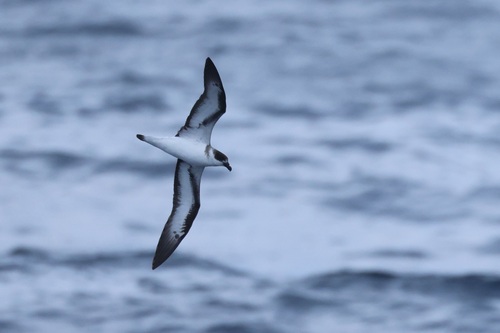 Black-capped Petrel
In short
The most reliable separation between Short-billed Gull and Black-capped Petrel is the combination of structure and flight style: Short-billed Gull is a compact, short-billed, broad-winged gull with a distinctive 'string of pearls' pattern on the wingtips in flight (especially in adults and older immatures), while Black-capped Petrel is a long-winged, slender-bodied seabird with a bold black cap, white nape, and contrasting dark underwing markings. Juvenile and immature Short-billed Gulls show brownish, smudgy upperparts and dark wingtips, never the crisp black-and-white contrast or the unique facial pattern of the petrel. In flight, the petrel's buoyant, gliding flight and long wings are instantly different from the more direct, flapping flight of the gull. Habitat is also a strong clue: Short-billed Gull is a coastal and inland gull of North America, while Black-capped Petrel is a rare, pelagic West Indian seabird.
Identification tips
- Wing pattern in flight (adult/older immature): Short-billed Gull shows a 'string of pearls'—white tongue tips on primaries p5–p8 and large white mirrors on p9–p10, plus a broad white trailing edge. Black-capped Petrel never shows these marks; its upperwing is uniformly dark with a white rump and nape.
- Juvenile/immature plumage: Young Short-billed Gulls are brownish, smudgy, and have dark brown wingtips, with a pink-based bill and black tip in first winter. Black-capped Petrel juveniles (and adults) always have a sharp black cap, white nape, and never appear brownish or mottled like a young gull.
- Facial pattern: Black-capped Petrel has a bold black cap (sometimes extending over the eye) and a white nape, giving a striking contrast. Short-billed Gull never shows a black cap or white nape at any age.
- Bill structure: Short-billed Gull has a short, yellow bill (duller in winter, sometimes with a faint dark mark), while Black-capped Petrel has a longer, slender, hooked bill typical of petrels, never yellow.
- Leg color: Adult Short-billed Gull has yellow legs; Black-capped Petrel's legs are not visible in flight and are not yellow.
- Flight style: Short-billed Gull flies with steady, direct wingbeats and glides, often in flocks. Black-capped Petrel has a buoyant, shearing flight, arcing over waves with long, stiff wings, and is usually solitary or in small groups.
- Body structure: Short-billed Gull is compact, with a short bill and broad wings. Black-capped Petrel is long-winged, slender-bodied, and appears more streamlined in flight.
- Underwing pattern: Black-capped Petrel shows bold dark markings on the underwing, contrasting with white, while Short-billed Gull (especially adults) shows a broad white trailing edge and lacks strong underwing contrast.
- Tail and rump: Black-capped Petrel has a white rump and nape, visible in flight; Short-billed Gull has a plain white tail and no contrasting rump or nape.
- Habitat/context: If seen far offshore in the Caribbean or western Atlantic, especially from a boat, Black-capped Petrel is possible; Short-billed Gull is not. If seen loafing on a beach, pier, or inland water, it's almost certainly a gull.
- Seasonal context: Short-billed Gull is present in North America mainly from spring through fall; Black-capped Petrel is present at sea year-round but only comes to land at night to breed.
- Group size: Short-billed Gull is often in flocks; Black-capped Petrel is usually solitary or in small groups at sea.
- Behavior on land: Short-billed Gull walks and stands readily; Black-capped Petrel is rarely seen on land and only shuffles to its burrow at night.
- Vocalizations: Not typically useful in field separation, but Short-billed Gull gives gull-like calls; Black-capped Petrel is mostly silent at sea.
- Pitfalls: Immature gulls can look confusingly dark and smudgy, but never show the petrel's crisp black cap or long-winged, shearing flight. Petrel never shows the gull's wing 'pearls' or mirrors.
Size
Black-capped Petrel is heavier (body mass ~455 g [wikidata]) and has a longer, more slender wingspan (about 94 cm) compared to the Short-billed Gull (wingspan 100–120 cm, but with a shorter, chunkier body and shorter bill [wikipedia]). Both species are similar in overall length (about 40–45 cm), but the petrel appears longer-winged and more streamlined, while the gull is more compact and deep-bodied. In hand or at close range, the petrel feels bulkier due to its mass, but in flight, the gull can appear larger due to its broader wings and shorter tail.
Plumage
Juvenile and first-winter Short-billed Gulls are brownish overall with dark brown wingtips and a smudgy, dark-marked head and neck. They lack the bold black cap and white nape of the Black-capped Petrel, which is already present in all plumages of the petrel. First-year gulls may show a pink-based bill with a black tip, and as they age, gray saddle feathers and more adult-like patterns appear, but always with a more mottled, less sharply defined look than the petrel. Adult Short-billed Gulls in breeding plumage are clean white-headed with yellow legs and bill, but in flight, they show a diagnostic 'string of pearls'—white tongue tips on the outer primaries (p5–p8) and large white mirrors on p9–p10, plus a broad white trailing edge. Black-capped Petrel, in contrast, has a uniform dark upperwing with a white rump and nape, and underwings with bold dark markings, never the 'pearls' or mirrors of the gull. The petrel's facial pattern (black cap, white face and nape) is unique and never matched by the gull at any age or season.
Behaviour
Short-billed Gull is typically seen in flocks, often loafing, swimming, or feeding along coasts, lakes, and rivers, with a steady, direct flight and frequent gliding. Black-capped Petrel is strictly pelagic, rarely seen from land except at nesting colonies, and is usually solitary or in small groups, with a distinctive, buoyant, shearing flight—arching over waves with long, stiff wings and rapid, shallow wingbeats interspersed with glides. On land, the petrel is awkward and shuffles to its burrow, while the gull walks and stands readily. The petrel is nocturnal at breeding sites, while the gull is active by day.
Habitat
Short-billed Gull breeds and winters along coastal and inland wetlands of northwestern North America, especially Alaska and Canada, and winters along the Pacific coast to California and occasionally further south or inland. It is a rare vagrant elsewhere. Black-capped Petrel is a rare, highly localized seabird of the West Indies, nesting in remote montane forests (Hispaniola) but spending most of its life far offshore in the Caribbean and western Atlantic. Seeing a Black-capped Petrel from shore is extremely unlikely; Short-billed Gull is never truly pelagic.
Voice
No direct comparison is available in the notes. Short-billed Gull has typical gull calls, while Black-capped Petrel is mostly silent at sea but gives odd-sounding croaks and calls at night on breeding grounds. In most field situations, voice is not a useful separator.