

Motmot

Shikra vs Besra

Tachyspiza badia versus Tachyspiza virgata

Play a quiz with Shikra and Besra
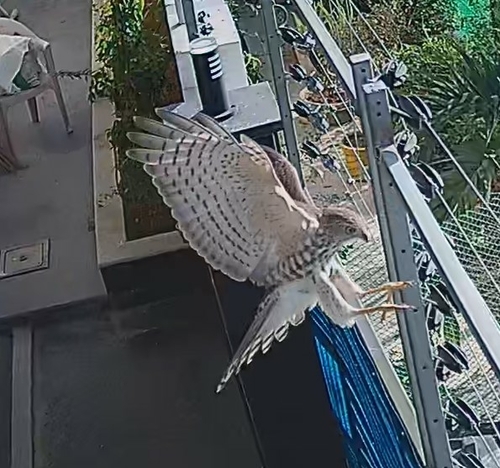
Shikra (Tachyspiza badia) Shikra
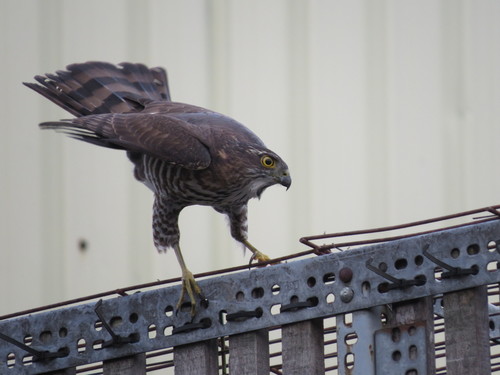
Besra (Tachyspiza virgata) Besra

Media

Loading…

In short

The most reliable field mark to separate Shikra from Besra is the tail pattern in all ages: Besra always shows 3–4 equally sized, sharply defined dark bands across the uppertail, while Shikra has less distinct tail bands, with the central tail feathers often unbanded except for a dark terminal band. Juvenile Shikra also shows narrower tail bands and less extensive underpart barring than juvenile Besra. Adult Besra is overall darker above and more heavily barred below than Shikra, with a broader gular (throat) stripe and longer, thinner legs. In flight, Besra’s underwing is more strongly barred, while Shikra’s underwing coverts are paler and less marked. Both species are similar in size and shape, but subtle differences in structure and plumage, especially in the tail and underparts, are key for confident identification.

Identification tips

  1. Tail banding (all ages): Besra always has 3–4 equally broad, sharply defined dark bands across the uppertail, visible both perched and in flight. Shikra’s tail bands are narrower, less distinct, often faint on lateral feathers, and the central tail feathers may be unbanded except for a dark terminal band.
  2. Underwing pattern (in flight): Besra shows strong, consistent barring across the underwing coverts in all plumages; Shikra has a paler underwing lining with less extensive barring and blackish wingtips. This is best seen in good light from below.
  3. Juvenile underparts: Juvenile Besra is white below with strong brown barring; juvenile Shikra has dark streaks and spots on the upper breast and narrower barring on the wings and underparts.
  4. Throat/gular stripe: Besra has a broader, more prominent gular stripe (dark central throat line); Shikra’s is narrower and less obvious. This is best seen at rest or in close views.
  5. Upperparts color: Adult Besra is darker above (males dark blue-grey, females browner); Shikra is paler grey above. This difference is subtle and can be affected by light.
  6. Underpart barring: Besra’s underparts are more heavily and broadly barred reddish-brown; Shikra’s barring is finer and less extensive, especially on the lower belly and thighs, which are often whitish.
  7. Leg and toe structure: Besra has longer, thinner legs and toes than Shikra, but this is subtle and requires good views or direct comparison.
  8. Iris color (adults): Male Shikra has a red iris, female Shikra a yellowish-orange iris; this is not diagnostic for Besra but can help confirm Shikra in good light.
  9. Size: Besra is slightly larger, but the overlap is considerable and not reliable for field separation.
  10. Habitat context: Deep forest birds are more likely Besra, especially if seen hunting through dense vegetation; open country, farmland, or urban birds are more likely Shikra, but both can overlap in woodland edges.
  11. Flight style: Both species use a flap–flap–glide, but Besra is more likely to hunt by surprise from a hidden perch in dense cover, while Shikra may be seen soaring or perching in the open.
  12. Sexual dimorphism: Females of both species are larger and browner above; this can confuse identification if only one bird is seen.
  13. Post-juvenile plumage: Shikra may show strong barring on the underside in transitional plumage, but the tail pattern remains the best mark.
  14. Perched vs. flying: Tail and underwing patterns are often easier to see in flight, but perched birds can be separated by tail banding and throat stripe.
  15. Voice: Shikra’s 'pee-wee' and 'kik-ki' calls can help confirm its presence, but lack of Besra vocalization data means this is only a positive mark for Shikra, not a negative for Besra.

Size

Shikra is slightly smaller, measuring 26–30 cm in length, while Besra is a bit larger at 29–36 cm. Both have short, rounded wings and long tails adapted for maneuverability, but the size overlap is considerable and not reliable for field separation. Females of both species are larger than males, but this is only useful if the sex is known. Overall, size alone is not a safe distinguishing feature between the two.

Plumage

Juvenile/immature birds: Besra juveniles are dark brown above and white below with strong brown barring, and always show 3–4 equally broad, sharply defined dark bands across the uppertail. Shikra juveniles have dark streaks and spots on the upper breast, narrower barring on the wings, and the tail bands are narrower and less distinct; the central tail feathers are often unbanded except for a dark terminal band. Post-juvenile Shikra can show strong barring on the underside, but the tail pattern remains a key difference.

Adults: Besra adults are darker above (males dark blue-grey, females browner) and have white underparts with strong reddish-brown barring, a broader and more prominent gular stripe, and thin, long legs and toes. Shikra adults have paler grey upperparts, fine rufous barring on the underparts (less extensive than Besra), a narrow dark mesial throat stripe, and paler thighs. In flight, Besra shows a more strongly barred underwing, while Shikra has a lighter underwing lining and blackish wingtips. Iris color can help: adult male Shikra has a red iris, female Shikra has yellowish-orange, while iris color is not diagnostic for Besra in the field.

Behaviour

Both species use a flap–flap–glide flight style and are fast, agile hunters. Besra is especially adapted for maneuvering through dense forest, often hunting by surprise from a concealed perch. Shikra is more often seen in open habitats, including urban areas, and may be more conspicuous when soaring or perching in the open. Both species may draw alarm calls from small birds, but this is not a reliable separation feature.

Habitat

Besra is primarily a bird of dense forests and woodland, though it can emerge into more open woodland and even cultivated areas in winter. Shikra is more versatile, occurring in forests, farmland, and urban environments, and is often seen in more open country or perched conspicuously. If the bird is deep in dense forest, Besra is more likely, but habitat overlap is significant, especially outside the breeding season.

Voice

Shikra gives a distinctive 'pee-wee' call, with the first note higher and the second longer; in flight, its calls are shorter and sharper ('kik-ki ... kik-ki'). Besra’s vocalizations are not described in the provided notes, so voice is not a reliable field mark for separation based on current information.

Submit a better description

Use the same sections as the comparison. Your text is published immediately.

The most reliable field mark to separate Shikra from Besra is the tail pattern in all ages: Besra always shows 3–4 equally sized, sharply defined dark bands across the uppertail, while Shikra has less distinct tail bands, with the central tail feathers often unbanded except for a dark terminal band. Juvenile Shikra also shows narrower tail bands and less extensive underpart barring than juvenile Besra. Adult Besra is overall darker above and more heavily barred below than Shikra, with a broader gular (throat) stripe and longer, thinner legs. In flight, Besra’s underwing is more strongly barred, while Shikra’s underwing coverts are paler and less marked. Both species are similar in size and shape, but subtle differences in structure and plumage, especially in the tail and underparts, are key for confident identification.

  1. Tail banding (all ages): Besra always has 3–4 equally broad, sharply defined dark bands across the uppertail, visible both perched and in flight. Shikra’s tail bands are narrower, less distinct, often faint on lateral feathers, and the central tail feathers may be unbanded except for a dark terminal band.
  2. Underwing pattern (in flight): Besra shows strong, consistent barring across the underwing coverts in all plumages; Shikra has a paler underwing lining with less extensive barring and blackish wingtips. This is best seen in good light from below.
  3. Juvenile underparts: Juvenile Besra is white below with strong brown barring; juvenile Shikra has dark streaks and spots on the upper breast and narrower barring on the wings and underparts.
  4. Throat/gular stripe: Besra has a broader, more prominent gular stripe (dark central throat line); Shikra’s is narrower and less obvious. This is best seen at rest or in close views.
  5. Upperparts color: Adult Besra is darker above (males dark blue-grey, females browner); Shikra is paler grey above. This difference is subtle and can be affected by light.
  6. Underpart barring: Besra’s underparts are more heavily and broadly barred reddish-brown; Shikra’s barring is finer and less extensive, especially on the lower belly and thighs, which are often whitish.
  7. Leg and toe structure: Besra has longer, thinner legs and toes than Shikra, but this is subtle and requires good views or direct comparison.
  8. Iris color (adults): Male Shikra has a red iris, female Shikra a yellowish-orange iris; this is not diagnostic for Besra but can help confirm Shikra in good light.
  9. Size: Besra is slightly larger, but the overlap is considerable and not reliable for field separation.
  10. Habitat context: Deep forest birds are more likely Besra, especially if seen hunting through dense vegetation; open country, farmland, or urban birds are more likely Shikra, but both can overlap in woodland edges.
  11. Flight style: Both species use a flap–flap–glide, but Besra is more likely to hunt by surprise from a hidden perch in dense cover, while Shikra may be seen soaring or perching in the open.
  12. Sexual dimorphism: Females of both species are larger and browner above; this can confuse identification if only one bird is seen.
  13. Post-juvenile plumage: Shikra may show strong barring on the underside in transitional plumage, but the tail pattern remains the best mark.
  14. Perched vs. flying: Tail and underwing patterns are often easier to see in flight, but perched birds can be separated by tail banding and throat stripe.
  15. Voice: Shikra’s 'pee-wee' and 'kik-ki' calls can help confirm its presence, but lack of Besra vocalization data means this is only a positive mark for Shikra, not a negative for Besra.

Shikra is slightly smaller, measuring 26–30 cm in length, while Besra is a bit larger at 29–36 cm. Both have short, rounded wings and long tails adapted for maneuverability, but the size overlap is considerable and not reliable for field separation. Females of both species are larger than males, but this is only useful if the sex is known. Overall, size alone is not a safe distinguishing feature between the two.

Juvenile/immature birds: Besra juveniles are dark brown above and white below with strong brown barring, and always show 3–4 equally broad, sharply defined dark bands across the uppertail. Shikra juveniles have dark streaks and spots on the upper breast, narrower barring on the wings, and the tail bands are narrower and less distinct; the central tail feathers are often unbanded except for a dark terminal band. Post-juvenile Shikra can show strong barring on the underside, but the tail pattern remains a key difference.

Adults: Besra adults are darker above (males dark blue-grey, females browner) and have white underparts with strong reddish-brown barring, a broader and more prominent gular stripe, and thin, long legs and toes. Shikra adults have paler grey upperparts, fine rufous barring on the underparts (less extensive than Besra), a narrow dark mesial throat stripe, and paler thighs. In flight, Besra shows a more strongly barred underwing, while Shikra has a lighter underwing lining and blackish wingtips. Iris color can help: adult male Shikra has a red iris, female Shikra has yellowish-orange, while iris color is not diagnostic for Besra in the field.

Both species use a flap–flap–glide flight style and are fast, agile hunters. Besra is especially adapted for maneuvering through dense forest, often hunting by surprise from a concealed perch. Shikra is more often seen in open habitats, including urban areas, and may be more conspicuous when soaring or perching in the open. Both species may draw alarm calls from small birds, but this is not a reliable separation feature.

Besra is primarily a bird of dense forests and woodland, though it can emerge into more open woodland and even cultivated areas in winter. Shikra is more versatile, occurring in forests, farmland, and urban environments, and is often seen in more open country or perched conspicuously. If the bird is deep in dense forest, Besra is more likely, but habitat overlap is significant, especially outside the breeding season.

Shikra gives a distinctive 'pee-wee' call, with the first note higher and the second longer; in flight, its calls are shorter and sharper ('kik-ki ... kik-ki'). Besra’s vocalizations are not described in the provided notes, so voice is not a reliable field mark for separation based on current information.

Discard your changes?

You have unsaved edits. If you leave now, those changes will be lost.

Shikra · Besra · My Tricky Birds