

Sharp-shinned Hawk vs Bicoloured Hawk
Accipiter striatus versus Astur bicolor
Play a quiz with Sharp-shinned Hawk and Bicoloured Hawk
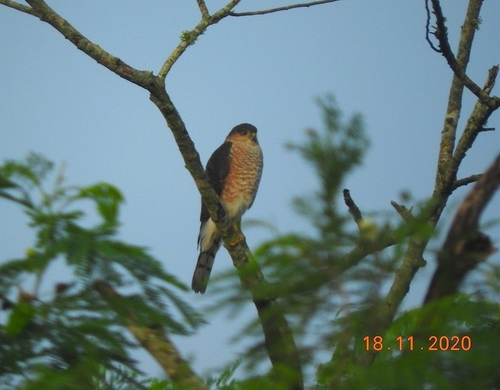 Sharp-shinned Hawk
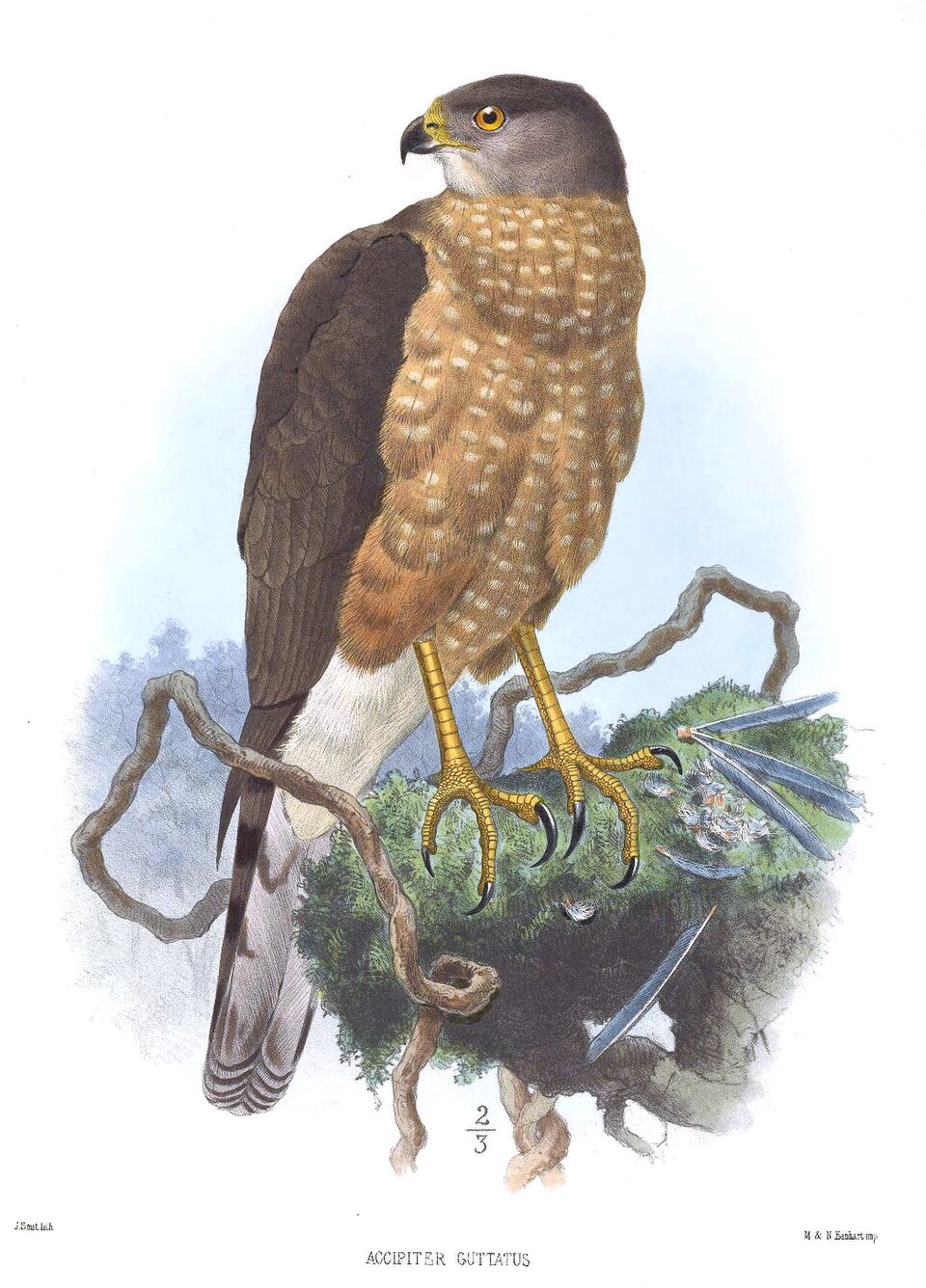 Bicoloured Hawk
In short
The most reliable field mark to separate Sharp-shinned Hawk from Bicoloured Hawk is size: Bicoloured Hawk is much larger and bulkier, with a heavier build and proportionally thicker legs. For birds in flight, juvenile plumage is key: juvenile Sharp-shinned Hawks show brown, scaly upperparts and heavily streaked underparts, while juvenile Bicoloured Hawks are highly variable but never as finely streaked below. Adults differ in underpart color and thigh pattern—Sharp-shinned has rufous-barred white underparts and often rufous thighs, while Bicoloured is generally solid grey or rufous below with pure rufous thighs. Structure and jizz (especially tail shape and leg thickness) are also helpful, but beware overlap in perched views. Both species can be confused in Central America and northern South America, but Bicoloured Hawk is the only one found well south of Panama.
Identification tips
- Size is the first check: Bicoloured Hawk is much larger and bulkier than any Sharp-shinned Hawk, even the largest females. If the bird looks hefty, with a deep chest and thick legs, Bicoloured is likely. This is most reliable when seen alongside known species or with a good sense of scale.
- Leg thickness: Bicoloured Hawk has noticeably thicker, more robust legs and feet than the slender, delicate legs of Sharp-shinned Hawk. This is often visible when perched or in photos.
- Juvenile underpart streaking: Juvenile Sharp-shinned Hawks have fine, dense brown or reddish streaks on whitish underparts, often with rufous barring on the sides. Juvenile Bicoloured Hawks are variable below but never as finely or densely streaked; they may be white, buff, or rufous with coarse streaks or blotches.
- Adult underpart pattern: Adult Sharp-shinned Hawks have white underparts with rufous or tawny barring, while adult Bicoloured Hawks are generally solid grey or rufous below, sometimes with white spots or bars in southern subspecies but never the fine barring of Sharp-shinned.
- Thigh color: Bicoloured Hawk always has pure rufous thighs (though not always visible), while Sharp-shinned Hawk's thighs are rufous but often barred white.
- Tail pattern: Both species have banded tails, but Sharp-shinned Hawk's tail is more evenly banded with a variable white tip (notched, square, or slightly rounded), while Bicoloured Hawk's tail has broader, fewer pale bands and lacks the neat white tip.
- Cap and crown: Adult Bicoloured Hawk has a black crown contrasting with grey upperparts; Sharp-shinned Hawk has a dark cap but not as sharply defined.
- Scapular spots: Sharp-shinned Hawk often shows random white spots on the scapulars (shoulder area), especially in adults; Bicoloured Hawk lacks these.
- Flight jizz: Sharp-shinned Hawk is quick, snappy, and agile in flight, with short, broad wings and a medium-length tail. Bicoloured Hawk is more powerful, with deeper wingbeats and a bulkier silhouette.
- Perched posture: Bicoloured Hawk appears more upright and robust when perched, while Sharp-shinned Hawk looks slimmer and more delicate.
- Iris color: Adult Sharp-shinned Hawks have dark orange to red irises (yellowish to pale orange in juveniles); iris color is not a strong field mark for Bicoloured Hawk.
- Underwing coverts: In flight, Bicoloured Hawk shows white (northern) or rufous (southern) underwing coverts; Sharp-shinned Hawk's underwing is barred but lacks this strong contrast.
- Habitat and range: In Central and South America, Bicoloured Hawk is the default Accipiter-like hawk in lowland and foothill forests; Sharp-shinned Hawk is rare south of Panama except at higher elevations or as a migrant.
- Sexual size dimorphism: Both species show strong female-male size difference, but even the largest female Sharp-shinned is smaller than most Bicoloured Hawks.
- Subspecies confusion: Southern Bicoloured Hawk subspecies can be more rufous below, but still lack the fine barring and scaly juvenile upperparts of Sharp-shinned Hawk.
Size
Bicoloured Hawk is substantially larger and heavier than Sharp-shinned Hawk. Adult Bicoloured measures 34–45 cm in length and weighs 200–450 g, while Sharp-shinned Hawk is much smaller: males are 23–30 cm and 82–115 g, females 29–37 cm and 150–219 g. Even the largest female Sharp-shinned is smaller than most Bicoloured Hawks. In the field, Bicoloured appears bulkier, with a deeper chest and heavier legs. Wingspan is also greater in Bicoloured Hawk, contributing to a more powerful impression in flight.
Plumage
-
Juveniles: Sharp-shinned Hawk juveniles have brown upperparts with rufous edges, giving a scaly look, and whitish underparts with dense brown or reddish streaking and some rufous barring on the sides. Their thighs are rufous, often barred white, and the head is brown with whitish streaks. Juvenile Bicoloured Hawks are much more variable: they can be white, buff, or rufous below, sometimes with dark streaks, but never as densely or finely streaked as Sharp-shinned. Their upperparts are browner than adults, and thighs may be paler but not as distinctly barred.
-
Adults: Sharp-shinned Hawk adults have blue-grey upperparts, a dark cap, white underparts with rufous or tawny barring, and rufous thighs (often barred white). The tail is banded blackish and gray, with a white tip that varies in shape. Bicoloured Hawk adults are grey above with a black crown, and underparts range from dark grey to pale grey or even salmon rufous (especially in southern subspecies), but are generally solid rather than barred. The thighs are always pure rufous (not always visible), and underwing coverts are white (northern) or rufous (southern). The tail is banded, but the bands are broader and fewer than on Sharp-shinned.
-
Subspecies variation: Bicoloured Hawk shows more regional variation, especially in underpart and underwing color, but always maintains the solid rufous thigh and lacks the fine barring of Sharp-shinned.
Behaviour
Both species are forest hawks and can be seen darting through woodlands or perched quietly in cover. Bicoloured Hawk, being larger, often appears more powerful and deliberate in flight, with slower, deeper wingbeats and a more robust silhouette. Sharp-shinned Hawk is quicker and more agile, with rapid, snappy wingbeats and a lighter, more buoyant feel. When perched, Bicoloured Hawk tends to look bulkier and more upright, while Sharp-shinned Hawk is slimmer and more delicate, especially in the legs and feet.
Habitat
Sharp-shinned Hawk is widespread in North America and the northern Neotropics, favoring forests, woodlands, and edges, but is generally absent from deep tropical lowlands south of Panama. Bicoloured Hawk is a resident of forest, woodland, second growth, plantations, and wooded savanna from southeastern Mexico through Central America to northern Argentina. In Central and South America, Bicoloured is the expected Accipiter-like hawk, especially in lowland and foothill forests, while Sharp-shinned is more likely at higher elevations or as a migrant/winterer. Overlap is possible in southern Mexico and Central America, but Bicoloured is absent from high Andes and Sharp-shinned is rare south of Panama.