

Semipalmated Plover vs Piping Plover
Charadrius semipalmatus versus Charadrius melodus
Play a quiz with Semipalmated Plover and Piping Plover
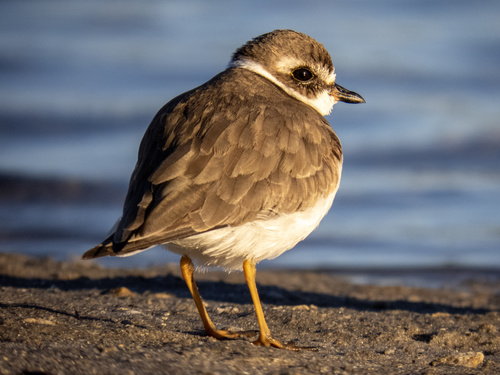 Semipalmated Plover
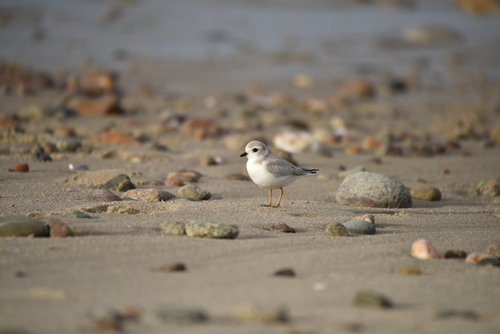 Piping Plover
In short
The most reliable field mark to separate Semipalmated Plover from Piping Plover is the breast band: Semipalmated has a single, complete dark band across the breast, while Piping Plover shows a thinner, often incomplete black band or just side patches, especially outside male breeding plumage. Semipalmated also has a darker brown upperpart and a more distinct facial mask, while Piping is paler and sandier overall. Bill color and leg color differ subtly but can be tricky at distance. Both are small plovers, but Piping is slightly stockier and paler, often blending into pale sand. Immature and nonbreeding birds can be especially confusing, so focus on the pattern and completeness of the breast band and overall tone.
Identification tips
- Breast band pattern is the single most reliable field mark: Semipalmated Plover always shows a complete, dark breast band (all ages and seasons). Piping Plover usually has a thinner, sometimes broken or incomplete band, especially in females and nonbreeding birds; males in breeding plumage may show a full band, but it's typically narrower than Semipalmated's.
- Upperpart color: Semipalmated is darker brown above, contrasting with its white underparts. Piping is much paler, sandy or khaki above, blending into pale sand.
- Facial pattern: Semipalmated has a strong black mask around the eyes and a white forehead, giving a more contrasting, 'masked' look. Piping has a less contrasting face, with a black forehead band that is bold only in breeding males and often faint or incomplete otherwise.
- Bill color and shape: Both have orange bills with black tips, but Semipalmated's bill is shorter, stubbier, and appears darker overall. Piping's bill is slightly longer, more orange, and stubbier in proportion to its head.
- Leg color: Piping Plover has brighter yellow-orange legs, while Semipalmated's are duller. This is subtle and can be obscured by mud or distance.
- Body shape: Piping Plover is slightly stockier, with a rounder head and thicker neck. Semipalmated may look a bit slimmer and longer-legged.
- Back and wing color: Semipalmated's back and wings are darker brown, contrasting with its white underparts. Piping's upperparts are pale and sandy, matching pale beaches.
- Habitat context: On sandy beaches, especially in the breeding season, Piping is more likely. On tidal flats, mudflats, or fields, especially away from the breeding range, Semipalmated is more likely.
- Seasonal changes: In nonbreeding season, Piping's black bands fade and may be almost absent, while Semipalmated retains a strong breast band year-round.
- Sex differences: In Piping Plover, only breeding males show a bold, complete breast and forehead band; females and nonbreeding birds have faint or incomplete bands. Semipalmated shows little sexual dimorphism in plumage.
- Juvenile confusion: Both species' juveniles can be duller and less contrasting, but the completeness and width of the breast band still separates them: Semipalmated's is always complete and dark, Piping's is thinner or broken.
- Flight views: No distinctive upperwing pattern differences are described for these species in the sources; focus on body and face pattern even in flight.
- Foraging behavior: Both pick at the surface, but Semipalmated may be seen in more varied habitats, including fields and mudflats, while Piping is almost always on sandy beaches.
- Voice: Not described in the provided sources; do not rely on vocalizations for separation based on these notes.
- Pitfalls: Beware of Piping Plovers with incomplete or faint bands (females, nonbreeding birds) and pale Semipalmateds in bright light; always check the breast band for width and completeness, and use upperpart color as a backup.
Size
Both species are small plovers, with very similar lengths (Semipalmated: 17–19 cm; Piping: 15–19 cm) [wikipedia]. Piping Plover is slightly heavier on average (mean 55 g vs. 46–47 g for Semipalmated) [wikidata][wikipedia], and often appears a bit more compact and round-headed. In the field, size difference is subtle and unreliable unless seen side-by-side.
Plumage
Juvenile and nonbreeding birds of both species can be confusing, but the breast band is key: Semipalmated Plover (all ages) shows a single, complete dark breast band, while Piping Plover (especially females and nonbreeding birds) often has a thinner, sometimes broken or incomplete band, or just dark patches at the sides of the breast. Semipalmated has a darker brown back and wings, with a contrasting white forehead and black mask; Piping is much paler, sandy or khaki above, with a less contrasting face pattern. Both have orange bills with black tips, but Semipalmated's bill is shorter and darker overall. In breeding plumage, Piping males show a bold black forehead band and neck ring, but these fade or become incomplete in females and nonbreeding birds. Leg color is brighter yellow-orange in Piping, duller in Semipalmated, but this is subtle and variable. No distinctive juvenile upperwing pattern is described for either species in the sources.
Behaviour
Both species forage by sight on open beaches and flats, but Semipalmated is more likely to be found on tidal flats and sometimes in fields, while Piping is more strictly tied to sandy beaches and gravel shores. Both may use distraction displays near nests. Piping Plover tends to be more confiding and less wary in some areas, but this varies with disturbance.
Habitat
Semipalmated Plover breeds on open ground in northern Canada and Alaska, often on beaches or flats with little vegetation, and winters along coasts in the southern US, Caribbean, and South America. Piping Plover is more restricted to sandy and gravel beaches in North America, both for breeding and feeding. In migration, Semipalmated can be found in a wider range of open habitats, including mudflats and even fields, while Piping is almost always on sandy beaches. Overlap can occur on migration, but Piping is more habitat-specific.