
Semipalmated Plover vs Little Ringed Plover
Charadrius semipalmatus versus Thinornis dubius
Play a quiz with Semipalmated Plover and Little Ringed Plover
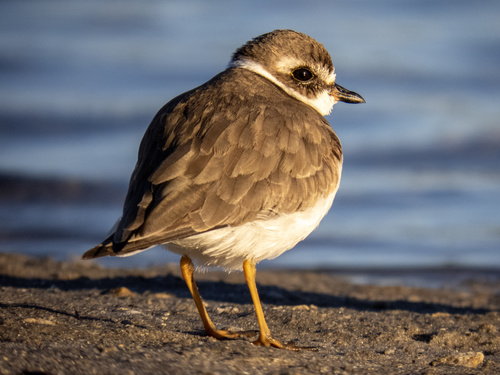 Semipalmated Plover
 Little Ringed Plover
In short
The most reliable field mark to separate Semipalmated Plover from Little Ringed Plover in the field is the presence of a bright yellow eyering on Little Ringed Plover, which is absent in Semipalmated. Bill color is also key: Semipalmated shows a short orange-and-black bill, while Little Ringed's bill is entirely dark. Both species have a single black breast band and similar brown-and-white upperparts, so confusion is easy, especially with immatures. Leg color and subtle differences in facial pattern can help, but beware overlap in dull light or at distance. Structure and size are very close, so focus on head and bill details for confident ID.
Identification tips
- Yellow eyering: Little Ringed Plover always shows a clear, bright yellow eyering in adults, visible even at a distance with good light. Semipalmated Plover never shows a yellow eyering. This is the single most reliable field mark for adults of both sexes.
- Bill color: Semipalmated Plover has a short bill with a distinct orange base and black tip (especially in breeding plumage). Little Ringed Plover's bill is entirely dark. This mark is visible at moderate range and works for adults in spring and summer; beware duller bills in non-breeding birds.
- Facial pattern: Both species have a black mask, but Little Ringed Plover has more white above the mask (supercilium area), and the yellow eyering enhances the facial contrast. Semipalmated's mask is less sharply set off above the eye.
- Leg color: Little Ringed Plover has flesh-colored legs, while Semipalmated Plover typically shows brighter orange legs. This is a supporting mark—leg color can be obscured by mud or poor light, and some variation occurs.
- Breast band: Both have a single black breast band; this is not a separator, but helps rule out Killdeer (which has two bands).
- Bill shape: Both have short, stubby bills, but Semipalmated's may appear slightly deeper at the base due to the orange color. This is subtle and not always reliable.
- Toe webbing: Both species have webbed toes, but this is rarely visible unless the bird is close and walking on mud or sand.
- Flight and upperwing pattern: No distinctive differences are noted for juveniles or adults in flight; both lack the bold white wingbar of Common Ringed Plover. If you see a strong white wingbar, reconsider the ID.
- Habitat and range: In Europe and Asia, Little Ringed Plover is the default; Semipalmated is a rare vagrant. In North America, Semipalmated is expected, and Little Ringed is extremely rare. Use range and season as a supporting clue, not a primary mark.
- Voice: Not described in the sources; do not rely on call for separation based on these notes.
- Jizz and behavior: Both species are small, active plovers with similar feeding behavior. Do not rely on general impression for separation.
- Perched vs. in flight: All key marks (eyering, bill color, leg color) are best seen on perched or standing birds. In flight, separation is very difficult without a close view of the head.
- Immature birds: No age-specific flight marks are described for juveniles or immatures. Use the same head and bill features as for adults, but expect colors to be duller and contrasts less sharp.
- Lighting and distance: At long range or in poor light, the yellow eyering and bill color may be hard to see. In these cases, do not overcall ID—wait for a better view.
- Common pitfalls: The biggest errors are missing the yellow eyering on Little Ringed or misjudging bill color in muddy or distant birds. Always check multiple features before deciding.
Size
Both species are very similar in size and structure, with Semipalmated Plover averaging 17–19 cm in length and a mean body mass around 47 g [wikipedia][avonet]. Little Ringed Plover is also described as a small plover, and no significant size difference is noted between the two in the sources. In the field, size is not a reliable separator between these two species.
Plumage
For all ages, both species have a grey-brown back and wings, white underparts, and a single black breast band. Juvenile and immature plumages are not described in detail for either species in the notes, so there are no known distinctive upperwing or flight marks to separate young birds. Adult breeding birds are best separated by head and bill pattern: Little Ringed Plover has a conspicuous yellow eyering and an all-dark bill, while Semipalmated Plover lacks the yellow eyering and has a short bill with an orange base and black tip. Both have a brown cap, white forehead, and black mask around the eyes, but Little Ringed shows more white above the mask. Leg color is flesh-toned in Little Ringed and not specified for Semipalmated, but typically more orange in Semipalmated. Both have webbed toes, but this is rarely visible in the field.
Behaviour
Both species forage visually on open ground, beaches, or flats, picking at invertebrates and small prey. Semipalmated Plover is noted for its 'broken-wing' distraction display, similar to Killdeer, when nesting. Foraging behavior and general jizz are very similar and not reliably diagnostic in the field.
Habitat
Semipalmated Plover breeds in open, often barren ground in northern North America and winters along coasts in the Americas. Little Ringed Plover is native to the Old World, breeding on open ground near water, often inland. In Europe, Little Ringed is the expected species, while Semipalmated is a rare vagrant. Habitat alone is not diagnostic, but context can support ID, especially outside migration periods.
Semipalmated Plover · Little Ringed Plover · My Tricky Birds