
Semipalmated Plover vs Corriere piccolo
Charadrius semipalmatus contro Thinornis dubius
Fai un quiz con Semipalmated Plover e Corriere piccolo
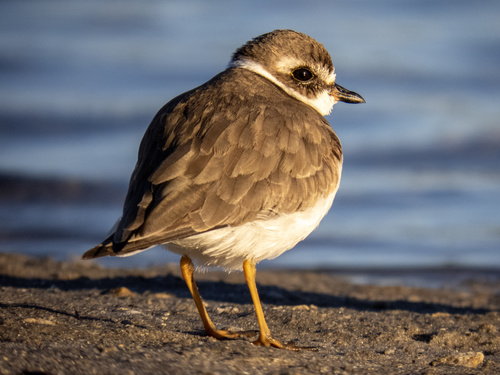 Semipalmated Plover
 Corriere piccolo
In breve
Il segno distintivo più affidabile per separare il Semipalmated Plover dal Corriere piccolo sul campo è la presenza di un anello oculare giallo brillante sul Corriere piccolo, assente nel Semipalmated. Anche il colore del becco è fondamentale: il Semipalmated mostra un becco corto arancione e nero, mentre il becco del Corriere piccolo è completamente scuro. Entrambe le specie hanno una singola banda nera sul petto e parti superiori marroni e bianche simili, quindi la confusione è facile, specialmente con gli immaturi. Il colore delle gambe e le sottili differenze nel pattern facciale possono aiutare, ma attenzione alla sovrapposizione in luce fioca o a distanza. La struttura e la dimensione sono molto simili, quindi concentrati sui dettagli della testa e del becco per un'identificazione sicura.
Consigli di identificazione
- Anello oculare giallo: Il Corriere piccolo mostra sempre un chiaro e brillante anello oculare giallo negli adulti, visibile anche a distanza con buona luce. Il Semipalmated Plover non mostra mai un anello oculare giallo. Questo è il segno distintivo più affidabile per gli adulti di entrambi i sessi.
- Colore del becco: Il Semipalmated Plover ha un becco corto con una base arancione distintiva e una punta nera (specialmente in abito nuziale). Il becco del Corriere piccolo è completamente scuro. Questo segno è visibile a distanza moderata e funziona per gli adulti in primavera e estate; attenzione ai becchi più opachi negli uccelli non in riproduzione.
- Pattern facciale: Entrambe le specie hanno una maschera nera, ma il Corriere piccolo ha più bianco sopra la maschera (area del supercilio), e l'anello oculare giallo migliora il contrasto facciale. La maschera del Semipalmated è meno nettamente definita sopra l'occhio.
- Colore delle gambe: Il Corriere piccolo ha gambe color carne, mentre il Semipalmated Plover mostra tipicamente gambe arancioni più brillanti. Questo è un segno di supporto: il colore delle gambe può essere oscurato dal fango o da scarsa illuminazione, e si verifica una certa variazione.
- Banda sul petto: Entrambi hanno una singola banda nera sul petto; questo non è un separatore, ma aiuta a escludere il Killdeer (che ha due bande).
- Forma del becco: Entrambi hanno becchi corti e tozzi, ma il Semipalmated può apparire leggermente più profondo alla base a causa del colore arancione. Questo è sottile e non sempre affidabile.
- Palme delle dita: Entrambe le specie hanno dita palmate, ma questo è raramente visibile a meno che l'uccello non sia vicino e cammini su fango o sabbia.
- Volo e pattern delle ali superiori: Non si notano differenze distintive per i giovanili o gli adulti in volo; entrambi mancano della marcata banda bianca delle ali del Corriere grosso. Se vedi una forte banda bianca, riconsidera l'identificazione.
- Habitat e distribuzione: In Europa e Asia, il Corriere piccolo è la specie predefinita; il Semipalmated è un raro vagabondo. In Nord America, il Semipalmated è atteso, e il Corriere piccolo è estremamente raro. Usa la distribuzione e la stagione come indizio di supporto, non come segno primario.
- Voce: Non descritta nelle fonti; non fare affidamento sul richiamo per la separazione basata su queste note.
- Jizz e comportamento: Entrambe le specie sono piccoli, attivi corrieri con comportamenti alimentari simili. Non fare affidamento sull'impressione generale per la separazione.
- In posa vs. in volo: Tutti i segni chiave (anello oculare, colore del becco, colore delle gambe) sono meglio visti su uccelli in posa o in piedi. In volo, la separazione è molto difficile senza una vista ravvicinata della testa.
- Uccelli immaturi: Non sono descritti segni di volo specifici per età per i giovanili o gli immaturi. Usa le stesse caratteristiche della testa e del becco degli adulti, ma aspettati colori più opachi e contrasti meno netti.
- Illuminazione e distanza: A lunga distanza o in scarsa luce, l'anello oculare giallo e il colore del becco possono essere difficili da vedere. In questi casi, non sovrastimare l'identificazione: aspetta una vista migliore.
- Errori comuni: I maggiori errori sono perdere l'anello oculare giallo sul Corriere piccolo o giudicare male il colore del becco in uccelli fangosi o distanti. Controlla sempre più caratteristiche prima di decidere.
Taglia
Entrambe le specie sono molto simili in dimensione e struttura, con il Semipalmated Plover che misura in media 17–19 cm di lunghezza e una massa corporea media di circa 47 g [wikipedia][avonet]. Anche il Corriere piccolo è descritto come un piccolo corriere, e non si nota una differenza di dimensioni significativa tra i due nelle fonti. Sul campo, la dimensione non è un separatore affidabile tra queste due specie.
Piumaggio
Per tutte le età, entrambe le specie hanno un dorso e ali marrone-grigiastro, parti inferiori bianche e una singola banda nera sul petto. Le piume giovanili e immature non sono descritte in dettaglio per nessuna delle due specie nelle note, quindi non ci sono segni distintivi noti sulle ali superiori o sui segni di volo per separare i giovani uccelli. Gli uccelli adulti in riproduzione sono meglio separati dal pattern della testa e del becco: il Corriere piccolo ha un anello oculare giallo evidente e un becco completamente scuro, mentre il Semipalmated Plover manca dell'anello oculare giallo e ha un becco corto con una base arancione e una punta nera. Entrambi hanno un cappello marrone, una fronte bianca e una maschera nera attorno agli occhi, ma il Corriere piccolo mostra più bianco sopra la maschera. Il colore delle gambe è color carne nel Corriere piccolo e non specificato per il Semipalmated, ma tipicamente più arancione nel Semipalmated. Entrambi hanno dita palmate, ma questo è raramente visibile sul campo.
Comportamento
Entrambe le specie si nutrono visivamente su terreni aperti, spiagge o pianure, beccando invertebrati e piccole prede. Il Semipalmated Plover è noto per la sua esibizione di distrazione 'ala rotta', simile al Killdeer, durante la nidificazione. Il comportamento di foraggiamento e il jizz generale sono molto simili e non sono affidabilmente diagnostici sul campo.
Habitat
Il Semipalmated Plover nidifica in terreni aperti, spesso aridi, nel nord dell'America del Nord e sverna lungo le coste delle Americhe. Il Corriere piccolo è nativo del Vecchio Mondo, nidificando su terreni aperti vicino all'acqua, spesso nell'entroterra. In Europa, il Corriere piccolo è la specie attesa, mentre il Semipalmated è un raro vagabondo. L'habitat da solo non è diagnostico, ma il contesto può supportare l'identificazione, specialmente al di fuori dei periodi di migrazione.
Semipalmated Plover · Corriere piccolo · I miei uccelli difficili