

Motmot

Scissor-tailed Flycatcher vs Fork-tailed Flycatcher

Tyrannus forficatus versus Tyrannus savana

Play a quiz with Scissor-tailed Flycatcher and Fork-tailed Flycatcher
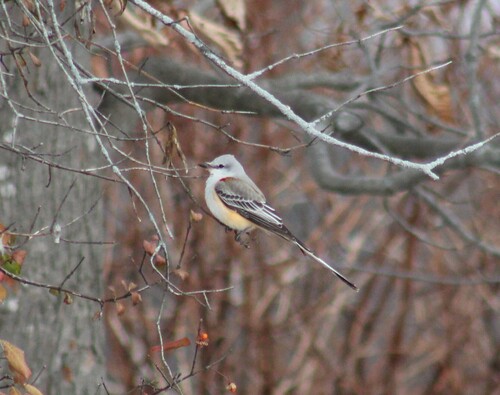
Scissor-tailed Flycatcher (Tyrannus forficatus) Scissor-tailed Flycatcher
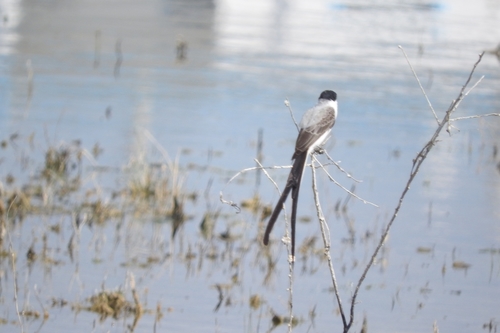
Fork-tailed Flycatcher (Tyrannus savana) Fork-tailed Flycatcher

Media

Loading…

In short

The most reliable field mark between Scissor-tailed Flycatcher and Fork-tailed Flycatcher is the head pattern: Fork-tailed shows a striking black cap (often with a yellow crown stripe in males), while Scissor-tailed has a plain pale gray head. Both species have extremely long, deeply forked tails, but the Fork-tailed's tail is proportionally longer in adult males and appears more dramatically oversized relative to its body. Plumage differences are subtle in flight, but Scissor-tailed shows salmon-pink flanks and underwing coverts, while Fork-tailed is clean white below. Immatures of both are duller and have shorter tails, increasing confusion. Structural and plumage marks, especially head pattern and underpart color, are key in all ages.

Identification tips

  1. Head pattern is the most reliable separator: Fork-tailed Flycatcher always shows a black cap (often with a yellow crown stripe in males), contrasting with white underparts and gray back. Scissor-tailed Flycatcher has a plain pale gray head with no black cap or crown stripe. This works for all ages and sexes.
  2. Underpart color: Fork-tailed is clean white below, while Scissor-tailed shows pale underparts with salmon-pink flanks and undertail coverts, especially obvious in good light or when the bird fans its tail or wings.
  3. Underwing color (adults): Scissor-tailed Flycatcher has red axillars and a red patch on the underwing coverts, visible in flight or when stretching; Fork-tailed lacks this feature.
  4. Tail structure: Both have extremely long, deeply forked tails in adult males, but Fork-tailed's tail is proportionally even longer and more ribbon-like relative to its small body. In females and immatures, tail length is less distinctive, but Fork-tailed still tends to have a longer tail for its size.
  5. Tail pattern: Scissor-tailed's tail is black above and white below; Fork-tailed's tail is black, with less contrast below.
  6. Body size and shape: Scissor-tailed is heavier, bulkier, and more robust, with a stouter bill; Fork-tailed is lighter, slimmer, and more delicate overall. This is most apparent when both species are seen together or at close range.
  7. Back color: Fork-tailed's back is gray, sometimes darker depending on subspecies, and always contrasts with the black cap; Scissor-tailed's back is pale gray and blends into the head.
  8. Juvenile confusion: Both species' immatures have shorter tails and duller colors, but Fork-tailed still shows a dark (though duller) cap, while Scissor-tailed remains plain-headed.
  9. Flight jizz: Both species are agile and perform aerial sallies, but Scissor-tailed often displays with exaggerated tail movements and acrobatics, while Fork-tailed males may perform somersaults and flips, especially in display.
  10. Perched posture: Both perch conspicuously, but Fork-tailed often looks more slender and upright, with the tail appearing disproportionately long for the body.
  11. Habitat context: In North America, Scissor-tailed is expected in open country, especially in the southern US; Fork-tailed is a rare vagrant north of Mexico, so context can help but is not diagnostic.
  12. Flock size: Fork-tailed may be seen in large migratory flocks, especially in South America; Scissor-tailed is usually solitary or in small groups.
  13. Vocalizations: If you hear a dry, buzzy call or a wing-produced whistle/crackle, suspect Fork-tailed, especially if accompanied by a black-capped bird.
  14. Sex differences: Both species show sexual dimorphism in tail length, but only Fork-tailed males may show a yellow crown stripe.
  15. Subspecies variation (Fork-tailed): Some Fork-tailed subspecies have paler or darker backs, but all retain the black cap and white underparts, unlike Scissor-tailed.

Size

Scissor-tailed Flycatcher is heavier (39.0g vs 29.65g) and more robust than Fork-tailed Flycatcher, despite similar overall lengths due to the latter's longer tail. Fork-tailed Flycatcher males reach 37–41 cm in length, but much of this is tail; their bodies are notably slighter, with a lighter, more delicate build. Females and immatures of both species have shorter tails, but Scissor-tailed remains bulkier. In hand or at close range, Scissor-tailed appears stouter and heavier-billed, while Fork-tailed looks slim and lightweight.

Plumage

Juvenile and immature birds of both species have shorter tails, making them less distinctive. For all ages, Fork-tailed Flycatcher stands out with a black cap contrasting sharply with a white throat and underparts, and gray upperparts; males may show a yellow crown stripe. Scissor-tailed Flycatcher lacks any black on the head, instead showing a uniform pale gray head and upperparts, with pale underparts and distinctive salmon-pink flanks and underwing coverts (often visible in flight or when perched with wings slightly open). The Scissor-tailed's tail is black above and white below, while Fork-tailed's tail is also black but lacks the strong white underside. Immature Fork-taileds have a duller cap and shorter tail, but the head pattern remains a key separator. Both species have dark wings, but only Scissor-tailed shows red in the axillars and underwing coverts (best seen in adults).

Behaviour

Both species sally from exposed perches to catch insects, but Scissor-tailed Flycatcher often performs spectacular aerial displays, especially in courtship, with its long tail streaming behind. Fork-tailed Flycatcher males also use their long tails in display, sometimes performing somersaults and flips. Fork-taileds are more gregarious in migration, sometimes forming large flocks, while Scissor-taileds are usually seen singly or in small groups. Both defend territories aggressively.

Habitat

Scissor-tailed Flycatcher is found in open country, often near isolated trees, shrubs, or artificial sites like telephone wires, mainly in North and Central America. Fork-tailed Flycatcher occupies a broader range of open habitats from southern Mexico to Argentina, including savanna, shrubland, grassland, forest edges, and even open residential areas. During migration, Fork-taileds may appear in a wider range of habitats and sometimes in large flocks, while Scissor-taileds are more localized.

Voice

Fork-tailed Flycatcher gives a dry, buzzy call and a weak 'tic' note in flight; its wings can produce a distinct whistling or crackling sound, especially during display. Scissor-tailed Flycatcher's vocalizations are not described in the provided notes, so voice is less useful for separation unless the Fork-tailed's distinctive wing sounds are heard.

Submit a better description

Use the same sections as the comparison. Your text is published immediately.

The most reliable field mark between Scissor-tailed Flycatcher and Fork-tailed Flycatcher is the head pattern: Fork-tailed shows a striking black cap (often with a yellow crown stripe in males), while Scissor-tailed has a plain pale gray head. Both species have extremely long, deeply forked tails, but the Fork-tailed's tail is proportionally longer in adult males and appears more dramatically oversized relative to its body. Plumage differences are subtle in flight, but Scissor-tailed shows salmon-pink flanks and underwing coverts, while Fork-tailed is clean white below. Immatures of both are duller and have shorter tails, increasing confusion. Structural and plumage marks, especially head pattern and underpart color, are key in all ages.

  1. Head pattern is the most reliable separator: Fork-tailed Flycatcher always shows a black cap (often with a yellow crown stripe in males), contrasting with white underparts and gray back. Scissor-tailed Flycatcher has a plain pale gray head with no black cap or crown stripe. This works for all ages and sexes.
  2. Underpart color: Fork-tailed is clean white below, while Scissor-tailed shows pale underparts with salmon-pink flanks and undertail coverts, especially obvious in good light or when the bird fans its tail or wings.
  3. Underwing color (adults): Scissor-tailed Flycatcher has red axillars and a red patch on the underwing coverts, visible in flight or when stretching; Fork-tailed lacks this feature.
  4. Tail structure: Both have extremely long, deeply forked tails in adult males, but Fork-tailed's tail is proportionally even longer and more ribbon-like relative to its small body. In females and immatures, tail length is less distinctive, but Fork-tailed still tends to have a longer tail for its size.
  5. Tail pattern: Scissor-tailed's tail is black above and white below; Fork-tailed's tail is black, with less contrast below.
  6. Body size and shape: Scissor-tailed is heavier, bulkier, and more robust, with a stouter bill; Fork-tailed is lighter, slimmer, and more delicate overall. This is most apparent when both species are seen together or at close range.
  7. Back color: Fork-tailed's back is gray, sometimes darker depending on subspecies, and always contrasts with the black cap; Scissor-tailed's back is pale gray and blends into the head.
  8. Juvenile confusion: Both species' immatures have shorter tails and duller colors, but Fork-tailed still shows a dark (though duller) cap, while Scissor-tailed remains plain-headed.
  9. Flight jizz: Both species are agile and perform aerial sallies, but Scissor-tailed often displays with exaggerated tail movements and acrobatics, while Fork-tailed males may perform somersaults and flips, especially in display.
  10. Perched posture: Both perch conspicuously, but Fork-tailed often looks more slender and upright, with the tail appearing disproportionately long for the body.
  11. Habitat context: In North America, Scissor-tailed is expected in open country, especially in the southern US; Fork-tailed is a rare vagrant north of Mexico, so context can help but is not diagnostic.
  12. Flock size: Fork-tailed may be seen in large migratory flocks, especially in South America; Scissor-tailed is usually solitary or in small groups.
  13. Vocalizations: If you hear a dry, buzzy call or a wing-produced whistle/crackle, suspect Fork-tailed, especially if accompanied by a black-capped bird.
  14. Sex differences: Both species show sexual dimorphism in tail length, but only Fork-tailed males may show a yellow crown stripe.
  15. Subspecies variation (Fork-tailed): Some Fork-tailed subspecies have paler or darker backs, but all retain the black cap and white underparts, unlike Scissor-tailed.

Scissor-tailed Flycatcher is heavier (39.0g vs 29.65g) and more robust than Fork-tailed Flycatcher, despite similar overall lengths due to the latter's longer tail. Fork-tailed Flycatcher males reach 37–41 cm in length, but much of this is tail; their bodies are notably slighter, with a lighter, more delicate build. Females and immatures of both species have shorter tails, but Scissor-tailed remains bulkier. In hand or at close range, Scissor-tailed appears stouter and heavier-billed, while Fork-tailed looks slim and lightweight.

Juvenile and immature birds of both species have shorter tails, making them less distinctive. For all ages, Fork-tailed Flycatcher stands out with a black cap contrasting sharply with a white throat and underparts, and gray upperparts; males may show a yellow crown stripe. Scissor-tailed Flycatcher lacks any black on the head, instead showing a uniform pale gray head and upperparts, with pale underparts and distinctive salmon-pink flanks and underwing coverts (often visible in flight or when perched with wings slightly open). The Scissor-tailed's tail is black above and white below, while Fork-tailed's tail is also black but lacks the strong white underside. Immature Fork-taileds have a duller cap and shorter tail, but the head pattern remains a key separator. Both species have dark wings, but only Scissor-tailed shows red in the axillars and underwing coverts (best seen in adults).

Both species sally from exposed perches to catch insects, but Scissor-tailed Flycatcher often performs spectacular aerial displays, especially in courtship, with its long tail streaming behind. Fork-tailed Flycatcher males also use their long tails in display, sometimes performing somersaults and flips. Fork-taileds are more gregarious in migration, sometimes forming large flocks, while Scissor-taileds are usually seen singly or in small groups. Both defend territories aggressively.

Scissor-tailed Flycatcher is found in open country, often near isolated trees, shrubs, or artificial sites like telephone wires, mainly in North and Central America. Fork-tailed Flycatcher occupies a broader range of open habitats from southern Mexico to Argentina, including savanna, shrubland, grassland, forest edges, and even open residential areas. During migration, Fork-taileds may appear in a wider range of habitats and sometimes in large flocks, while Scissor-taileds are more localized.

Fork-tailed Flycatcher gives a dry, buzzy call and a weak 'tic' note in flight; its wings can produce a distinct whistling or crackling sound, especially during display. Scissor-tailed Flycatcher's vocalizations are not described in the provided notes, so voice is less useful for separation unless the Fork-tailed's distinctive wing sounds are heard.

Discard your changes?

You have unsaved edits. If you leave now, those changes will be lost.

Scissor-tailed Flycatcher · Fork-tailed Flycatcher · My Tricky Birds