

Scaly-throated Honeyguide vs Southern Fiscal
Indicator variegatus versus Lanius collaris
Play a quiz with Scaly-throated Honeyguide and Southern Fiscal
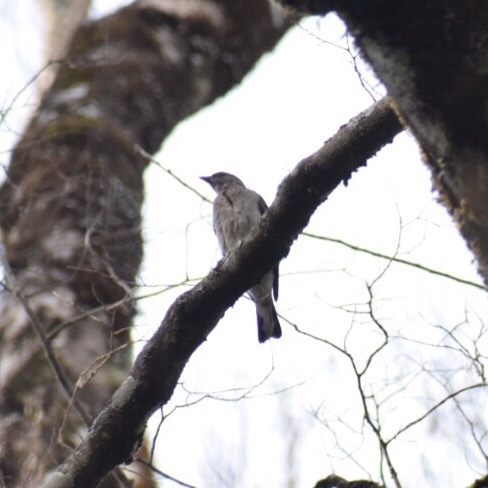 Scaly-throated Honeyguide
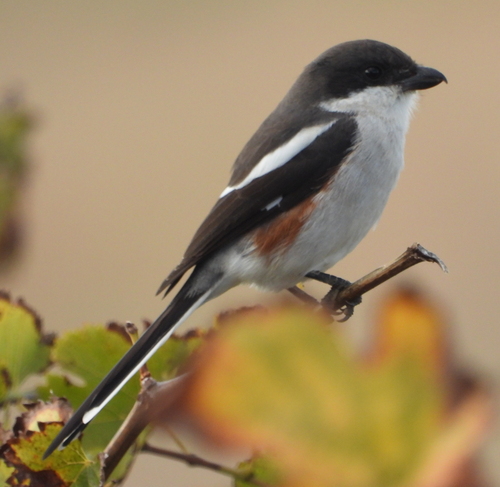 Southern Fiscal
In short
The most reliable field mark to separate Scaly-throated Honeyguide from Southern Fiscal is overall color pattern: the honeyguide is olive to olive-brown above with a scaly or streaked pale throat and breast, while the fiscal is sharply black above and white below with a bold white 'V' on the back and a long black tail with white edges. Immature honeyguides may show a greener throat and breast with bold dark spots, but never the crisp black-and-white contrast of a fiscal. The two species differ strongly in structure as well: the honeyguide is compact with a short tail, while the fiscal is longer, slimmer, and has a noticeably long tail. In flight or perched, the fiscal's striking black-and-white pattern and long tail are diagnostic, while the honeyguide always looks more muted and streaked. Voice and behavior also differ, but plumage and structure are the most immediate clues.
Identification tips
- Overall color pattern: Southern Fiscal is sharply black above and white below, with a bold white 'V' on the back; Scaly-throated Honeyguide is olive to olive-brown above with a scaly or streaked pale throat and breast, lacking any crisp black-and-white contrast.
- Tail length and pattern: Fiscal has a long, black tail with white edges and tips; honeyguide's tail is shorter, with a black-tipped white outer pattern and short outermost feathers. Juvenile honeyguides can have a nearly all-white tail, but never the long, black-and-white tail of a fiscal.
- Back markings: The fiscal's white 'V' on the back is unique and never shown by honeyguides of any age.
- Underparts: Fiscal is pure white below (except for possible rufous flanks in females); honeyguide is pale with olive or grayish streaks or scales, sometimes with a buffy or yellow tinge.
- Head and face: Fiscal has a black head and face, blending into the upperparts; honeyguide has olive-brown to greenish upperparts, with stripes or streaks on the face and crown, sometimes reaching the nape.
- Bill color and shape: Fiscal's bill is black and hooked (typical of shrikes); honeyguide's bill is less hooked, with males showing a black gape and females a pinkish gape with dusky gray (more obvious in older females).
- Leg color: Fiscal has black legs; honeyguide's legs are greenish-gray or yellowish-olive.
- Eye color: Fiscal's eyes are black; honeyguide's eyes range from hazel to gray-brown or deep brown.
- Juvenile/immature marks: Young honeyguides have a greener throat and breast with broad blackish spots and a darker face/crown; juvenile fiscals already show the adult black-and-white pattern.
- Behavior: Fiscals perch openly and upright, often flicking their long tails and hunting from exposed sites; honeyguides are more secretive, usually under canopy or in shaded woodland.
- Habitat: Fiscals are found in open country, gardens, and on wires; honeyguides are in woodland, forest edge, or dense canopy.
- Vocalizations: Fiscal gives harsh, shrike-like calls and a sweet, quiet song; honeyguide gives a churring trill, soft whistles, and 'kizz-kizz-kizz' calls, generally lower-pitched and less harsh.
- Feeding behavior: Fiscal may be seen impaling prey on thorns (hence 'butcher bird'); honeyguide does not show this behavior.
- Sex differences: Both species are similar between sexes, but female fiscal may have rufous lower flanks; honeyguide females may show a pinkish gape.
- Size impression: Fiscal appears longer and slimmer due to its tail, but is actually lighter than the honeyguide, which is more compact and stubby.
Size
Scaly-throated Honeyguide is slightly heavier on average (48 g vs. 40 g for Southern Fiscal) but is shorter in length (18–19 cm for honeyguide, 21–23 cm for fiscal). The fiscal appears longer and more slender, mainly due to its proportionally longer tail. In the field, the fiscal's size and shape are more reminiscent of a shrike, while the honeyguide is more compact and stubby.
Plumage
- Juvenile/immature plumage: Immature Scaly-throated Honeyguides have a greener throat and breast with broad, blackish spots, a darker face and crown, and a nearly all-white tail. This contrasts with the Southern Fiscal, which as a juvenile already shows the black-and-white pattern typical of adults: black upperparts, white underparts, and the distinctive white 'V' on the back. No age of honeyguide shows the fiscal's crisp black-and-white contrast or the white 'V'.
- Adult plumage: Adult honeyguides are olive to olive-brown above with a variable scaly or streaked pale throat and breast, and a yellow-green rump. Their tail is short with a black-tipped white outer pattern. In contrast, adult fiscals are sharply black above (from head to tail), pure white below, with a long black tail edged and tipped with white, and a bold white 'V' on the back. The fiscal's bill, legs, and eyes are black, while the honeyguide's legs are greenish-gray or yellowish-olive and eye color varies. Sexes are similar in both, but female fiscals may show a rufous tinge on the lower flanks.
Behaviour
Southern Fiscal is an active, conspicuous perch-hunter, often seen sitting upright on exposed perches, scanning for prey, and sometimes impaling prey on thorns. Its long tail is often flicked or held at an angle. Scaly-throated Honeyguide is more secretive, usually found under canopy or in shaded areas, and is less likely to be seen in open, exposed sites. The honeyguide is not known for the impaling behavior typical of fiscals.
Habitat
Southern Fiscal is found in open habitats, including savanna, farmland, gardens, and roadside wires, where it perches conspicuously. Scaly-throated Honeyguide prefers wooded areas, forest edges, and dense canopy, and is rarely seen in open country. If the bird is in an open, treeless area, it is almost certainly a fiscal; if deep in woodland or forest edge, honeyguide is more likely.
Voice
Scaly-throated Honeyguide gives a churring trill or a soft whistle, sometimes compared to scimitarbills, and a 'kizz-kizz-kizz' call when chasing. Its song is often heard early in the morning and is lower-pitched and less harsh than a fiscal's. Southern Fiscal has a mix of harsh, shrike-like swizzling calls and a 'Dzzzttt-dzzzt-dzzzt' alarm, but can also give a surprisingly sweet, quiet song. Fiscal calls are generally louder, harsher, and more varied, with more mimicry and alarm notes.
Scaly-throated Honeyguide · Southern Fiscal · My Tricky Birds