
Motmot

Sanderling vs White Tern

Calidris alba versus Gygis alba

Play a quiz with Sanderling and White Tern

Sanderling (Calidris alba) Sanderling
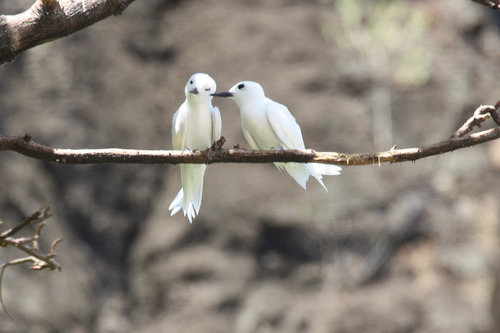
White Tern (Gygis alba) White Tern

Media

Loading…

In short

The most reliable way to separate Sanderling from White Tern is by overall structure and leg color: Sanderling is a small, chunky sandpiper with black legs and a short, straight black bill, while White Tern is a slim, pure white seabird with a long, slender black or bluish-black bill and dark grey to pale grey legs. In flight, Sanderling shows a strong white wingbar and a typical sandpiper jizz, whereas White Tern appears all-white with a shallowly forked tail and buoyant tern-like flight. Sanderling is always seen running along beaches or mudflats, never perching in trees, while White Tern is often seen flying over water or perched on branches or ledges. Juvenile White Terns are white mottled with grey, but never show the sandpiper wing pattern of Sanderling.

Identification tips

  1. Leg color: Sanderling always has black legs; White Tern has dark grey to pale grey legs depending on subspecies. If you see pale or grey legs, it's not a Sanderling.
  2. Bill shape and length: Sanderling's bill is short, straight, and black; White Tern's bill is long, slender, and black to bluish-black. The difference is obvious at close range.
  3. Plumage color: Adult White Tern is entirely white except for a faint dark streak on the outer primaries in some subspecies; Sanderling is never all-white, even in its palest nonbreeding plumage.
  4. Flight pattern and wingbar: Sanderling in flight shows a strong white wingbar across the upperwing, visible in all ages; White Tern never shows a sandpiper-like wingbar, instead appearing all-white with a shallowly forked tail.
  5. Tail shape: White Tern has a shallowly forked tail with the second-from-outermost feathers longest; Sanderling has a short, square tail typical of sandpipers.
  6. Eye and face: White Tern has a black eye with a narrow black feather ring, giving a striking facial expression; Sanderling has a plain dark eye without a contrasting ring.
  7. Juvenile plumage: Juvenile Sanderling is pale grey above with dark-centered feathers and a white wingbar; juvenile White Tern is white mottled with grey but never shows a sandpiper wing pattern.
  8. Perching behavior: Sanderling is never seen perched in trees or on branches; White Tern routinely perches on small branches or ledges.
  9. Foraging behavior: Sanderling runs rapidly along the sand, often in groups, picking at invertebrates; White Tern catches fish by plunge-diving and rarely if ever forages on the ground.
  10. Habitat: Sanderling is found on sandy beaches and tidal flats; White Tern is found on tropical islands, often far from continental shores.
  11. Size and shape: White Tern is larger, longer-winged, and more graceful; Sanderling is small, plump, and compact.
  12. Hind toe: Sanderling lacks a hind toe, unlike most sandpipers, but this is not visible in the field and does not help separate it from White Tern.
  13. Group context: Sanderling is often in tight flocks on beaches; White Tern is usually seen singly or in loose groups, often in trees or over water.
  14. Seasonal context: Sanderling is a high Arctic breeder and long-distance migrant, present on beaches in winter; White Tern is resident or a local breeder on tropical islands.
  15. Confusion risk: The only real confusion arises with distant, pale Sanderlings or juvenile White Terns, but the combination of structure, behavior, and habitat is always diagnostic.

Size

White Tern is significantly larger and heavier than Sanderling. The White Tern has a body mass around 138 g [wikidata], and a length of 23–30 cm with a wingspan of 76–87 cm [wikipedia]. Sanderling is smaller and more compact, similar in size to a Dunlin, and noticeably stouter than the elegant, long-winged White Tern. In the field, Sanderling will always look like a small, dumpy shorebird, while White Tern is a medium-sized, airy seabird.

Plumage

For immatures and adults alike, Sanderling and White Tern are easily separated by overall color and flight pattern. Sanderling in all plumages shows a strong white wingbar in flight, dark upperparts in nonbreeding and juvenile plumage, and blackish legs and bill. The lack of a hind toe is unique but hard to see in the field. White Tern is pure white as an adult, with only a faint dark streak along the outer primaries in some subspecies (notably G. a. candida), and a narrow black eye ring. The tail is shallowly forked, and the bill is long and black to bluish-black. Juvenile White Tern is white mottled with grey or greyish-brown, but never shows the strong wingbar or sandpiper-like pattern of Sanderling. Sanderling never appears all-white and never perches in trees.

Behaviour

Sanderling is highly gregarious in winter, running rapidly along sandy beaches with a distinctive 'bicycling' leg action, stopping frequently to feed. It is almost always seen on the ground, foraging in the intertidal zone, and never perches above ground. White Tern, in contrast, is often seen flying gracefully over water or perched on tree branches or man-made structures, rarely if ever seen running on the ground. Its flight is buoyant and tern-like, and it feeds by plunge-diving for fish.

Habitat

Sanderling is strictly a shorebird, found on sandy beaches, tidal flats, and sometimes mudflats or lake shores, but never inland or in trees. White Tern is a seabird of tropical and subtropical oceans, breeding on coral islands and perching in trees or on rocky ledges. It is never found foraging along the shore in the manner of a sandpiper. If you see a small white bird perched in a tree or flying over open ocean, it is a White Tern; if it is running along the beach with other sandpipers, it is a Sanderling.

Submit a better description

Use the same sections as the comparison. Your text is published immediately.

The most reliable way to separate Sanderling from White Tern is by overall structure and leg color: Sanderling is a small, chunky sandpiper with black legs and a short, straight black bill, while White Tern is a slim, pure white seabird with a long, slender black or bluish-black bill and dark grey to pale grey legs. In flight, Sanderling shows a strong white wingbar and a typical sandpiper jizz, whereas White Tern appears all-white with a shallowly forked tail and buoyant tern-like flight. Sanderling is always seen running along beaches or mudflats, never perching in trees, while White Tern is often seen flying over water or perched on branches or ledges. Juvenile White Terns are white mottled with grey, but never show the sandpiper wing pattern of Sanderling.

  1. Leg color: Sanderling always has black legs; White Tern has dark grey to pale grey legs depending on subspecies. If you see pale or grey legs, it's not a Sanderling.
  2. Bill shape and length: Sanderling's bill is short, straight, and black; White Tern's bill is long, slender, and black to bluish-black. The difference is obvious at close range.
  3. Plumage color: Adult White Tern is entirely white except for a faint dark streak on the outer primaries in some subspecies; Sanderling is never all-white, even in its palest nonbreeding plumage.
  4. Flight pattern and wingbar: Sanderling in flight shows a strong white wingbar across the upperwing, visible in all ages; White Tern never shows a sandpiper-like wingbar, instead appearing all-white with a shallowly forked tail.
  5. Tail shape: White Tern has a shallowly forked tail with the second-from-outermost feathers longest; Sanderling has a short, square tail typical of sandpipers.
  6. Eye and face: White Tern has a black eye with a narrow black feather ring, giving a striking facial expression; Sanderling has a plain dark eye without a contrasting ring.
  7. Juvenile plumage: Juvenile Sanderling is pale grey above with dark-centered feathers and a white wingbar; juvenile White Tern is white mottled with grey but never shows a sandpiper wing pattern.
  8. Perching behavior: Sanderling is never seen perched in trees or on branches; White Tern routinely perches on small branches or ledges.
  9. Foraging behavior: Sanderling runs rapidly along the sand, often in groups, picking at invertebrates; White Tern catches fish by plunge-diving and rarely if ever forages on the ground.
  10. Habitat: Sanderling is found on sandy beaches and tidal flats; White Tern is found on tropical islands, often far from continental shores.
  11. Size and shape: White Tern is larger, longer-winged, and more graceful; Sanderling is small, plump, and compact.
  12. Hind toe: Sanderling lacks a hind toe, unlike most sandpipers, but this is not visible in the field and does not help separate it from White Tern.
  13. Group context: Sanderling is often in tight flocks on beaches; White Tern is usually seen singly or in loose groups, often in trees or over water.
  14. Seasonal context: Sanderling is a high Arctic breeder and long-distance migrant, present on beaches in winter; White Tern is resident or a local breeder on tropical islands.
  15. Confusion risk: The only real confusion arises with distant, pale Sanderlings or juvenile White Terns, but the combination of structure, behavior, and habitat is always diagnostic.

White Tern is significantly larger and heavier than Sanderling. The White Tern has a body mass around 138 g [wikidata], and a length of 23–30 cm with a wingspan of 76–87 cm [wikipedia]. Sanderling is smaller and more compact, similar in size to a Dunlin, and noticeably stouter than the elegant, long-winged White Tern. In the field, Sanderling will always look like a small, dumpy shorebird, while White Tern is a medium-sized, airy seabird.

For immatures and adults alike, Sanderling and White Tern are easily separated by overall color and flight pattern. Sanderling in all plumages shows a strong white wingbar in flight, dark upperparts in nonbreeding and juvenile plumage, and blackish legs and bill. The lack of a hind toe is unique but hard to see in the field. White Tern is pure white as an adult, with only a faint dark streak along the outer primaries in some subspecies (notably G. a. candida), and a narrow black eye ring. The tail is shallowly forked, and the bill is long and black to bluish-black. Juvenile White Tern is white mottled with grey or greyish-brown, but never shows the strong wingbar or sandpiper-like pattern of Sanderling. Sanderling never appears all-white and never perches in trees.

Sanderling is highly gregarious in winter, running rapidly along sandy beaches with a distinctive 'bicycling' leg action, stopping frequently to feed. It is almost always seen on the ground, foraging in the intertidal zone, and never perches above ground. White Tern, in contrast, is often seen flying gracefully over water or perched on tree branches or man-made structures, rarely if ever seen running on the ground. Its flight is buoyant and tern-like, and it feeds by plunge-diving for fish.

Sanderling is strictly a shorebird, found on sandy beaches, tidal flats, and sometimes mudflats or lake shores, but never inland or in trees. White Tern is a seabird of tropical and subtropical oceans, breeding on coral islands and perching in trees or on rocky ledges. It is never found foraging along the shore in the manner of a sandpiper. If you see a small white bird perched in a tree or flying over open ocean, it is a White Tern; if it is running along the beach with other sandpipers, it is a Sanderling.

Discard your changes?

You have unsaved edits. If you leave now, those changes will be lost.

Sanderling · White Tern · My Tricky Birds