

Saker Falcon vs Peregrine Falcon
Falco cherrug versus Falco peregrinus
Play a quiz with Saker Falcon and Peregrine Falcon
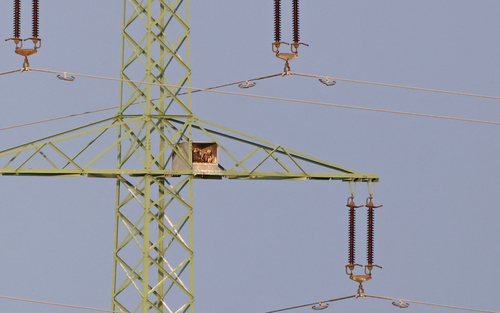 Saker Falcon
 Peregrine Falcon
In short
The most reliable field mark between Saker Falcon and Peregrine Falcon is overall coloration and head pattern: Saker is a large, heavily built, brownish falcon with a pale, streaked look and lacks the strong black hood and bold moustache of Peregrine. Peregrine is more compact, with a blue-grey back, crisp black hood, and clear barring below. Juvenile Sakers are darker and more heavily streaked than adults, but never show the classic Peregrine face pattern. In flight, Saker appears broader-winged and heavier, while Peregrine is more compact and pointed. Both can be confused at a distance, especially immatures, but careful attention to structure and head pattern usually resolves the ID.
Identification tips
- Head pattern is key: Peregrine of all ages shows a bold black hood and thick moustache; Saker always has a plainer, paler head with no strong facial markings.
- Overall color: Saker is brownish or sandy above, with streaked underparts; Peregrine is blue-grey above with finely barred underparts (adults) or more uniform below (juveniles).
- Size and build: Saker is larger, heavier, and bulkier, with broader wings and a more powerful jizz; Peregrine is more compact and pointed, especially in flight.
- Juvenile confusion: Young Sakers are darker and more heavily streaked, but still lack the sharp face pattern of Peregrine juveniles, which already show the mask and moustache.
- Flight silhouette: Saker's wings are broader and less pointed than Peregrine's; in level flight, Saker looks heavier and more 'draggy', while Peregrine is sleeker and more agile.
- Perched posture: Saker often appears more upright and massive on a perch, with a larger head and bulkier body; Peregrine is more compact and sits lower.
- Habitat clues: Saker prefers wide open steppe and grassland; Peregrine is more likely in varied open habitats, including cliffs and cities.
- Voice: If heard, Saker's 'kiy-ee' or 'kyak-kyak-kyak' is distinctive, but vocalizations are rarely diagnostic in the field for these species.
- Sexual dimorphism: Both species show females larger than males, but Saker females are especially massive; beware overlap in size with large female Peregrines and small male Sakers.
- Plumage variability: Saker is highly variable in plumage, but never shows the crisp, clean barring and face pattern of Peregrine.
- Geographic context: In the Palearctic, Saker is more likely in the east and in open steppe; Peregrine is widespread, including urban and coastal areas.
- Migration timing: Saker juveniles are more likely to migrate; adults are often resident. Peregrine migrates widely, especially in northern populations.
- Behavioral jizz: Saker often flies with slower, heavier wingbeats and less dramatic stoops; Peregrine is famous for high-speed dives and agile pursuits.
- Pitfalls: At long range, both can appear similar in shape and size, especially immatures; always try for a clear view of the head and underparts.
- No distinctive wing panels: Neither species shows a unique juvenile upperwing panel or trailing edge mark in the sources, so do not rely on this feature for separation.
Size
Saker Falcon is distinctly larger and more robust than Peregrine Falcon. Saker averages about 1000 g in body mass ([wikidata]), with females reaching up to 1300 g, making it nearly as large as a Gyrfalcon. Peregrine is crow-sized and more compact, with females being larger than males but still noticeably smaller and lighter than Saker. In the field, Saker's size is most apparent when perched or seen alongside other raptors, but beware that lone birds can be hard to judge for size unless directly compared.
Plumage
Juvenile Saker Falcons are darker and more heavily streaked overall, with a brownish tone and variable plumage, but they never show the clean, crisp facial pattern of Peregrine. Saker lacks the strong black hood and bold moustachial stripe that is diagnostic for Peregrine of all ages. Adult Saker is paler, often sandy or brownish above with streaked underparts, while Peregrine adults are blue-grey above with clear, horizontal barring below and a striking black head. In all ages, Peregrine's face is sharply marked, while Saker's is plainer and more diffuse. There is no mention of distinctive juvenile wing panel or trailing edge marks for either species in the sources, so focus on body and head pattern for age-related differences.
Behaviour
Both species are powerful aerial hunters, but Saker is more likely to hunt over open steppe and grassland, often pursuing prey in level flight, while Peregrine is famous for its high-speed stoops from altitude, especially over open water, marshes, and urban areas. Peregrine is more likely to be seen hunting birds in dramatic dives, while Saker's hunting style is more direct and less reliant on vertical stoops. Both can be seen perched in open country, but Saker tends to look heavier and more upright.
Habitat
Saker Falcon breeds across open steppe, grassland, and semi-desert from Central Europe to East Asia, favoring wide, treeless expanses. Peregrine Falcon is much more cosmopolitan, found in a range of open habitats including cliffs, coasts, cities, marshes, and tundra. In Europe and Asia, Saker is more restricted to open country, while Peregrine can turn up almost anywhere with suitable hunting perches and prey. Overlap can occur on migration, but habitat context can help: Saker in vast open steppe, Peregrine in more varied or urban settings.
Voice
Saker Falcon gives a sharp 'kiy-ee' or repeated 'kyak-kyak-kyak' call. Peregrine's call is not described in the provided notes, so is not diagnostic here.