

Rufous-bellied Niltava vs Chinese Vivid Niltava
Niltava sundara versus Niltava oatesi
Play a quiz with Rufous-bellied Niltava and Chinese Vivid Niltava
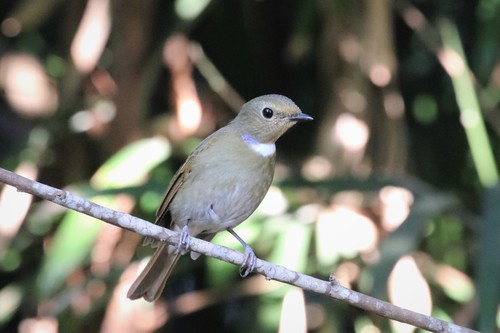 Rufous-bellied Niltava
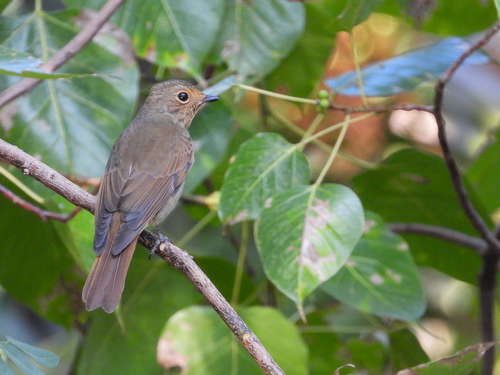 Chinese Vivid Niltava
In short
The most reliable field mark between Rufous-bellied Niltava and Chinese Vivid Niltava is the rich rufous coloration on the underparts of Rufous-bellied Niltava, which is never matched by Chinese Vivid Niltava. Both are robust, short-tailed niltavas with overlapping ranges in the eastern Himalayas and southern China, so confusion is possible, especially with females and immatures. Structural differences are subtle, so focus on underpart color and any hints of blue or violet in the plumage. Subspecies variation in Rufous-bellied Niltava can cause paler or more olive females, but the rufous belly remains a key point of separation.
Identification tips
- Rufous underparts are diagnostic: Any bird showing a rich rufous or orange wash on the belly or vent is a Rufous-bellied Niltava, regardless of sex or age. Chinese Vivid Niltava never shows this coloration.
- Male plumage: Rufous-bellied Niltava males are deep blue above with a contrasting rufous belly. Chinese Vivid Niltava males are blue above but lack the rufous below, appearing more uniformly blue or blue-and-white.
- Female plumage: Female Rufous-bellied Niltava can be variable (some subspecies are paler, more olive, or have a greyer belly), but always retain some rufous or warm brown on the underparts. Female Chinese Vivid Niltava is more uniformly brownish or olive, lacking any strong rufous wash.
- Subspecies pitfalls: Some Rufous-bellied Niltava subspecies (e.g., whistleri) have paler underparts in males and more greyish-olive in females, which can approach the tones of Chinese Vivid Niltava, but the rufous belly is still present, if less intense.
- Tail and upperpart color in females: Female Rufous-bellied Niltava may show paler tails and upperparts, sometimes with rufous on the uppertail-coverts and tail edges (especially denotata), while Chinese Vivid Niltava females are more uniformly colored.
- No useful wing or flight pattern differences: Neither species is described as having distinctive juvenile or immature upperwing patterns, so flight views are not especially helpful.
- Structure is not diagnostic: Both are large, stocky niltavas with a broad-based bill, rounded head, and short tail. Do not rely on structure alone.
- Habitat overlap: Both occur in similar forest habitats in the eastern Himalayas and southern China, so do not use habitat as a primary separator where ranges overlap.
- Geographic context: In western parts of the Himalayas (Pakistan, Nepal, Uttarakhand), only Rufous-bellied Niltava occurs, so a niltava here with any rufous below is almost certainly this species.
- Seasonal context: Non-breeding Rufous-bellied Niltava may occur further south than Chinese Vivid Niltava, but this is not a reliable field mark without range knowledge.
- Bill and head shape: Both species have a broad-based bill and rounded head; these are not useful for separation.
- No vocal differences provided: If you hear a niltava, do not attempt to separate these two by voice based on the current sources.
- Juvenile/immature confusion: No specific marks are described for young birds, so use underpart color as the main clue even in fresh-plumaged immatures.
- Lighting pitfalls: In deep shade, the rufous underparts of Rufous-bellied Niltava can appear duller, but should still be visible with patience.
- Mixed flocks: Both species may join mixed-species flocks in forest undergrowth; check each individual for underpart color rather than assuming species by association.
Size
Rufous-bellied Niltava is a large, stocky niltava, measuring 15–18 cm and weighing 19–24 g [wikipedia]. No direct size data is available for Chinese Vivid Niltava in the provided sources, but both are described as robust, broad-headed niltavas. In the field, size is not a reliable separator between these two, as both appear similarly chunky and short-tailed.
Plumage
For all ages and sexes, Rufous-bellied Niltava shows a distinctive rufous or orange wash across the belly and vent, which is lacking in Chinese Vivid Niltava. Males of Rufous-bellied Niltava (especially the nominate and denotata subspecies) are bright blue above with rich rufous below, while Chinese Vivid Niltava males are blue above but lack the rufous underparts. Females of Rufous-bellied Niltava vary by subspecies: some have paler tails, more olive or greyish-olive underparts, but always show at least some rufous or warm brown on the belly, especially compared to the more uniformly brownish or olive female Chinese Vivid Niltava. No age-specific upperwing or flight pattern differences are described in the sources, so perched views and underpart color are most useful.
Behaviour
Both species are typical niltavas, often seen singly or in pairs in dense forest undergrowth or at forest edges. They perch upright and sally for insects, but no behavioral differences are noted in the sources that would reliably separate them in the field.
Habitat
Both species share similar habitats: subtropical or tropical moist lowland and montane forests. Rufous-bellied Niltava has a broader range, occurring from Pakistan and Nepal east to Vietnam and south into Indochina, while Chinese Vivid Niltava is found from the eastern Himalayas to southern China. In areas of overlap (eastern Himalayas, southern China), habitat alone does not separate them.
Rufous-bellied Niltava · Chinese Vivid Niltava · My Tricky Birds