
Rufous-backed Redstart vs Black Redstart
Phoenicurus erythronotus versus Phoenicurus ochruros
Play a quiz with Rufous-backed Redstart and Black Redstart
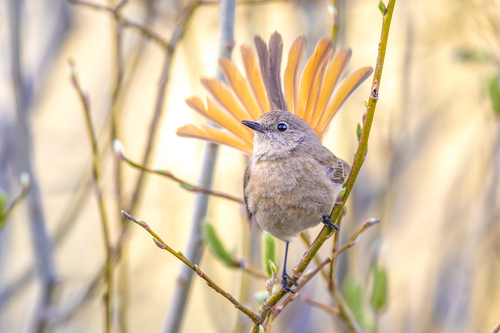 Rufous-backed Redstart
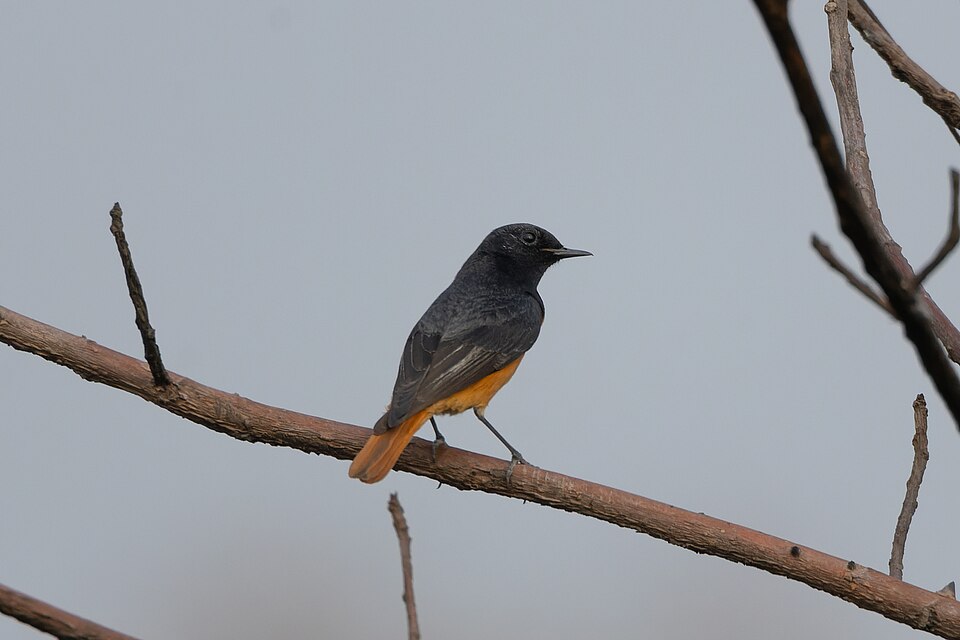 Black Redstart
In short
The most reliable field mark to separate Rufous-backed Redstart (Eversmann's Redstart) from Black Redstart is the combination of upperwing pattern and overall coloration, especially in first-winter and female birds. Rufous-backed Redstart shows prominent white wing patches (on scapulars and primary coverts) in males, and females have two buff wingbars and a rufous back and tail with a dark center. Black Redstart, regardless of age or sex, lacks these white wing patches and instead has a more uniform wing and a darker, often blackish, body in males. Females and juveniles of Black Redstart are plainer, with a sandier or grey-brown appearance and a less contrasting tail. These differences are most apparent when birds are perched or in good light, but can also be seen in flight if the wing pattern is visible.
Identification tips
- White wing patches (scapulars and primary-coverts): Only Rufous-backed Redstart (especially males, but also visible in duller non-breeding/first-winter males) shows clear white patches on the wing. Black Redstart never shows white in the wing.
- Buff wingbars and tertial edges (females/immatures): Female and immature Rufous-backed Redstarts have two buff wingbars and buff tertial edges, which are absent in Black Redstart of any age or sex.
- Rufous back and rump: Rufous-backed Redstart (all ages) shows a rufous back and rump, contrasting with the grey or blackish upperparts of Black Redstart. This is especially obvious in adult males but can be seen in females and immatures as well.
- Tail pattern: Both species have rufous tails, but Rufous-backed Redstart's tail is rufous with a dark center, while Black Redstart's tail is more uniformly rufous or rufous-chestnut, sometimes with less contrast.
- Overall coloration (males): Rufous-backed Redstart males have a black mask, grey crown/nape, and rufous underparts, with white on the belly and undertail. Black Redstart males are darker overall, with a black face, chest, and upperparts, and lack the white belly and undertail.
- Female/juvenile coloration: Female and juvenile Rufous-backed Redstarts are grey-brown with a pale eye-ring, rufous tail, and wingbars. Black Redstart females/juveniles are plainer, sandier or grey-brown, with a less distinct tail and no wingbars.
- Bill and legs: Both species have black bills and legs; this is not a useful separation mark.
- Habitat context: In urban or rocky settings in Europe/North Africa, Black Redstart is much more likely. Rufous-backed Redstart is restricted to Central Asian habitats.
- Size: Rufous-backed Redstart is slightly larger and bulkier, but this is rarely diagnostic in the field.
- Behavior: Both flick their tails, but Black Redstart may appear more restless and is more likely to be seen on buildings or walls.
- Voice: Rufous-backed Redstart has a lively song and croaking/whistling calls, but unless you know both species well, voice is not a primary field mark.
- Seasonal variation: Non-breeding and first-winter Rufous-backed Redstart males are duller but retain white wing patches; Black Redstart males remain dark and lack wing patches year-round.
- Subspecies confusion: Some Asian Black Redstart subspecies have rufous underparts but still lack the white wing patches and have a darker back and head than Rufous-backed Redstart.
- Eye-ring: Female Rufous-backed Redstart may show a pale eye-ring, which is less distinct or absent in Black Redstart.
- Pitfalls: Beware of dull first-winter Rufous-backed Redstarts, which may appear similar to female Black Redstarts at a glance, but the presence of wingbars and a rufous back/tail are key.
Size
Rufous-backed Redstart is slightly larger, measuring 15–16 cm in length with a wingspan of 25.5–27 cm and weighing 15–22 g. Black Redstart is generally smaller, but precise comparative measurements are not provided in the sources. In the field, the size difference is subtle and not usually diagnostic unless both are seen side by side.
Plumage
- Juvenile/First-winter/Female: Rufous-backed Redstart females and immatures are mostly grey-brown with a rufous tail (dark center), a pale eye-ring, two buff wingbars, and buff tertial edges. Black Redstart females and juveniles are plainer, light grey-brown or sandy, with a less distinct tail pattern and lacking any wingbars or white patches. Their tail is also rufous but less contrasting, and the body is more uniformly colored.
- Adult Male (Breeding): Rufous-backed Redstart males have a striking black mask, grey crown and nape, rufous back and rump, rufous tail with darker central feathers, and prominent white patches on the scapulars and primary-coverts. Underparts are mainly rufous with white on the belly and undertail. Black Redstart males (across subspecies) are darker overall, often with a black face, chest, and upperparts, and a rufous or rufous-chestnut tail and vent. They lack the white wing patches and have a more uniform wing. Some Asian Black Redstart males have rufous underparts but still lack the white wing panels and have a darker back.
- Non-breeding/First-winter Male: Rufous-backed Redstart males are duller and browner but retain the white wing patches and rufous tail. Black Redstart males remain dark and lack any white in the wing.
Behaviour
Both species flick their tails up and down frequently, a typical redstart behavior. Rufous-backed Redstart may appear slightly bulkier and more upright when perched. Black Redstart is often seen in rocky or urban habitats, sometimes on buildings or walls, and can appear more restless, frequently dropping to the ground to feed. In flight, neither species shows a particularly distinctive jizz that is diagnostic, but the Rufous-backed's white wing patches may catch the eye if seen well.
Habitat
Rufous-backed Redstart is more localized in Central Asia and is not as widespread as Black Redstart. Black Redstart is extremely adaptable, breeding in rocky habitats, towns, and cities across Eurasia and North Africa. If you are in a city or rocky urban area in Europe or North Africa, Black Redstart is much more likely. Rufous-backed Redstart prefers more open, shrubby, or montane habitats in its range.
Voice
Rufous-backed Redstart has a loud, lively song, a soft croaking call, and a whistling call. Black Redstart's song and calls are not detailed in the notes, but in practice, their vocalizations are different. However, unless you are familiar with both, voice is not the most reliable field mark for separation.