

Rufous-and-white Wren vs Canebrake Wren
Thryophilus rufalbus versus Cantorchilus zeledoni
Play a quiz with Rufous-and-white Wren and Canebrake Wren
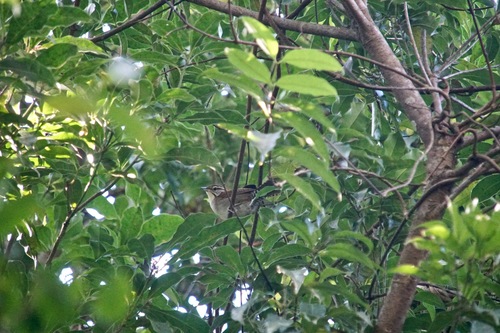 Rufous-and-white Wren
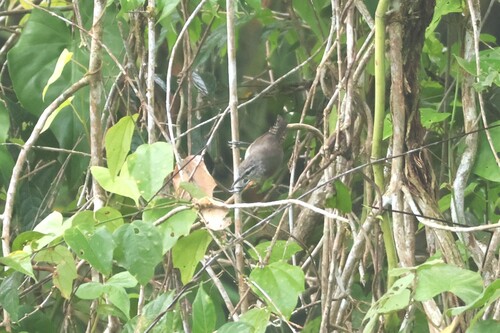 Canebrake Wren
In short
The most reliable field mark between Rufous-and-white Wren and Canebrake Wren is the strong rufous-chestnut upperparts and darker crown of Rufous-and-white Wren versus the browner, grayer, and more olivaceous upperparts of Canebrake Wren. Both species show a white supercilium and barred tails, but Rufous-and-white Wren has bolder black streaking on the cheeks and more extensive black barring on the lower belly and tail. Juveniles of both are duller, but Rufous-and-white Wren juveniles retain a buff tinge below, while Canebrake Wren juveniles have less distinct facial markings. In the field, focus on the contrast between the rufous back and white underparts of Rufous-and-white Wren and the grayer, more muted tones of Canebrake Wren, especially in perched views.
Identification tips
- Upperparts color: Rufous-and-white Wren shows rich chestnut brown upperparts with a darker crown, while Canebrake Wren is brownish gray to olivaceous gray above, especially on the rump. This is most obvious in good light and on perched birds.
- Crown contrast: Rufous-and-white Wren's crown is darker than the back, creating a capped look; Canebrake Wren's crown is similar in tone to the back, lacking strong contrast.
- Supercilium: Both have a strong white supercilium, so this is not a separator.
- Facial markings: Rufous-and-white Wren has a brown eye-stripe and bold black streaking on the cheeks; Canebrake Wren has a gray-brown eye-stripe and cheeks mottled gray and off-white, lacking the bold streaking.
- Underparts: Rufous-and-white Wren is white below with black barring on the lower belly and brown flanks; Canebrake Wren is off-white on the throat, gray on the chest, and gray-buff on the lower belly, appearing more muted and less contrasting.
- Tail and wing barring: Both species have barred tails, but Rufous-and-white Wren's tail and wings are barred with black, and the barring may be more extensive. Canebrake Wren's tail is olivaceous brown with well-defined darker bars, but the overall effect is less bold.
- Juvenile plumage: Juvenile Rufous-and-white Wrens have buff-tinged underparts and duller upperparts; juvenile Canebrake Wrens have duller underparts and less distinct facial markings. In both, the lack of strong adult contrast can cause confusion, but look for the buff tinge in Rufous-and-white Wren.
- Cheek pattern: The black streaking on the cheeks of Rufous-and-white Wren is a strong field mark, especially in adults; Canebrake Wren's cheeks are mottled but not streaked.
- Flank color: Rufous-and-white Wren has brown flanks, which can stand out against the white belly; Canebrake Wren's flanks blend into the gray-buff of the lower belly.
- Song: If you hear a slow, melodious sequence of hooting whistles or a purring duet, it's likely Rufous-and-white Wren. Absence of song is not diagnostic, but hearing this song is a strong clue.
- Habitat and range: In Costa Rica and Panama, both species can occur, but Rufous-and-white Wren is more likely in drier, open habitats and on the Pacific slope, while Canebrake Wren is more likely in the Caribbean lowlands.
- Size: Both are similar in length and mass, so do not use size for separation.
- Behavior: Rufous-and-white Wren is shy and often forages low or on the ground in pairs; Canebrake Wren's behavior is not distinctive based on the notes.
- Flight views: No distinctive wing or flight pattern marks are described for either species, so rely on perched views for separation.
- Season and age: Both species' juveniles are duller, but look for the buff tinge below in juvenile Rufous-and-white Wren and less distinct facial markings in juvenile Canebrake Wren. Adult field marks are more reliable.
Size
Both species are similar in length, with Rufous-and-white Wren at 14–15 cm and Canebrake Wren at 14 cm. Rufous-and-white Wren is slightly heavier (22–25 g) compared to Canebrake Wren (no weight given, but likely similar). Size is not a reliable separator in the field.
Plumage
- Juvenile/immature plumage: Both species' juveniles are duller than adults, but Rufous-and-white Wren juveniles have buff-tinged underparts, while Canebrake Wren juveniles have less distinct facial markings and duller underparts overall. No age-specific wing or flight pattern marks are described for either species.
- Adult plumage: Rufous-and-white Wren has chestnut brown upperparts with a darker crown, a strong white supercilium, a brown eye-stripe, and black streaking on the cheeks. Underparts are white with black barring on the lower belly and brown flanks. The wings and tail are barred with black. Canebrake Wren adults have a brown crown, brownish gray upperparts merging to olivaceous gray on the rump, and an olivaceous brown tail with well-defined darker bars. Their supercilium is white, with a gray-brown eye-stripe and cheeks mottled gray and off-white. The throat is off-white, chest gray, and lower belly gray-buff. Overall, Rufous-and-white Wren is more rufous and contrasting, while Canebrake Wren is grayer and more muted.
Behaviour
Rufous-and-white Wren is described as shy, foraging in low vegetation or on the ground in pairs, and is more often heard than seen. Canebrake Wren's behavior is not detailed in the notes, so behavior is not a reliable separator.
Habitat
Rufous-and-white Wren ranges from southwestern Mexico to northern Colombia and northwestern Venezuela, typically in lowlands and foothills up to 1,500 m, favoring dry forests or open scrubby woodland, especially on the Pacific side of Central America. Canebrake Wren is found in Costa Rica, Nicaragua, and Panama. While ranges overlap in Costa Rica and Panama, Rufous-and-white Wren is absent from the Caribbean lowlands where Canebrake Wren is more likely. Habitat overlap is possible, but Rufous-and-white Wren is more associated with drier, open habitats.
Voice
Rufous-and-white Wren has a sharp 'chek' or explosive 'tuck' call and a melodious, distinctive sequence of slow hooting whistles (e.g., 'weee, boo, boo, booo, boo, whit'). Pairs may duet, with the second bird giving a purring 'ou-ou-ou-oouu,u,u,u.' No vocal details are provided for Canebrake Wren, so song is not a reliable separator unless Rufous-and-white Wren's distinctive song is heard.