

Motmot

セアカマユミソサザイ 対 ゼレドンミソサザイ

Thryophilus rufalbus 対 Cantorchilus zeledoni

セアカマユミソサザイとゼレドンミソサザイのクイズ
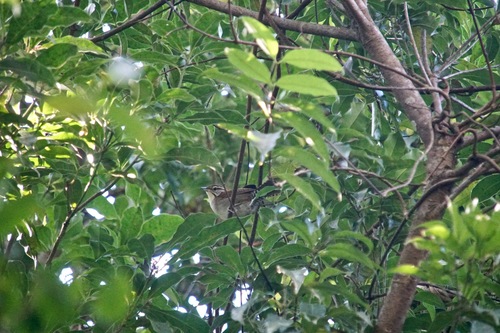
セアカマユミソサザイ (Thryophilus rufalbus) セアカマユミソサザイ
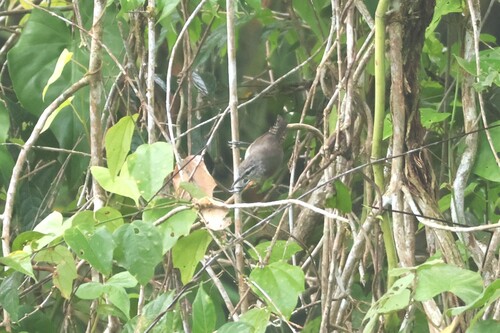
ゼレドンミソサザイ (Cantorchilus zeledoni) ゼレドンミソサザイ

メディア

読み込み中…

要点

ゼレドンミソサザイとセアカマユミソサザイの最も信頼できるフィールドマークは、ゼレドンミソサザイの強いルーファス・チェスナットの上面と暗い冠に対して、セアカマユミソサザイの茶色がかった、灰色がかった、よりオリーブ色の上面です。両種は白いスーペルシリウムと縞模様の尾を示しますが、ゼレドンミソサザイは頬により大胆な黒いストリーキングがあり、下腹部と尾により広範な黒い縞模様があります。両者の幼鳥はより鈍いですが、ゼレドンミソサザイの幼鳥は下にバフの色合いを保持し、セアカマユミソサザイの幼鳥は顔のマーキングがあまり明確ではありません。フィールドでは、ゼレドンミソサザイのルーファスの背中と白い腹部のコントラスト、特に止まっている姿でのセアカマユミソサザイのより灰色で muted な色合いに注目してください。

識別のコツ

  1. Upperparts color: ゼレドンミソサザイは濃いチェスナットブラウンの上面と暗い冠を示し、セアカマユミソサザイは特に尾羽の上で茶色がかった灰色からオリーブ色の灰色です。これは良い光の下で、止まっている鳥で最も明らかです。
  2. Crown contrast: ゼレドンミソサザイの冠は背中よりも暗く、キャップのような外観を作り、セアカマユミソサザイの冠は背中と同じトーンで、強いコントラストがありません。
  3. Supercilium: 両者は強い白いスーペルシリウムを持っているので、これは区別にはなりません。
  4. Facial markings: ゼレドンミソサザイは茶色のアイストライプと頬に大胆な黒いストリーキングがあり、セアカマユミソサザイは灰色がかった茶色のアイストライプと灰色とオフホワイトのまだらな頬を持ち、大胆なストリーキングがありません。
  5. Underparts: ゼレドンミソサザイは下が白で、下腹部に黒い縞模様と茶色の側面があります。セアカマユミソサザイは喉がオフホワイト、胸が灰色、下腹部が灰色がかったバフで、より muted でコントラストが少ないように見えます。
  6. Tail and wing barring: 両種は縞模様の尾を持っていますが、ゼレドンミソサザイの尾と翼は黒で縞模様があり、縞模様はより広範である可能性があります。セアカマユミソサザイの尾はオリーブ色の茶色で、明確な暗い縞模様がありますが、全体的な効果はあまり大胆ではありません。
  7. Juvenile plumage: 幼鳥のゼレドンミソサザイはバフの色合いのある下部と鈍い上面を持ち、幼鳥のセアカマユミソサザイは鈍い下部とあまり明確でない顔のマーキングを持っています。両者とも、強い成鳥のコントラストがないため混乱を招く可能性がありますが、ゼレドンミソサザイのバフの色合いを探してください。
  8. Cheek pattern: ゼレドンミソサザイの頬の黒いストリーキングは強いフィールドマークであり、特に成鳥で顕著です。セアカマユミソサザイの頬はまだらですがストリークはありません。
  9. Flank color: ゼレドンミソサザイは茶色の側面を持ち、白い腹部に対して際立つことがあります。セアカマユミソサザイの側面は下腹部の灰色がかったバフに溶け込みます。
  10. Song: ゆっくりとしたメロディックなフーッというホイッスルの連続や、ゴロゴロとしたデュエットを聞いた場合、ゼレドンミソサザイの可能性が高いです。歌の不在は診断的ではありませんが、この歌を聞くことは強い手がかりです。
  11. Habitat and range: コスタリカとパナマでは、両種が発生する可能性がありますが、ゼレドンミソサザイは乾燥した開けた生息地や太平洋側でより可能性が高く、セアカマユミソサザイはカリブ海の低地でより可能性があります。
  12. Size: 両者は長さと質量が似ているため、サイズを区別に使用しないでください。
  13. Behavior: ゼレドンミソサザイはシャイで、ペアで低い場所や地面で採餌することが多く、見られるよりもよく聞かれます。セアカマユミソサザイの行動はメモに詳細がないため、行動は信頼できる区別にはなりません。
  14. Flight views: どちらの種にも特有の翼や飛行パターンのマークは記載されていないため、区別には止まっている姿に頼ってください。
  15. Season and age: 両種の幼鳥は鈍いですが、幼鳥のゼレドンミソサザイの下にバフの色合いを探し、幼鳥のセアカマユミソサザイのあまり明確でない顔のマーキングを探してください。成鳥のフィールドマークはより信頼できます。

大きさ

両種は長さが似ており、ゼレドンミソサザイは14〜15 cm、セアカマユミソサザイは14 cmです。ゼレドンミソサザイはセアカマユミソサザイ(重量は記載されていませんが、おそらく似ている)よりもわずかに重い(22〜25 g)です。サイズはフィールドでの信頼できる区別にはなりません。

羽色

行動

ゼレドンミソサザイはシャイで、ペアで低い植生や地面で採餌し、見られるよりもよく聞かれます。セアカマユミソサザイの行動はメモに詳細がないため、行動は信頼できる区別にはなりません。

生息環境

ゼレドンミソサザイはメキシコ南西部からコロンビア北部およびベネズエラ北西部まで分布し、通常は低地や1,500 mまでの丘陵地帯に生息し、特に中米の太平洋側の乾燥した森林や開けた低木林を好みます。セアカマユミソサザイはコスタリカ、ニカラグア、パナマで見られます。コスタリカとパナマでは分布が重なりますが、ゼレドンミソサザイはセアカマユミソサザイがより可能性のあるカリブ海の低地には存在しません。生息地の重複は可能ですが、ゼレドンミソサザイはより乾燥した開けた生息地に関連しています。

声

ゼレドンミソサザイは鋭い「チェク」または爆発的な「タック」の呼び声と、メロディックで独特な遅いフーッというホイッスルの連続(例:「ウィー、ブー、ブー、ブー、ブー、ホイット」)を持っています。ペアはデュエットを行うことがあり、2羽目の鳥はゴロゴロとした「ウーウーウーオウウ、ウ、ウ、ウ」と鳴くことがあります。セアカマユミソサザイの音声の詳細は提供されていないため、ゼレドンミソサザイの独特な歌が聞かれない限り、歌は信頼できる区別にはなりません。

より良い説明を送る

比較と同じ項目を使ってください。文章はすぐに公開されます。

The most reliable field mark between Rufous-and-white Wren and Canebrake Wren is the strong rufous-chestnut upperparts and darker crown of Rufous-and-white Wren versus the browner, grayer, and more olivaceous upperparts of Canebrake Wren. Both species show a white supercilium and barred tails, but Rufous-and-white Wren has bolder black streaking on the cheeks and more extensive black barring on the lower belly and tail. Juveniles of both are duller, but Rufous-and-white Wren juveniles retain a buff tinge below, while Canebrake Wren juveniles have less distinct facial markings. In the field, focus on the contrast between the rufous back and white underparts of Rufous-and-white Wren and the grayer, more muted tones of Canebrake Wren, especially in perched views.

  1. Upperparts color: Rufous-and-white Wren shows rich chestnut brown upperparts with a darker crown, while Canebrake Wren is brownish gray to olivaceous gray above, especially on the rump. This is most obvious in good light and on perched birds.
  2. Crown contrast: Rufous-and-white Wren's crown is darker than the back, creating a capped look; Canebrake Wren's crown is similar in tone to the back, lacking strong contrast.
  3. Supercilium: Both have a strong white supercilium, so this is not a separator.
  4. Facial markings: Rufous-and-white Wren has a brown eye-stripe and bold black streaking on the cheeks; Canebrake Wren has a gray-brown eye-stripe and cheeks mottled gray and off-white, lacking the bold streaking.
  5. Underparts: Rufous-and-white Wren is white below with black barring on the lower belly and brown flanks; Canebrake Wren is off-white on the throat, gray on the chest, and gray-buff on the lower belly, appearing more muted and less contrasting.
  6. Tail and wing barring: Both species have barred tails, but Rufous-and-white Wren's tail and wings are barred with black, and the barring may be more extensive. Canebrake Wren's tail is olivaceous brown with well-defined darker bars, but the overall effect is less bold.
  7. Juvenile plumage: Juvenile Rufous-and-white Wrens have buff-tinged underparts and duller upperparts; juvenile Canebrake Wrens have duller underparts and less distinct facial markings. In both, the lack of strong adult contrast can cause confusion, but look for the buff tinge in Rufous-and-white Wren.
  8. Cheek pattern: The black streaking on the cheeks of Rufous-and-white Wren is a strong field mark, especially in adults; Canebrake Wren's cheeks are mottled but not streaked.
  9. Flank color: Rufous-and-white Wren has brown flanks, which can stand out against the white belly; Canebrake Wren's flanks blend into the gray-buff of the lower belly.
  10. Song: If you hear a slow, melodious sequence of hooting whistles or a purring duet, it's likely Rufous-and-white Wren. Absence of song is not diagnostic, but hearing this song is a strong clue.
  11. Habitat and range: In Costa Rica and Panama, both species can occur, but Rufous-and-white Wren is more likely in drier, open habitats and on the Pacific slope, while Canebrake Wren is more likely in the Caribbean lowlands.
  12. Size: Both are similar in length and mass, so do not use size for separation.
  13. Behavior: Rufous-and-white Wren is shy and often forages low or on the ground in pairs; Canebrake Wren's behavior is not distinctive based on the notes.
  14. Flight views: No distinctive wing or flight pattern marks are described for either species, so rely on perched views for separation.
  15. Season and age: Both species' juveniles are duller, but look for the buff tinge below in juvenile Rufous-and-white Wren and less distinct facial markings in juvenile Canebrake Wren. Adult field marks are more reliable.

Both species are similar in length, with Rufous-and-white Wren at 14–15 cm and Canebrake Wren at 14 cm. Rufous-and-white Wren is slightly heavier (22–25 g) compared to Canebrake Wren (no weight given, but likely similar). Size is not a reliable separator in the field.

  • Juvenile/immature plumage: Both species' juveniles are duller than adults, but Rufous-and-white Wren juveniles have buff-tinged underparts, while Canebrake Wren juveniles have less distinct facial markings and duller underparts overall. No age-specific wing or flight pattern marks are described for either species.
  • Adult plumage: Rufous-and-white Wren has chestnut brown upperparts with a darker crown, a strong white supercilium, a brown eye-stripe, and black streaking on the cheeks. Underparts are white with black barring on the lower belly and brown flanks. The wings and tail are barred with black. Canebrake Wren adults have a brown crown, brownish gray upperparts merging to olivaceous gray on the rump, and an olivaceous brown tail with well-defined darker bars. Their supercilium is white, with a gray-brown eye-stripe and cheeks mottled gray and off-white. The throat is off-white, chest gray, and lower belly gray-buff. Overall, Rufous-and-white Wren is more rufous and contrasting, while Canebrake Wren is grayer and more muted.

Rufous-and-white Wren is described as shy, foraging in low vegetation or on the ground in pairs, and is more often heard than seen. Canebrake Wren's behavior is not detailed in the notes, so behavior is not a reliable separator.

Rufous-and-white Wren ranges from southwestern Mexico to northern Colombia and northwestern Venezuela, typically in lowlands and foothills up to 1,500 m, favoring dry forests or open scrubby woodland, especially on the Pacific side of Central America. Canebrake Wren is found in Costa Rica, Nicaragua, and Panama. While ranges overlap in Costa Rica and Panama, Rufous-and-white Wren is absent from the Caribbean lowlands where Canebrake Wren is more likely. Habitat overlap is possible, but Rufous-and-white Wren is more associated with drier, open habitats.

Rufous-and-white Wren has a sharp 'chek' or explosive 'tuck' call and a melodious, distinctive sequence of slow hooting whistles (e.g., 'weee, boo, boo, booo, boo, whit'). Pairs may duet, with the second bird giving a purring 'ou-ou-ou-oouu,u,u,u.' No vocal details are provided for Canebrake Wren, so song is not a reliable separator unless Rufous-and-white Wren's distinctive song is heard.

変更を破棄しますか?

保存していない編集があります。今離れると失われます。

セアカマユミソサザイ · ゼレドンミソサザイ · 苦手な鳥