

Motmot

Ruddy Turnstone vs Black Turnstone

Arenaria interpres versus Arenaria melanocephala

Play a quiz with Ruddy Turnstone and Black Turnstone
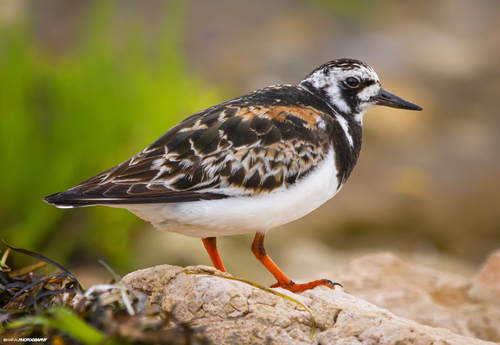
Ruddy Turnstone (Arenaria interpres) Ruddy Turnstone
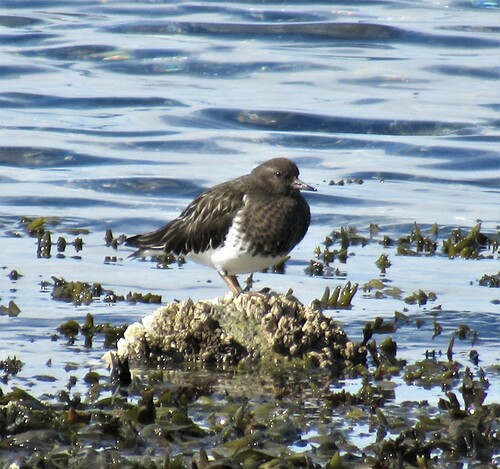
Black Turnstone (Arenaria melanocephala) Black Turnstone

Media

Loading…

In short

The most reliable field mark to separate Ruddy Turnstone from Black Turnstone is the presence of rufous (reddish-brown) upperparts in Ruddy Turnstone, especially obvious on juveniles and breeding adults, while Black Turnstone is always blackish-brown above with no rufous tones. In flight, both show a white wingbar and white tail base, but Ruddy Turnstone has a broader white lower back and more extensive white on the head and breast, especially in breeding plumage. Leg color is a quick check: Ruddy Turnstone has bright orange legs, while Black Turnstone's legs are dark with only a reddish tinge. Juveniles of both species can look similar, but Ruddy Turnstone juveniles are paler and show a scaly pattern above, while Black Turnstone juveniles are browner with buff fringes. Structure and voice offer secondary clues, but plumage and leg color are most reliable.

Identification tips

  1. Rufous upperparts (Ruddy Turnstone only): Any sign of reddish-brown or rufous on the upperparts, especially on the scapulars or mantle, indicates Ruddy Turnstone. Black Turnstone is always blackish-brown above, never rufous. Works for all ages except very worn or dirty birds.
  2. Leg color: Ruddy Turnstone has bright orange legs, visible even at a distance. Black Turnstone has dark legs with only a slight reddish tinge, never truly orange. This is reliable in all seasons and ages.
  3. Head and breast pattern (breeding adults): Ruddy Turnstone shows a white head with black streaks and a bold black breast band, creating a harlequin look. Black Turnstone has a black head and breast, with a white spot between the eye and bill and a white supercilium, but much less white overall.
  4. Juvenile/first-winter plumage: Juvenile Ruddy Turnstone is paler and scaly above, with pale brown tones and some rufous. Juvenile Black Turnstone is browner, with buff fringes but no rufous, and a grey-brown tail tip. Look for the overall darkness and lack of rufous in Black Turnstone.
  5. Flight pattern: Both species show a white wingbar and white at the tail base, but Ruddy Turnstone has a broader white lower back and more extensive white on the head and breast. Black Turnstone's white is more restricted, and the tail has a broad black band across it.
  6. Bill shape and color: Both have short, slightly upturned black bills. Bill shape is not a strong separator, but Black Turnstone's bill can be marginally longer and heavier.
  7. Non-breeding adults: Ruddy Turnstone is duller but still shows some pattern and paler tones; Black Turnstone remains mostly dark brown-black with little white on the head or breast.
  8. Voice: Ruddy Turnstone's call is a harsher, rattling staccato; Black Turnstone's trill is higher and less harsh. Use with caution unless familiar with both.
  9. Habitat and range: Outside the Pacific coast of North America, a turnstone is almost certainly Ruddy. Black Turnstone is strictly Pacific, especially rocky shores and jetties.
  10. Behavior: Both flip stones and debris, but Ruddy Turnstone is more likely to be seen on open beaches and in a wider range of coastal habitats.
  11. Sex differences: Female Ruddy Turnstone is slightly duller and browner on the head than the male, but still shows rufous upperparts. Black Turnstone sexes are similar.
  12. Size: Not reliable in the field; both are similar in length and weight.
  13. Pitfalls: Worn or dirty Ruddy Turnstones can look darker and less rufous, and leg color can be obscured by mud. Juvenile Black Turnstones may appear paler in bright light but never show true rufous or orange legs.
  14. Seasonal context: In breeding season, Ruddy Turnstone is much more patterned and colorful; in winter, both are duller, so rely more on leg color and any remaining rufous.
  15. Flock composition: Mixed flocks are rare except on the Pacific coast; elsewhere, a group of turnstones is almost always all Ruddy.

Size

Both species are similar in size, with Ruddy Turnstone measuring 22–24 cm in length and weighing 85–150 g, and Black Turnstone slightly larger at 22–25 cm and 100–170 g. Their wingspans overlap (Ruddy: 50–57 cm), and bill length is also very close (Ruddy: 2–2.5 cm; Black: 2–2.7 cm). In the field, size is not a reliable separator.

Plumage

Juvenile and non-breeding birds are the most likely to be confused. Juvenile Ruddy Turnstone has pale brown head and upperparts with pale fringes, giving a scaly look, and some rufous tones may be visible. Juvenile Black Turnstone is browner overall, with buff fringes to the wing-coverts and scapulars, but lacks any rufous or reddish tones and has a grey-brown tip to the tail. In flight, both show a white wingbar and white at the base of the tail, but Ruddy Turnstone has a broader white lower back and more white on the head and breast. Breeding adult Ruddy Turnstone is striking with a harlequin pattern: white head with black streaks, bold black breast band, and rich rufous upperparts. Breeding adult Black Turnstone is much darker: black head and breast with white spot between eye and bill, white supercilium, and white flecks on the breast sides. Non-breeding adults of both are duller, but Ruddy Turnstone retains some pattern and paler tones, while Black Turnstone remains mostly dark brown-black. Leg color is a consistent difference: Ruddy Turnstone's legs are bright orange, Black Turnstone's are dark with a reddish tinge.

Behaviour

Both species forage by turning over stones and debris with their bills, but Ruddy Turnstone is more likely to be seen flicking and bulldozing seaweed or stones in a variety of coastal habitats worldwide. Black Turnstone uses similar methods but is more restricted to rocky Pacific coasts. Social behavior is similar, but Ruddy Turnstone may show more aggressive posturing, especially among adults.

Habitat

Ruddy Turnstone is cosmopolitan, found on coastlines almost worldwide during migration and winter, including sandy and rocky shores, mudflats, and even man-made structures. Black Turnstone is strictly a bird of the Pacific coast of North America, breeding in western Alaska and wintering south to Baja California, favoring rocky shores, jetties, and breakwaters. If you are not on the Pacific coast, a turnstone is almost certainly Ruddy.

Voice

Both species have rattling calls, but Black Turnstone's trill is higher-pitched and less harsh than Ruddy Turnstone's. Ruddy Turnstone's call is described as staccato and chattering, especially in the breeding season. Black Turnstone also gives a loud screeching alarm and a soft purring call to chicks, and males display with long staccato notes in flight. Voice is subtle and best used in combination with visual marks.

Submit a better description

Use the same sections as the comparison. Your text is published immediately.

The most reliable field mark to separate Ruddy Turnstone from Black Turnstone is the presence of rufous (reddish-brown) upperparts in Ruddy Turnstone, especially obvious on juveniles and breeding adults, while Black Turnstone is always blackish-brown above with no rufous tones. In flight, both show a white wingbar and white tail base, but Ruddy Turnstone has a broader white lower back and more extensive white on the head and breast, especially in breeding plumage. Leg color is a quick check: Ruddy Turnstone has bright orange legs, while Black Turnstone's legs are dark with only a reddish tinge. Juveniles of both species can look similar, but Ruddy Turnstone juveniles are paler and show a scaly pattern above, while Black Turnstone juveniles are browner with buff fringes. Structure and voice offer secondary clues, but plumage and leg color are most reliable.

  1. Rufous upperparts (Ruddy Turnstone only): Any sign of reddish-brown or rufous on the upperparts, especially on the scapulars or mantle, indicates Ruddy Turnstone. Black Turnstone is always blackish-brown above, never rufous. Works for all ages except very worn or dirty birds.
  2. Leg color: Ruddy Turnstone has bright orange legs, visible even at a distance. Black Turnstone has dark legs with only a slight reddish tinge, never truly orange. This is reliable in all seasons and ages.
  3. Head and breast pattern (breeding adults): Ruddy Turnstone shows a white head with black streaks and a bold black breast band, creating a harlequin look. Black Turnstone has a black head and breast, with a white spot between the eye and bill and a white supercilium, but much less white overall.
  4. Juvenile/first-winter plumage: Juvenile Ruddy Turnstone is paler and scaly above, with pale brown tones and some rufous. Juvenile Black Turnstone is browner, with buff fringes but no rufous, and a grey-brown tail tip. Look for the overall darkness and lack of rufous in Black Turnstone.
  5. Flight pattern: Both species show a white wingbar and white at the tail base, but Ruddy Turnstone has a broader white lower back and more extensive white on the head and breast. Black Turnstone's white is more restricted, and the tail has a broad black band across it.
  6. Bill shape and color: Both have short, slightly upturned black bills. Bill shape is not a strong separator, but Black Turnstone's bill can be marginally longer and heavier.
  7. Non-breeding adults: Ruddy Turnstone is duller but still shows some pattern and paler tones; Black Turnstone remains mostly dark brown-black with little white on the head or breast.
  8. Voice: Ruddy Turnstone's call is a harsher, rattling staccato; Black Turnstone's trill is higher and less harsh. Use with caution unless familiar with both.
  9. Habitat and range: Outside the Pacific coast of North America, a turnstone is almost certainly Ruddy. Black Turnstone is strictly Pacific, especially rocky shores and jetties.
  10. Behavior: Both flip stones and debris, but Ruddy Turnstone is more likely to be seen on open beaches and in a wider range of coastal habitats.
  11. Sex differences: Female Ruddy Turnstone is slightly duller and browner on the head than the male, but still shows rufous upperparts. Black Turnstone sexes are similar.
  12. Size: Not reliable in the field; both are similar in length and weight.
  13. Pitfalls: Worn or dirty Ruddy Turnstones can look darker and less rufous, and leg color can be obscured by mud. Juvenile Black Turnstones may appear paler in bright light but never show true rufous or orange legs.
  14. Seasonal context: In breeding season, Ruddy Turnstone is much more patterned and colorful; in winter, both are duller, so rely more on leg color and any remaining rufous.
  15. Flock composition: Mixed flocks are rare except on the Pacific coast; elsewhere, a group of turnstones is almost always all Ruddy.

Both species are similar in size, with Ruddy Turnstone measuring 22–24 cm in length and weighing 85–150 g, and Black Turnstone slightly larger at 22–25 cm and 100–170 g. Their wingspans overlap (Ruddy: 50–57 cm), and bill length is also very close (Ruddy: 2–2.5 cm; Black: 2–2.7 cm). In the field, size is not a reliable separator.

Juvenile and non-breeding birds are the most likely to be confused. Juvenile Ruddy Turnstone has pale brown head and upperparts with pale fringes, giving a scaly look, and some rufous tones may be visible. Juvenile Black Turnstone is browner overall, with buff fringes to the wing-coverts and scapulars, but lacks any rufous or reddish tones and has a grey-brown tip to the tail. In flight, both show a white wingbar and white at the base of the tail, but Ruddy Turnstone has a broader white lower back and more white on the head and breast. Breeding adult Ruddy Turnstone is striking with a harlequin pattern: white head with black streaks, bold black breast band, and rich rufous upperparts. Breeding adult Black Turnstone is much darker: black head and breast with white spot between eye and bill, white supercilium, and white flecks on the breast sides. Non-breeding adults of both are duller, but Ruddy Turnstone retains some pattern and paler tones, while Black Turnstone remains mostly dark brown-black. Leg color is a consistent difference: Ruddy Turnstone's legs are bright orange, Black Turnstone's are dark with a reddish tinge.

Both species forage by turning over stones and debris with their bills, but Ruddy Turnstone is more likely to be seen flicking and bulldozing seaweed or stones in a variety of coastal habitats worldwide. Black Turnstone uses similar methods but is more restricted to rocky Pacific coasts. Social behavior is similar, but Ruddy Turnstone may show more aggressive posturing, especially among adults.

Ruddy Turnstone is cosmopolitan, found on coastlines almost worldwide during migration and winter, including sandy and rocky shores, mudflats, and even man-made structures. Black Turnstone is strictly a bird of the Pacific coast of North America, breeding in western Alaska and wintering south to Baja California, favoring rocky shores, jetties, and breakwaters. If you are not on the Pacific coast, a turnstone is almost certainly Ruddy.

Both species have rattling calls, but Black Turnstone's trill is higher-pitched and less harsh than Ruddy Turnstone's. Ruddy Turnstone's call is described as staccato and chattering, especially in the breeding season. Black Turnstone also gives a loud screeching alarm and a soft purring call to chicks, and males display with long staccato notes in flight. Voice is subtle and best used in combination with visual marks.

Discard your changes?

You have unsaved edits. If you leave now, those changes will be lost.

Ruddy Turnstone · Black Turnstone · My Tricky Birds