

Ruddy-breasted Crake vs Crested Honey-buzzard
Zapornia fusca versus Pernis ptilorhynchus
Play a quiz with Ruddy-breasted Crake and Crested Honey-buzzard
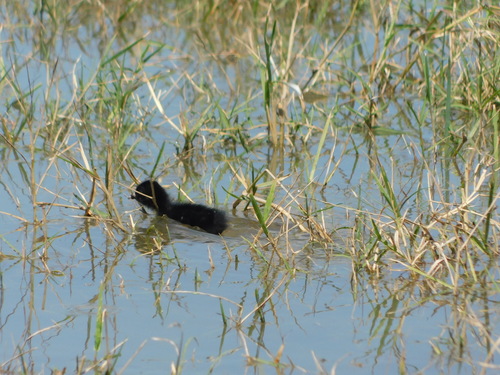 Ruddy-breasted Crake
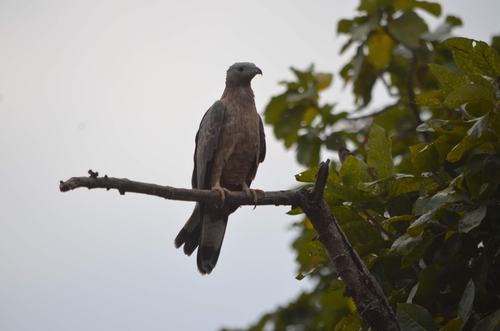 Crested Honey-buzzard
In short
The most reliable field mark to separate Ruddy-breasted Crake from Crested Honey-buzzard is overall structure and size: the crake is a tiny, laterally-flattened rail with a short tail and long toes, while the honey-buzzard is a large, long-winged raptor with a pigeon-like head and long tail. In flight, the honey-buzzard shows broad wings with distinctive tail and underwing banding (especially in juveniles and females), whereas the crake is rarely seen flying and lacks any raptor-like wing pattern. Juvenile crakes are dark brown with white spotting, while juvenile honey-buzzards have extensive black in the wing tips and variable banding. Habitat and behavior are also diagnostic: crakes skulk in dense marsh vegetation, while honey-buzzards soar or perch in open woodland or forest edges. Even at a distance, the difference in size, structure, and context is unmistakable.
Identification tips
- Size and Structure: The crake is tiny (22–23 cm, 60 g), with a laterally compressed body, short tail, and long toes. The honey-buzzard is huge (57–60 cm, 750–1,490 g), with long wings, a long tail, and a small, pigeon-like head. Even at a distance, the difference is dramatic.
- Flight Jizz: Crake flies weakly and low, quickly dropping into cover; honey-buzzard soars or glides with slow, deep wingbeats and broad wings. If you see a bird circling high or gliding for long distances, it is not a crake.
- Juvenile Wing Pattern: Juvenile honey-buzzards have extensive black at the primary tips and multiple underwing and tail bands; juvenile crakes are plain dark brown with white spotting and no banding at all.
- Adult Plumage: Adult crakes are chestnut below and pale brown above, with white barring on the flanks and undertail and a yellowish bill; adult honey-buzzards are brown above, paler below, with a dark throat stripe, and always show bold tail and underwing banding.
- Head and Bill: Crake has a short, yellowish bill and red eyes; honey-buzzard has a small, pigeon-like head, yellow cere, and iris color that differs by sex (brown in males, yellow in females).
- Tail: Crake's tail is short and not banded; honey-buzzard's tail is long and shows two or three dark bands depending on sex.
- Legs and Feet: Crake has long toes and red legs, adapted for walking on floating vegetation; honey-buzzard has typical raptor feet, not adapted for walking on reeds.
- Habitat: Crake is always in dense, wet marshes or reedbeds; honey-buzzard is in open woodlands, forest edges, or soaring overhead. Context is a strong clue.
- Behavior: Crake is secretive and skulking, rarely seen in the open; honey-buzzard is often conspicuous when soaring or perched in trees.
- Sex Differences: Only honey-buzzard shows sexual dimorphism in plumage (head color and iris); crake sexes are similar.
- Vocalization: Not diagnostic from the notes, but crake is more likely to call from cover, while honey-buzzard is generally silent except on migration.
- Seasonal Movement: Crake is mostly resident with some local migration; honey-buzzard is a long-distance migrant, often seen in migration flocks.
- Pitfalls: Juvenile honey-buzzards can mimic other raptors but never look like a crake; juvenile crakes are never banded or raptor-like.
- Perched Posture: Crake perches low or on the ground, often hidden; honey-buzzard perches high and upright in trees.
- If in Doubt: If the bird is seen in a marsh, is small, and skulks, it's a crake. If it's soaring, large, and banded, it's a honey-buzzard.
Size
Ruddy-breasted Crake is a small bird, about 22–23 cm in length and weighing around 60 g [wikidata]. In contrast, Crested Honey-buzzard is a large raptor, 57–60 cm long and weighing 750–1,490 g [wikipedia]. The honey-buzzard is nearly three times as long and over ten times heavier than the crake. Even at a distance, the crake appears small and compact, while the honey-buzzard is large and imposing, with long wings and tail.
Plumage
Juvenile and immature plumages are most likely to cause confusion in a quiz, so start there:
- Juvenile Ruddy-breasted Crake: Dark brown overall with some white spotting. No banding or raptor-like wing pattern. The underparts are not barred or streaked, and the bird is uniformly dark except for the spotting.
-
Juvenile Crested Honey-buzzard: Shows extensive black at the primary tips and narrower underwing bands. The tail has multiple dark bands (three in females, two in males), and the underwing has three or four dark bands depending on sex. The head is small and pigeon-like, with a yellow cere and dark iris. The juvenile's overall pattern is highly variable but always includes some banding and contrast on the wings and tail.
-
Adult Ruddy-breasted Crake: Chestnut head and underparts, pale brown back, white barring on flanks and undertail, yellowish bill, red eyes and legs. No raptor-like markings or banding.
- Adult Crested Honey-buzzard: Brown above, paler below, with a dark throat stripe. Males have blue-grey heads and brown irises, females have brown heads and yellow irises. Both sexes show bold tail and underwing banding, with the female showing more bands than the male. The head is small and lacks a strong brow ridge, giving a gentle, pigeon-like look.
In all ages, the crake lacks any banding or raptor-like pattern, while the honey-buzzard always shows some degree of banding and contrast in the wings and tail.
Behaviour
Ruddy-breasted Crake is a secretive, skulking marsh bird that forages by probing mud or shallow water, often hiding in dense vegetation and rarely flying in the open. When flushed, its flight is weak and low, quickly dropping back into cover. In contrast, Crested Honey-buzzard is a soaring raptor, often seen gliding or circling high above forests or perched prominently in trees. It forages mainly for bee and wasp larvae, sometimes raiding nests on the ground, but is much more conspicuous in flight and perching than the crake. The crake is territorial but shy, while the honey-buzzard is inconspicuous except on migration, when it may be seen in numbers.
Habitat
Ruddy-breasted Crake is strictly a wetland species, found in swamps, marshes, and dense reedbeds across South and East Asia. It nests and forages in thick, grassy or shrubby vegetation near water, rarely venturing into open ground. Crested Honey-buzzard, on the other hand, prefers open woodlands, forest edges, and sometimes plantations, and is rarely found in dense marshes. Its presence in open country, soaring above trees or perched in tall trees, is a strong clue. If the bird is seen in a marsh or reedbed, it is almost certainly a crake; if in woodland or soaring high, it is a honey-buzzard.
Ruddy-breasted Crake · Crested Honey-buzzard · My Tricky Birds