

Motmot

Rock Ptarmigan vs Western Capercaillie

Lagopus muta versus Tetrao urogallus

Play a quiz with Rock Ptarmigan and Western Capercaillie
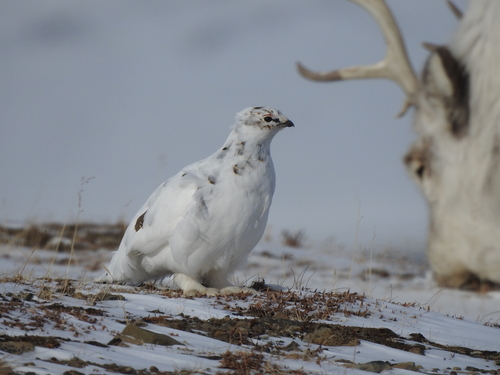
Rock Ptarmigan (Lagopus muta) Rock Ptarmigan
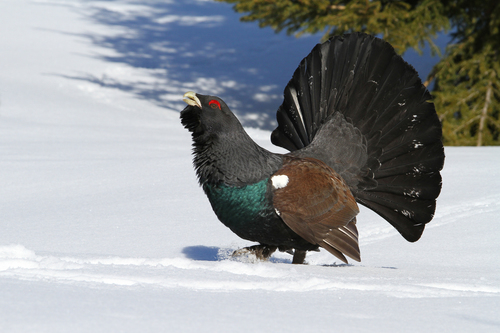
Western Capercaillie (Tetrao urogallus) Western Capercaillie

Media

Loading…

In short

The most reliable field mark between Rock Ptarmigan and Western Capercaillie is sheer size: even a female Capercaillie dwarfs the largest ptarmigan, and males are massive, crow-sized birds. In flight or on the ground, Capercaillie show a heavy, long-tailed, and broad-winged profile, while Rock Ptarmigan are compact, short-tailed, and much lighter. Plumage is also a strong separator: Rock Ptarmigan shift to all-white in winter (except for black tail and male facial markings), while Capercaillie never become white and show dark, barred, or metallic tones year-round. Habitat is a strong clue: Capercaillie are deep forest birds, while Rock Ptarmigan stick to open, barren uplands or tundra. If you see a white grouse in a snowy, treeless landscape, it is never a Capercaillie.

Identification tips

  1. Size is decisive: Capercaillie are enormous, even females; Rock Ptarmigan are small to medium-sized. If the bird looks turkey-sized, it is a Capercaillie.
  2. Winter plumage: Only Rock Ptarmigan turn nearly all-white in winter (except for black tail and, in males, a black eye line). Capercaillie are never white.
  3. Summer plumage: Rock Ptarmigan in summer are mottled grey/brown above with white wings and underparts; Capercaillie males are dark with metallic green breasts, females are barred brown and buff.
  4. Wing pattern in flight: Capercaillie show broad, rounded wings and a long, wedge-shaped tail; Rock Ptarmigan have shorter, more pointed wings and a short tail. This is visible in all ages.
  5. Bill structure: Rock Ptarmigan have a slender bill; Capercaillie have a heavy, thick bill, especially in males.
  6. Facial markings: Male Rock Ptarmigan in winter have a black eye stripe; Capercaillie males have a red eye comb but no black stripe.
  7. Legs and toes: Both species have feathered legs, but Capercaillie have specialized toes with 'horn tacks' for walking on snow, leaving large, distinctive tracks.
  8. Habitat: Rock Ptarmigan are never in forests; Capercaillie are never in open tundra or rocky uplands.
  9. Behavior: Capercaillie display on the ground and in trees, with elaborate postures and complex songs; Rock Ptarmigan display with aerial chases and simpler croaking calls.
  10. Voice: Capercaillie males produce a sequence of clicks, pops, and scrapes; Rock Ptarmigan males give guttural snores and a rasping croak.
  11. Sexual dimorphism: Capercaillie show extreme size and plumage differences between sexes; Rock Ptarmigan sexes are more similar, especially in winter.
  12. Juvenile confusion: Juvenile Capercaillie look like cryptic, barred females with a dark crown; juvenile Rock Ptarmigan are also cryptic but molt quickly to adult patterns and never show the barred, buffy look of young Capercaillie.
  13. Wing bow spot: Capercaillie of both sexes have a white spot on the wing bow; Rock Ptarmigan do not.
  14. Context clues: If you see a white grouse in snow or a small, camouflaged bird in rocky tundra, it is Rock Ptarmigan; a massive, dark grouse in forest is Capercaillie.
  15. Eggs and chicks: Capercaillie eggs are large and heavily speckled; chicks are cryptic with black crowns, while Rock Ptarmigan chicks are more uniformly cryptic and quickly molt to white or mottled plumage.

Size

Size is the most dramatic difference. Rock Ptarmigan are medium-sized grouse, averaging about 610 g [wikidata], with a length of 34–36 cm and a wingspan of 54–60 cm [wikipedia]. Western Capercaillie are giants by comparison: males average 4.1 kg (2885 g for the species overall [wikidata]), with lengths of 74–85 cm and wingspans of 90–125 cm; even females are 1.5–2.5 kg and 54–64 cm long [wikipedia]. In the field, Capercaillie look turkey-sized, while Rock Ptarmigan are closer to a pigeon or small chicken. There is no overlap in size.

Plumage

No age or sex of Capercaillie is ever white; Rock Ptarmigan, by contrast, are seasonally white. In winter, all Rock Ptarmigan (male and female, adult and immature) are nearly pure white except for black outer tail feathers and, in males, a black eye line. In summer, Rock Ptarmigan become mottled grey and brown above, but always keep white wings and underparts. Capercaillie males are dark grey-brown with a metallic green breast and variable black or white undertail, while females are brown with black and silver barring above and buffy below. Both sexes of Capercaillie have a white spot on the wing bow and red skin over the eye, but never show the all-white or white-winged look of ptarmigan. Juvenile Capercaillie resemble females but with a blackish crown; juvenile Rock Ptarmigan are cryptic but quickly molt toward adult patterns. In flight, Capercaillie show broad, rounded wings and a long, wedge-shaped tail; Rock Ptarmigan have shorter, more pointed wings and a short tail.

Behaviour

Capercaillie are famous for their elaborate ground and tree-top courtship displays, with males fanning tails, drooping wings, and producing a complex sequence of clicks and pops. They are primarily ground-dwelling but can fly powerfully for short distances. Rock Ptarmigan are more likely to flush low and fast from the ground, especially in open terrain, and their displays involve aerial chases and gliding descents with rasping calls. Capercaillie tracks in snow are large and distinctive, with 'courting tracks' from their specialized toes, while Rock Ptarmigan leave much smaller prints.

Habitat

Rock Ptarmigan are birds of open, barren, or alpine habitats—think tundra, rocky slopes, and windswept uplands. They avoid forested areas. Western Capercaillie, in contrast, are strictly forest birds, favoring mature coniferous or mixed woodlands with dense cover and open spaces for lekking. If you encounter a grouse in deep woods, it is almost certainly a Capercaillie; if in treeless, high-elevation or arctic terrain, it is a Rock Ptarmigan.

Voice

Rock Ptarmigan males produce guttural snores and rattles, with a distinctive rasping, croaking display call (likened to a stick dragged across a picket fence). Capercaillie males have a unique courtship song: a series of double-clicks accelerating into a popping 'cork' sound, followed by scraping notes. The Capercaillie display is more complex and musical, while Rock Ptarmigan are simpler and more croaky. Both are most vocal during the breeding season.

Submit a better description

Use the same sections as the comparison. Your text is published immediately.

The most reliable field mark between Rock Ptarmigan and Western Capercaillie is sheer size: even a female Capercaillie dwarfs the largest ptarmigan, and males are massive, crow-sized birds. In flight or on the ground, Capercaillie show a heavy, long-tailed, and broad-winged profile, while Rock Ptarmigan are compact, short-tailed, and much lighter. Plumage is also a strong separator: Rock Ptarmigan shift to all-white in winter (except for black tail and male facial markings), while Capercaillie never become white and show dark, barred, or metallic tones year-round. Habitat is a strong clue: Capercaillie are deep forest birds, while Rock Ptarmigan stick to open, barren uplands or tundra. If you see a white grouse in a snowy, treeless landscape, it is never a Capercaillie.

  1. Size is decisive: Capercaillie are enormous, even females; Rock Ptarmigan are small to medium-sized. If the bird looks turkey-sized, it is a Capercaillie.
  2. Winter plumage: Only Rock Ptarmigan turn nearly all-white in winter (except for black tail and, in males, a black eye line). Capercaillie are never white.
  3. Summer plumage: Rock Ptarmigan in summer are mottled grey/brown above with white wings and underparts; Capercaillie males are dark with metallic green breasts, females are barred brown and buff.
  4. Wing pattern in flight: Capercaillie show broad, rounded wings and a long, wedge-shaped tail; Rock Ptarmigan have shorter, more pointed wings and a short tail. This is visible in all ages.
  5. Bill structure: Rock Ptarmigan have a slender bill; Capercaillie have a heavy, thick bill, especially in males.
  6. Facial markings: Male Rock Ptarmigan in winter have a black eye stripe; Capercaillie males have a red eye comb but no black stripe.
  7. Legs and toes: Both species have feathered legs, but Capercaillie have specialized toes with 'horn tacks' for walking on snow, leaving large, distinctive tracks.
  8. Habitat: Rock Ptarmigan are never in forests; Capercaillie are never in open tundra or rocky uplands.
  9. Behavior: Capercaillie display on the ground and in trees, with elaborate postures and complex songs; Rock Ptarmigan display with aerial chases and simpler croaking calls.
  10. Voice: Capercaillie males produce a sequence of clicks, pops, and scrapes; Rock Ptarmigan males give guttural snores and a rasping croak.
  11. Sexual dimorphism: Capercaillie show extreme size and plumage differences between sexes; Rock Ptarmigan sexes are more similar, especially in winter.
  12. Juvenile confusion: Juvenile Capercaillie look like cryptic, barred females with a dark crown; juvenile Rock Ptarmigan are also cryptic but molt quickly to adult patterns and never show the barred, buffy look of young Capercaillie.
  13. Wing bow spot: Capercaillie of both sexes have a white spot on the wing bow; Rock Ptarmigan do not.
  14. Context clues: If you see a white grouse in snow or a small, camouflaged bird in rocky tundra, it is Rock Ptarmigan; a massive, dark grouse in forest is Capercaillie.
  15. Eggs and chicks: Capercaillie eggs are large and heavily speckled; chicks are cryptic with black crowns, while Rock Ptarmigan chicks are more uniformly cryptic and quickly molt to white or mottled plumage.

Size is the most dramatic difference. Rock Ptarmigan are medium-sized grouse, averaging about 610 g [wikidata], with a length of 34–36 cm and a wingspan of 54–60 cm [wikipedia]. Western Capercaillie are giants by comparison: males average 4.1 kg (2885 g for the species overall [wikidata]), with lengths of 74–85 cm and wingspans of 90–125 cm; even females are 1.5–2.5 kg and 54–64 cm long [wikipedia]. In the field, Capercaillie look turkey-sized, while Rock Ptarmigan are closer to a pigeon or small chicken. There is no overlap in size.

No age or sex of Capercaillie is ever white; Rock Ptarmigan, by contrast, are seasonally white. In winter, all Rock Ptarmigan (male and female, adult and immature) are nearly pure white except for black outer tail feathers and, in males, a black eye line. In summer, Rock Ptarmigan become mottled grey and brown above, but always keep white wings and underparts. Capercaillie males are dark grey-brown with a metallic green breast and variable black or white undertail, while females are brown with black and silver barring above and buffy below. Both sexes of Capercaillie have a white spot on the wing bow and red skin over the eye, but never show the all-white or white-winged look of ptarmigan. Juvenile Capercaillie resemble females but with a blackish crown; juvenile Rock Ptarmigan are cryptic but quickly molt toward adult patterns. In flight, Capercaillie show broad, rounded wings and a long, wedge-shaped tail; Rock Ptarmigan have shorter, more pointed wings and a short tail.

Capercaillie are famous for their elaborate ground and tree-top courtship displays, with males fanning tails, drooping wings, and producing a complex sequence of clicks and pops. They are primarily ground-dwelling but can fly powerfully for short distances. Rock Ptarmigan are more likely to flush low and fast from the ground, especially in open terrain, and their displays involve aerial chases and gliding descents with rasping calls. Capercaillie tracks in snow are large and distinctive, with 'courting tracks' from their specialized toes, while Rock Ptarmigan leave much smaller prints.

Rock Ptarmigan are birds of open, barren, or alpine habitats—think tundra, rocky slopes, and windswept uplands. They avoid forested areas. Western Capercaillie, in contrast, are strictly forest birds, favoring mature coniferous or mixed woodlands with dense cover and open spaces for lekking. If you encounter a grouse in deep woods, it is almost certainly a Capercaillie; if in treeless, high-elevation or arctic terrain, it is a Rock Ptarmigan.

Rock Ptarmigan males produce guttural snores and rattles, with a distinctive rasping, croaking display call (likened to a stick dragged across a picket fence). Capercaillie males have a unique courtship song: a series of double-clicks accelerating into a popping 'cork' sound, followed by scraping notes. The Capercaillie display is more complex and musical, while Rock Ptarmigan are simpler and more croaky. Both are most vocal during the breeding season.

Discard your changes?

You have unsaved edits. If you leave now, those changes will be lost.

Rock Ptarmigan · Western Capercaillie · My Tricky Birds