

Motmot

Rock Dove vs Stock Dove

Columba livia versus Columba oenas

Play a quiz with Rock Dove and Stock Dove
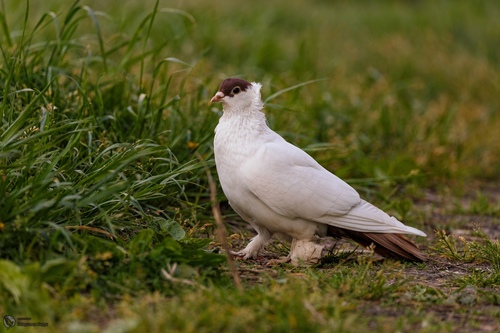
Rock Dove (Columba livia) Rock Dove
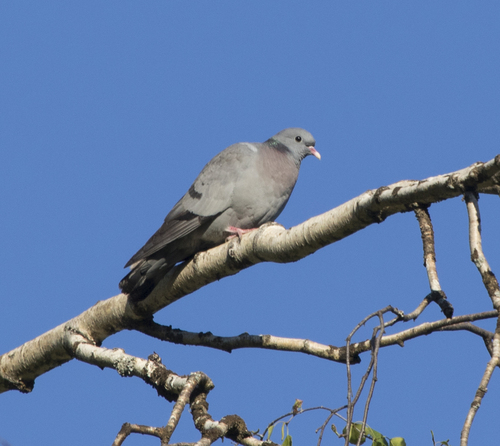
Stock Dove (Columba oenas) Stock Dove

Media

Loading…

In short

The most reliable field mark to separate Rock Dove from Stock Dove is the underwing color in flight: Rock Dove (wild type) shows a conspicuous white underwing, while Stock Dove has a uniform dark grey underwing. For perched birds, look for the Rock Dove's white rump and bold, complete black wingbars, versus the Stock Dove's grey rump and short, incomplete wingbars. Eye color is also helpful: Rock Dove has a red-brown iris, while Stock Dove's eyes are dark. Juveniles of both are duller, but the underwing contrast remains a strong separator in flight at all ages.

Identification tips

  1. Underwing color in flight (all ages): Rock Dove shows a bright white underwing, Stock Dove's is uniformly dark grey. This is the single most reliable mark when birds are overhead or flying away.
  2. Rump color (all ages): Rock Dove has a white lower back (rump) that contrasts with the rest of the body; Stock Dove's rump is grey and blends with the back.
  3. Wingbars (all ages): Rock Dove has two bold, complete black wingbars across the wing; Stock Dove has only short, dark bars on the tertials and greater coverts, never forming full bars across the wing.
  4. Tail pattern: Both have a dark terminal tail band, but Rock Dove's tail edges are white, Stock Dove's are not.
  5. Eye color: Rock Dove has a red-brown iris; Stock Dove's eyes are dark. This is visible at close range or in good light.
  6. Bill and cere: Rock Dove's bill is grey-black with a small off-white cere; Stock Dove's bill is pink with a yellow tip and lacks the prominent cere of feral pigeons.
  7. Neck iridescence: Rock Dove has extensive greenish to purplish iridescence on the neck and chest (especially males); Stock Dove has just a small iridescent patch on the neck sides (absent in juveniles).
  8. Juvenile plumage: Juvenile Rock Doves are duller but still show the white rump and underwing; juvenile Stock Doves lack neck iridescence and have a plain grey appearance, but underwing remains dark.
  9. Perched structure: Both are similar in size and shape, but Stock Dove may appear slightly more compact and lacks the swollen cere of many feral pigeons.
  10. Flight style: Both are strong fliers, but Stock Dove often shows sharp wing flicks and a wing crack in display, while Rock Dove's flight is more direct with frequent glides.
  11. Vocalizations: Rock Dove gives a familiar city pigeon coo; Stock Dove's call is a short, deep grunt, quite different in tone.
  12. Habitat context: In wild settings, Rock Dove is now mostly found on remote cliffs/islands; Stock Dove prefers woodlands and open countryside with tree holes. In urban areas, almost all 'pigeons' are feral Rock Doves.
  13. Flock size: Rock Doves (especially feral) often form large flocks; Stock Doves are usually in pairs or small groups.
  14. Display behavior: Rock Dove displays with strutting and bowing; Stock Dove walks along branches with a fanned tail and lowered wings, and cracks its wings in flight.
  15. Pitfall – Feral pigeons: Many city pigeons are feral/domestic Rock Doves with variable plumage; only wild-type Rock Doves show the classic field marks described above. Stock Dove is much less variable.

Size

Both species are similar in length and wingspan, but Rock Dove averages slightly heavier (body mass ~280.5g [avonet]) than Stock Dove (males 303–365g, females 286–290g [wikipedia]). In practice, size is not a reliable field mark for separation, as their measurements overlap broadly and both appear as medium-sized pigeons.

Plumage

Juvenile and adult Rock Doves (wild type) have a pale grey body, two bold black wingbars, a white lower back (rump), and a white underwing that stands out in flight. The tail is grey with a strong black terminal band and white edges. The head, neck, and chest are bluish-grey with greenish to purplish iridescence, more extensive in males. Stock Dove is overall blue-toned grey, with only short, dark wingbars on the tertials and greater coverts (never as bold or complete as Rock Dove), and a grey rump that blends with the back. The underwing is uniformly dark grey, lacking Rock Dove's white flash. The tail also ends in a dark band but lacks white edges. Both sexes are similar, but Stock Dove lacks the extensive neck iridescence of Rock Dove; instead, it has a small iridescent patch on the neck sides (missing in juveniles). Juvenile Stock Doves lack neck iridescence entirely. Eye color is a key difference: Rock Dove's iris is red-brown, Stock Dove's is dark. Bill color also differs: Rock Dove's is grey-black with a small off-white cere, Stock Dove's is pink with a yellow tip.

Behaviour

Both species are strong fliers and often seen in flocks, but Rock Doves (especially feral/domestic forms) are more likely to be found in large, urban or coastal groups, sometimes hundreds strong. Rock Doves take off with a noisy wing clap and may display foot stamping and bill snapping, especially when disturbed. Stock Doves are more discreet, often found in pairs or small groups, and their display flight includes sharp wing flicks and a distinctive wing crack during spring display. Both perch well, but Stock Dove's display involves walking along branches with a fanned tail and lowered wings.

Habitat

Rock Dove (wild type) is now mostly restricted to remote coastal cliffs and islands, especially in the far north and west of Scotland, but feral/domestic pigeons (derived from Rock Dove) are ubiquitous in urban areas. Stock Dove prefers woodland edges, open countryside with scattered trees, and is associated with nesting in tree holes or old woodpecker cavities, rarely in cliffs or buildings. In areas where both occur, Stock Dove is more likely in rural, wooded settings, while Rock Dove (or its feral forms) dominates urban and rocky coastal habitats.

Voice

Rock Dove gives a soft, wavering coo ('crruoo-u'), similar to familiar city pigeons, with additional grunts and hisses as alarm calls. Stock Dove's call is a short, deep, grunting 'Ooo-uu-ooh', very different from Rock Dove's modulated cooing. In display, Rock Dove's song is accompanied by strutting and bowing, while Stock Dove's display includes a wing crack.

Submit a better description

Use the same sections as the comparison. Your text is published immediately.

The most reliable field mark to separate Rock Dove from Stock Dove is the underwing color in flight: Rock Dove (wild type) shows a conspicuous white underwing, while Stock Dove has a uniform dark grey underwing. For perched birds, look for the Rock Dove's white rump and bold, complete black wingbars, versus the Stock Dove's grey rump and short, incomplete wingbars. Eye color is also helpful: Rock Dove has a red-brown iris, while Stock Dove's eyes are dark. Juveniles of both are duller, but the underwing contrast remains a strong separator in flight at all ages.

  1. Underwing color in flight (all ages): Rock Dove shows a bright white underwing, Stock Dove's is uniformly dark grey. This is the single most reliable mark when birds are overhead or flying away.
  2. Rump color (all ages): Rock Dove has a white lower back (rump) that contrasts with the rest of the body; Stock Dove's rump is grey and blends with the back.
  3. Wingbars (all ages): Rock Dove has two bold, complete black wingbars across the wing; Stock Dove has only short, dark bars on the tertials and greater coverts, never forming full bars across the wing.
  4. Tail pattern: Both have a dark terminal tail band, but Rock Dove's tail edges are white, Stock Dove's are not.
  5. Eye color: Rock Dove has a red-brown iris; Stock Dove's eyes are dark. This is visible at close range or in good light.
  6. Bill and cere: Rock Dove's bill is grey-black with a small off-white cere; Stock Dove's bill is pink with a yellow tip and lacks the prominent cere of feral pigeons.
  7. Neck iridescence: Rock Dove has extensive greenish to purplish iridescence on the neck and chest (especially males); Stock Dove has just a small iridescent patch on the neck sides (absent in juveniles).
  8. Juvenile plumage: Juvenile Rock Doves are duller but still show the white rump and underwing; juvenile Stock Doves lack neck iridescence and have a plain grey appearance, but underwing remains dark.
  9. Perched structure: Both are similar in size and shape, but Stock Dove may appear slightly more compact and lacks the swollen cere of many feral pigeons.
  10. Flight style: Both are strong fliers, but Stock Dove often shows sharp wing flicks and a wing crack in display, while Rock Dove's flight is more direct with frequent glides.
  11. Vocalizations: Rock Dove gives a familiar city pigeon coo; Stock Dove's call is a short, deep grunt, quite different in tone.
  12. Habitat context: In wild settings, Rock Dove is now mostly found on remote cliffs/islands; Stock Dove prefers woodlands and open countryside with tree holes. In urban areas, almost all 'pigeons' are feral Rock Doves.
  13. Flock size: Rock Doves (especially feral) often form large flocks; Stock Doves are usually in pairs or small groups.
  14. Display behavior: Rock Dove displays with strutting and bowing; Stock Dove walks along branches with a fanned tail and lowered wings, and cracks its wings in flight.
  15. Pitfall – Feral pigeons: Many city pigeons are feral/domestic Rock Doves with variable plumage; only wild-type Rock Doves show the classic field marks described above. Stock Dove is much less variable.

Both species are similar in length and wingspan, but Rock Dove averages slightly heavier (body mass ~280.5g [avonet]) than Stock Dove (males 303–365g, females 286–290g [wikipedia]). In practice, size is not a reliable field mark for separation, as their measurements overlap broadly and both appear as medium-sized pigeons.

Juvenile and adult Rock Doves (wild type) have a pale grey body, two bold black wingbars, a white lower back (rump), and a white underwing that stands out in flight. The tail is grey with a strong black terminal band and white edges. The head, neck, and chest are bluish-grey with greenish to purplish iridescence, more extensive in males. Stock Dove is overall blue-toned grey, with only short, dark wingbars on the tertials and greater coverts (never as bold or complete as Rock Dove), and a grey rump that blends with the back. The underwing is uniformly dark grey, lacking Rock Dove's white flash. The tail also ends in a dark band but lacks white edges. Both sexes are similar, but Stock Dove lacks the extensive neck iridescence of Rock Dove; instead, it has a small iridescent patch on the neck sides (missing in juveniles). Juvenile Stock Doves lack neck iridescence entirely. Eye color is a key difference: Rock Dove's iris is red-brown, Stock Dove's is dark. Bill color also differs: Rock Dove's is grey-black with a small off-white cere, Stock Dove's is pink with a yellow tip.

Both species are strong fliers and often seen in flocks, but Rock Doves (especially feral/domestic forms) are more likely to be found in large, urban or coastal groups, sometimes hundreds strong. Rock Doves take off with a noisy wing clap and may display foot stamping and bill snapping, especially when disturbed. Stock Doves are more discreet, often found in pairs or small groups, and their display flight includes sharp wing flicks and a distinctive wing crack during spring display. Both perch well, but Stock Dove's display involves walking along branches with a fanned tail and lowered wings.

Rock Dove (wild type) is now mostly restricted to remote coastal cliffs and islands, especially in the far north and west of Scotland, but feral/domestic pigeons (derived from Rock Dove) are ubiquitous in urban areas. Stock Dove prefers woodland edges, open countryside with scattered trees, and is associated with nesting in tree holes or old woodpecker cavities, rarely in cliffs or buildings. In areas where both occur, Stock Dove is more likely in rural, wooded settings, while Rock Dove (or its feral forms) dominates urban and rocky coastal habitats.

Rock Dove gives a soft, wavering coo ('crruoo-u'), similar to familiar city pigeons, with additional grunts and hisses as alarm calls. Stock Dove's call is a short, deep, grunting 'Ooo-uu-ooh', very different from Rock Dove's modulated cooing. In display, Rock Dove's song is accompanied by strutting and bowing, while Stock Dove's display includes a wing crack.

Discard your changes?

You have unsaved edits. If you leave now, those changes will be lost.

Rock Dove · Stock Dove · My Tricky Birds